

 3 months ago
47
3 months ago
47
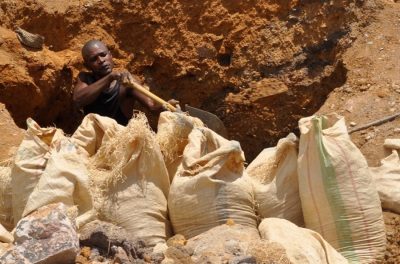
The global transition to clean energy is often framed as a technological revolution. In reality, it is equally a geopolitical transformation—one that is rapidly redefining power, dependency, and strategic competition in the international system. At the center of this transformation lies a country long associated with conflict and underdevelopment: the Democratic Republic of the Congo (DRC).
To read this article in the following languages, click the Translate Website button below the author’s name.
Français, Farsi, Русский, Español, Portugues, عربي, Hebrew, 中文, Deutsch, Italiano, 日本語, 한국어, Türkçe, Српски. And 40 more languages.
Far from being peripheral, the DRC is becoming indispensable to the future of the global economy. Its vast reserves of cobalt, lithium, coltan, and other critical minerals place it at the heart of the clean energy race. Yet, this strategic importance raises a fundamental question: will the DRC remain a passive supplier in global value chains, or can it leverage its position to reshape its own trajectory?
A Resource Power in the Making
The DRC holds approximately 70 percent of the world’s cobalt reserves—an essential component in lithium-ion batteries used in electric vehicles, smartphones, and renewable energy storage systems. As countries accelerate their decarbonization efforts, demand for these minerals is expected to surge dramatically.
This reality is transforming the DRC into a central node in global supply chains. From Washington to Beijing, major powers are increasingly aware that the success of their energy transition strategies depends, in part, on access to Congolese resources.
However, the strategic value of the DRC is not new. What is new is the scale and urgency of global demand, driven by climate commitments and industrial policy. The clean energy transition is not only about reducing carbon emissions—it is also about securing the materials that make this transition possible.
The New Arena of Great Power Competition
The growing importance of critical minerals is intensifying geopolitical competition. The DRC is no longer just a site of extraction; it is becoming a strategic arena where global powers seek influence.
China has already established a dominant position in the Congolese mining sector, controlling significant portions of cobalt production and processing. Through long-term investments, infrastructure deals, and state-backed companies, Beijing has embedded itself deeply in the country’s resource economy.
At the same time, the United States and its allies are attempting to re-engage. Initiatives aimed at securing “responsible supply chains” and reducing dependence on Chinese processing capacity reflect a broader strategic recalibration. The emerging competition is not merely economic—it is geopolitical, technological, and normative.
This dynamic reflects a classic pattern in international relations: competition over strategic resources in an anarchic system. Yet, unlike oil in the twentieth century, critical minerals are tied to a global public good—the fight against climate change. This creates a paradox: cooperation is necessary, but competition is intensifying.
The Paradox of Wealth and Weak Institutions
Despite its resource wealth, the DRC continues to face profound governance challenges. Weak institutions, corruption, and insecurity—particularly in the eastern provinces—have historically prevented the country from translating resource abundance into broad-based development.
This is not simply a domestic issue. Institutional weakness increases vulnerability to external influence and limits the state’s capacity to negotiate favorable agreements. As a result, the DRC risks remaining locked in a pattern of resource dependency, where value is extracted but not retained.
The concept of the “resource curse” remains relevant, but it must be updated. In the context of the clean energy transition, the risk is not only economic stagnation but also strategic marginalization. Without strong governance, the DRC could become indispensable to the world—yet unable to shape the terms of its own importance.
From Extraction to Strategy: A Window of Opportunity
The current moment also presents a historic opportunity. The global demand for critical minerals gives the DRC leverage it has rarely possessed before.
To capitalize on this, three strategic shifts are essential:
First, value addition.
Moving beyond raw extraction toward local processing and industrialization is crucial. This would allow the DRC to capture a larger share of the value chain and reduce its dependence on external actors.
Second, governance reform.
Strengthening institutions, improving transparency, and enforcing regulatory frameworks are necessary to ensure that resource wealth translates into national development.
Third, strategic partnerships.
Rather than entering asymmetric agreements, the DRC must negotiate partnerships that align with its long-term interests. This includes leveraging competition among global powers to secure better terms.
In this sense, the DRC is not simply a resource supplier—it is a potential strategic actor.
Rethinking Sovereignty in the Age of Energy Transition
The rise of critical minerals challenges traditional notions of sovereignty. Control over territory is no longer sufficient; what matters increasingly is control over value chains, technology, and negotiation capacity.
For the DRC, sovereignty must be redefined not only as political independence but as economic and strategic agency. This requires a shift from reactive governance to proactive statecraft.
The clean energy transition offers a rare convergence of global demand and national potential. Whether this convergence leads to transformation or perpetuates dependency will depend on the choices made today.
Conclusion
The global race for clean energy is reshaping the hierarchy of power in the international system. In this emerging landscape, the Democratic Republic of the Congo is not a peripheral actor—it is a central player.
Yet, being central is not the same as being powerful.
The true challenge for the DRC is not whether it matters, but whether it can convert its importance into influence. If it succeeds, it could redefine its place in the world. If it fails, it risks remaining essential to others while marginal to itself.
The stakes, in other words, are not only economic—they are profoundly geopolitical.
*
Click the share button below to email/forward this article. Follow us on Instagram and X and subscribe to our Telegram Channel. Feel free to repost Global Research articles with proper attribution.
Eric Kamba is a geostrategist and international relations analyst based in Boston, Massachusetts. His work focuses on global power dynamics, conflict resolution, and the geopolitics of the African Great Lakes region, with particular emphasis on critical minerals and informal diplomacy.
Featured image: Artisanal mining in the Congo | Fairphone-Flickr CC BY-NC 2.0
Global Research is a reader-funded media. We do not accept any funding from corporations or governments. Help us stay afloat. Click the image below to make a one-time or recurring donation.

















.png)






.jpg)



 English (US) ·
  French (CA) ·