

 6 months ago
67
6 months ago
67

In historical terms the struggles against imperialism have generally taken the form of planning for a determined and perhaps violent confrontation. However weapons have become so highly destructive that in the present phase of history we face the challenge of protecting the world from imperialism, or at least the more harmful manifestations and depredations of imperialism, in more peaceful ways, particularly without starting a very destructive war.
While imperialism must be challenged and resisted at least to such an extent as to limit and contain the harm caused by it to tolerable limits, a lot of attention should be given to avoid the possibility of the forces of imperialism launching an all-out and very destructive war.
The world presently works in a framework where economic power, currency and trade are rigged in favor of the dominant countries in a framework that has continued since the post-war (Second World War) years. While at times this framework, always unjust, appears to operate in a routine way, at other times, when forces of imperialism either feel threatened or become more aggressive for other reasons, this framework operates in more destructive ways against particular targets, threatening countries and regimes of its choosing over and above the depredations of the unjust paradigm in which it operates in a routine way.
Both the normal unjust paradigm and the increasingly frequent even more aggressive extensions of this must be resisted. However these must be resisted in ways that do not cause all-out destruction in wars. The forces of imperialism have already launched wars against several countries in recent decades which many observers believe are at least to a significant extent linked to retaining their control over resource-rich countries and regions. In addition the military-industrial complex is increasingly believed to operate in ways that favor forever wars to the extent that the complex can continue to operate in a situation of ever-increasing sales and profits.
All this is leading to a lot of discontent in other countries and while some of the less powerful countries are suffering in silence, the more powerful ones, including those who gained their strength at least partly on the basis of integrating with the forces of imperialism at some levels, are already actively seeking various ways of challenging the unfair exercise of power by the forces of imperialism, particularly in the context of their own interests being harmed.
As the forces of imperialism have been internally weakened and hollowed out in various ways, it is possible to reach uneasy compromises for some time but as long as hegemonic and imperial instincts remain dominant, the tensions and the possibility of an all-out war to settle the matters will remain. Hence the challenge is clearly a two-fold one.
Firstly, to remove the overall unjust paradigm of economic power, currency, trade and debt that has been inherited from the post war years as well as the increasing resort to use it in even more unjust and aggressive ways. This should be replaced by a more justice-based international economic system. Secondly, the effort must be to try to achieve this in peaceful ways as an all-out war to settle the matters once and for all may prove to be even more destructive to the world than the harm caused on the economic or related fronts.
Another aspect that cannot be ignored is that as the forces of imperialism operate in a framework that is over-engaged mainly in maintaining their unjust dominance, the world cannot give adequate and proper attention to the steady aggravation of life-threatening environmental problems including climate change. The middle-east is a very obvious example of a region that is very badly threatened by such problems and yet its agenda is decided to such an extent by the urge for extending dominance that the environmental problems here are not even discussed properly and studied properly and in the kind of detail needed to find the best possible solutions.
This reality adds further to the task or the challenge in front of us. Firstly, the forces of imperialism and their agenda of hegemony and dominance must be resisted. Secondly, at the same time, environmental problems must somehow get adequate attention. Thirdly, the resistance to imperialism must be in peaceful ways while making the best possible efforts to avoid the possibility of any wars and particularly a very destructive all-out war (likely to be a nuclear war or a world war).
This task can be accomplished only by mass movements of people which work with continuity and involve millions and millions of people worldwide to carry forward an agenda of peace, justice and protection of environment. While such a movement should be a worldwide movement, this will be particularly important in countries which constitute the countries of imperialism and most important allies.
*
Click the share button below to email/forward this article. Follow us on Instagram and X and subscribe to our Telegram Channel. Feel free to repost Global Research articles with proper attribution.
Bharat Dogra is Honorary Convener, Campaign to Save Earth Now. His recent books include Protecting Earth for Children, Planet in Peril, A Day in 2071, Earth without Borders and Man over Machine. He is a regular contributor to Global Research.
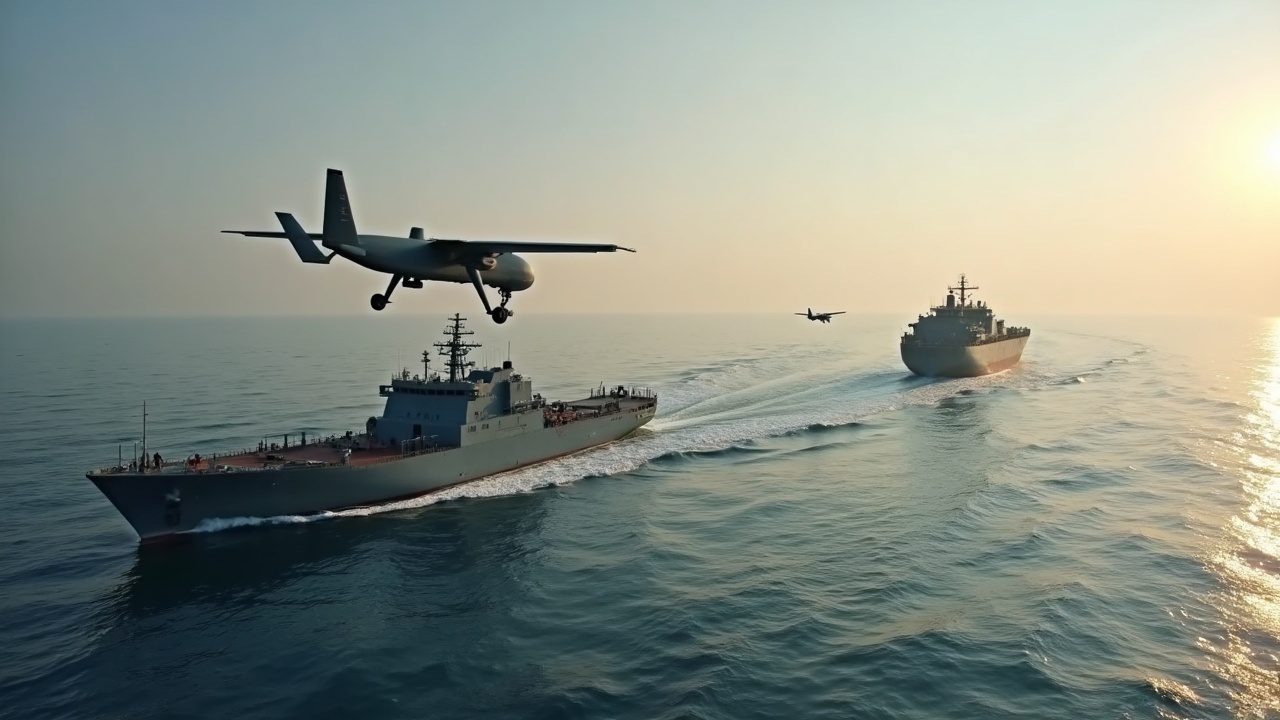
Featured image is from Black Agenda Report
Global Research is a reader-funded media. We do not accept any funding from corporations or governments. Help us stay afloat. Click the image below to make a one-time or recurring donation.















.png)






.jpg)



 English (US) ·
  French (CA) ·