

 5 months ago
41
5 months ago
41

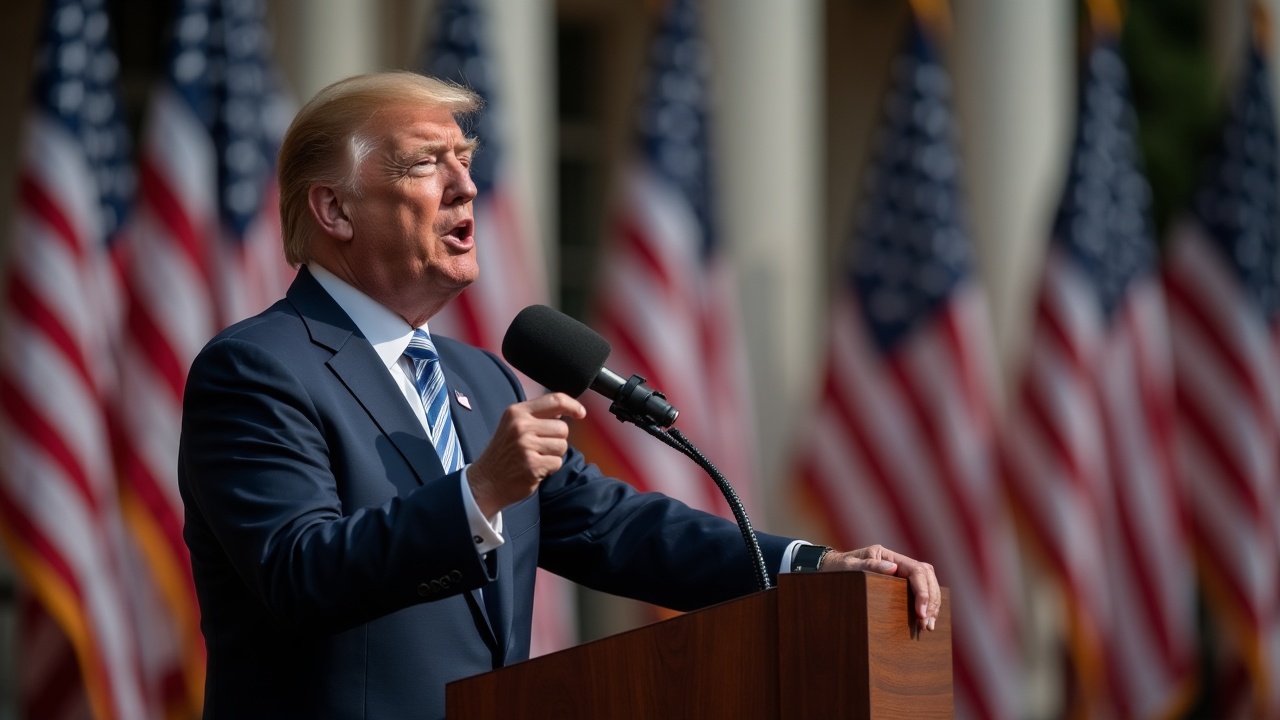
The release of the Trump administration’s National Security Strategy (NSS) outlines a shift in US foreign policy, moving away from decades of global engagement toward a doctrine of “America First” realism. The document argues that the United States has become overextended, echoing the maxim that he who defends everywhere defends nothing, and calls for a re-prioritization of core national interests. However, this document was created by the executive branch, particularly the presidential office, not by the permanent neocon bureaucracy and the Pentagon. So the central question is whether this presidential document can effectively lobby its vision to the permanent bureaucracy in charge and redirect the entrenched departments and agencies that ultimately formulate and deploy national security policy.
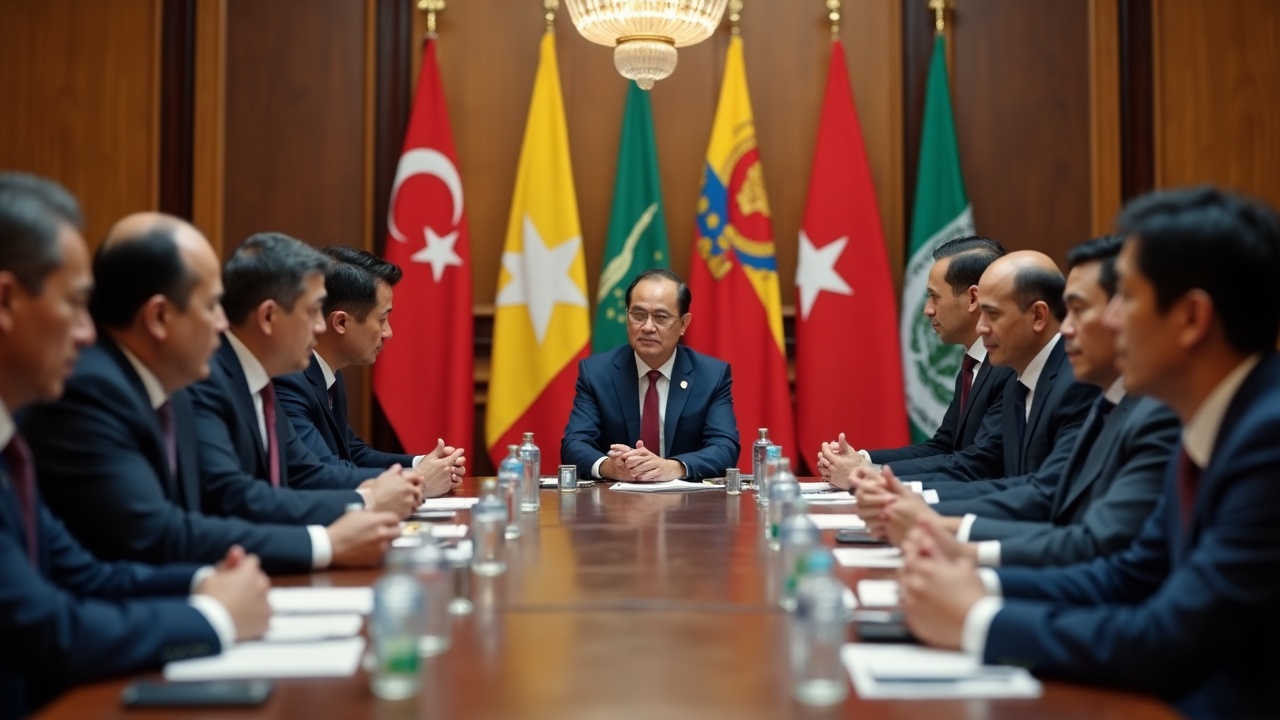
The strategy’s acknowledgment of a multipolar world, an observation stated by officials like US State Secretary Marco Rubio months ago, echoed a push for a shift of strategy that focuses on great power competition and against BRICS, understanding that the unipolar window of opportunity is now closed. Its grand strategic goal is to restore US centrality globally by resisting or even partially reversing the systemic transition to multipolarity, but it also outlines a backup plan if dominance in the Eastern Hemisphere is lost to China, then US would retreat to secure its preeminence in the Western Hemisphere.
The National Security Strategy criticizes the post-Cold War foreign policy establishment for pursuing “permanent American domination,” as it overestimated the US capacities to bear global burdens, and allowing allies to offload defense costs onto the US It proposes a corrective based on principles of sovereignty, burden-sharing, economic security, and a predisposition toward non-intervention. The document’s regional priorities desire securing the Western Hemisphere with a modified Monroe Doctrine, while also focusing on economic and military competition with China, encouraging a more independent and confident Europe, reducing commitments in the Middle East, and shifting African policy from aid to trade.

Rearranging Priorities
The strategy identifies China as the primary economic competitor, accusing past administrations of enabling its rise. It vows to rebalance the economic relationship, end perceived predatory practices like intellectual property theft, and protect supply chains, which might mean excluding China from participating in globalization fully. Militarily, the goal is to deter conflict, particularly regarding Taiwan and maintain the US domination over the South China Sea, by strengthening alliances like the Quad and AUKUS and demanding greater defense spending and capability investments from regional partners like Japan and South Korea.
The document takes a critical, cultural view of Europe, citing civilizational decline due to migration, regulatory suffocation, and loss of sovereignty to transnational bodies like the EU. It argues that Europe’s lack of self-confidence, especially regarding Russia, undermines its reliability as an ally. So US policy would aim to encourage a revival of “European greatness,” push for increased defense spending to the new NATO standard of 5% of GDP, and seek a stabilized relationship with Russia, including an “expeditious cessation of hostilities in Ukraine.” The document’s own diagnosis of Europe’s crises, civilizational erosion, uncontrolled migration, and a loss of sovereign confidence, don’t acknowledge the decades of US-driven foreign policy agendas that destabilized Europe’s periphery which brought about these consequences. While the strategy now criticizes European “failed focus” and “transnational bodies,” it ignores the primary catalyst of these symptoms, the US-led “forever wars” in the Middle East and North Africa, undertaken under a banner of liberal interventionism and democratization that it now decries. These conflicts, fueled by American military and ideological ambition, shattered states, fueled extremism, and created the profound humanitarian and security vacuums that pushed waves of destabilizing migration directly to Europe’s doorstep. As this is not merely Europe’s failure, but in significant part a geopolitical blowback from an American vision of world order that the presidential office is now seemingly trying to abandon.
The strategy also announces a “Trump Corollary to the Monroe Doctrine,” declaring the Western Hemisphere a zone of vital interest where influence from non-hemispheric competitors like China will be actively denied. Among the goals are “securing” supply chains and using economic and security tools to make the US the “partner of first choice.” But based on the proposed document, the US effectively seeks to replace the multilateral, market-based dynamics of global capitalism and globalization in the Western Hemisphere with a system of American economic and strategic primacy based on a neo-feudal, technocratic and neocolonial strategy.
The strategy explicitly states its goal is to make the United States the region’s undisputed “economic and security partner of choice” while actively seeking to “discourage collaboration with others.” It mandates that the terms of US alliances and aid be contingent on “winding down adversarial outside influence,” specifically targeting control of ports, infrastructure, and strategic assets by competitors like China. This framework does not promote a free market where Latin American nations autonomously seek the best partnerships and investment deals but instead, it constructs a Fortress America model that limits their sovereign choice in economic partners, using US leverage in finance, technology, and security to induce them to reject alternative offers, regardless of market conditions, the question is can the US actually compete with China and BRICS in this regard offering better terms or will this be a mixture of Hybrid War and less profits?
This enforced primacy functionally cancels the core tenets of capitalism for these nations by rigging the market in favor of a single, dominant state. The document argues that American goods and services are a better, yet the mechanisms to accomplish this are not competitive and seek to “push out foreign companies that build infrastructure in the region” and secure “sole-source contracts for our companies.” Capitalism requires the freedom to choose based on price, quality, and opportunity, but the strategy aims to present Latin American countries with a coercive binary choice: “whether they want to live in an American-led world… or in a parallel one.” By systematically using diplomatic and economic pressure, lawfare, color revolutions and unilateral force to eliminate competing options, the US would not be engaging in market competition but would be establishing a sphere of exclusive economic influence, where the “invisible hand” is guided by American national security directives.
Consequently, this doctrine would reduce Latin American nations to a status akin to unincorporated territories within a US-dominated bloc, like it has happened to Europe, making them lose global standing, and competitiveness rather than treating them as full sovereign participants in the global capitalist system. Their economic policies would be aligned not by their own independent assessment of market opportunities, but by a requirement to serve US strategic interests, such as “near-shoring manufacturing” and “strengthening critical supply chains” for American resilience, but it’s unclear whether they’ll instead offer better deals. The document’s focus on “joint development” of the Hemisphere’s strategic resources, directed by a US National Security Council interagency process, further suggests a managed economic relationship where ultimate oversight and priority-setting reside in Washington. In this model, the region’s capacity for capitalist agency, to freely choose partners, set terms of trade, and leverage global competition for their own development, is effectively subordinated to the imperative of maintaining American preeminence, transforming market-based solutions into instruments of unilateral strategy.
Action Plan or Lobbying Effort?
Whether this strategic vision gains traction within the permanent state is an open question. The Pentagon and foreign policy bureaucracy are neocon institutions with their own cultures, priorities. They may resist a doctrine that demands such a stark reduction of global military presence, a transactional approach to alliances, and a withdrawal from a Global New Cold War towards a limites New Cold War. The document’s success hinges on the administration’s ability to overcome institutional inertia and lobby to convince the Pentagon and other permanent bureaucracy.
*
Click the share button below to email/forward this article. Follow us on Instagram and X and subscribe to our Telegram Channel. Feel free to repost Global Research articles with proper attribution.
Miguel Santos García is a Puerto Rican writer and political analyst who mainly writes about the geopolitics of neocolonial conflicts and Hybrid Wars within the 4th Industrial Revolution, the ongoing New Cold War and the transition towards multipolarity. Visit his blog here.
Featured image is from the author
Global Research is a reader-funded media. We do not accept any funding from corporations or governments. Help us stay afloat. Click the image below to make a one-time or recurring donation.














.png)






.jpg)



 English (US) ·
  French (CA) ·