

 4 months ago
57
4 months ago
57
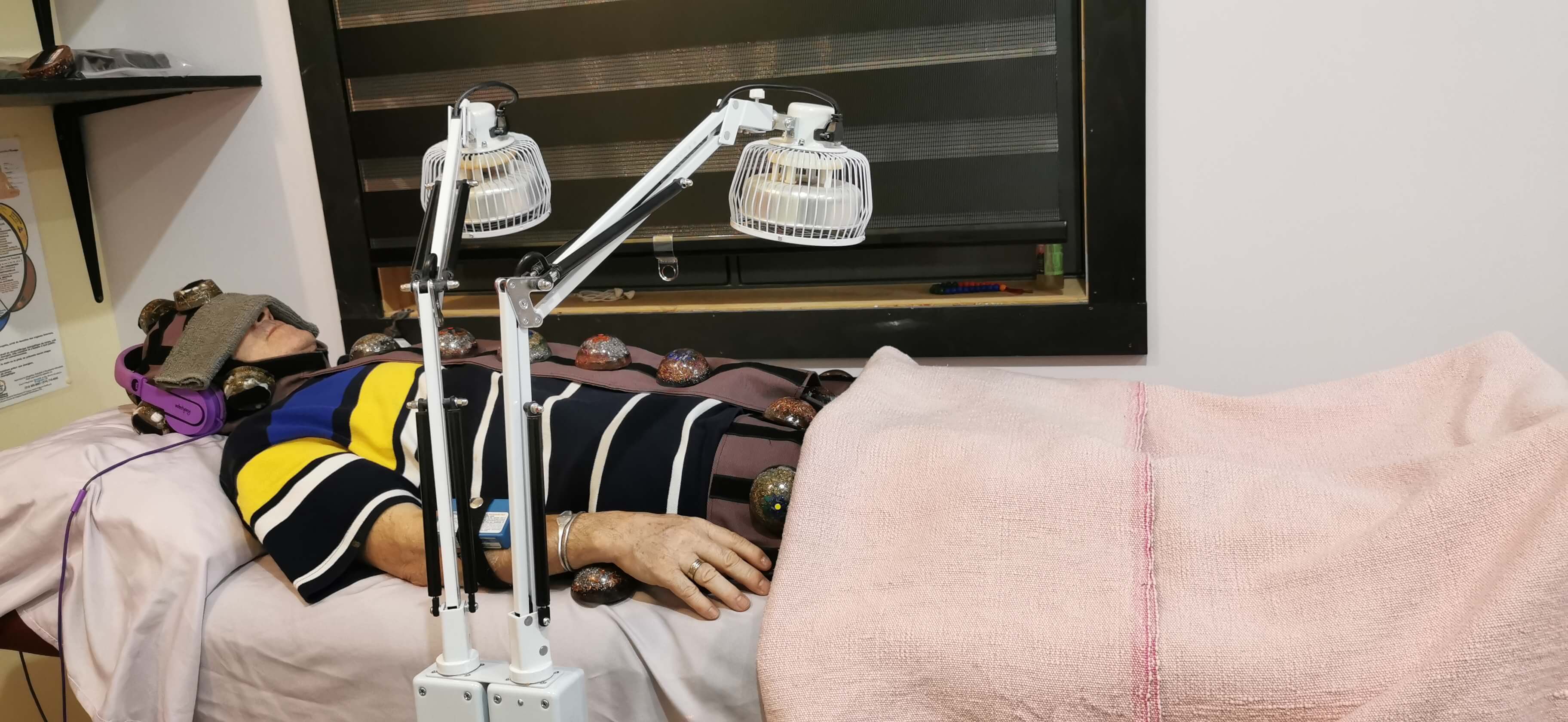
PROTECT YOUR DNA WITH QUANTUM TECHNOLOGY
Orgo-Life the new way to the future Advertising by AdpathwayThe great metaphysical truth on which the whole of Sacred Scripture opens, and to which everything from beginning to end testifies, is that the world in which we live and move and locate our being is a visible and created place—the happy result, no less, of a good and generous God, who, bringing it forth from nothingness, holds it in being from moment to moment lest it fall back into the nothingness to which all creation tends when left to its own devices.
The world we see and touch, taste and smell and hear, therefore, is not the outcome of a God forced to struggle against a horde of lesser deities, wrestling with various chthonic forces of chaos in order, as it were, to take control of the cosmos. But a God who need only say “Be!” and things are, they exist. Indeed, a God whose very name bespeaks being. “I AM WHO AM” he thunders forth from the Burning Bush when asked by Moses to reveal His name to the Israelites. “Thus shalt thou say to the children of Israel: HE WHO IS, hath sent me to you” (Exodus 3:13-14). This is how we are to address the God of Israel, who is at the same time the God of all peoples and of the universe itself—Yahweh, which means, “He Who Is.”
Why else would the Common Doctor of the Universal Church, St. Thomas Aquinas, when reaching for the most apt, the most precise definition of God, insist on calling him Qui Est, He Who Is? The answer is because it is the name more proper to God than even the name God itself. Nothing else will do; nothing else can possibly carry the freight of sheer being, the Ipsum Esse of a God who simply is.
It follows, therefore, that the only possible basis upon which a world filled with finite and contingent beings may be said to exist is that He who alone is has done this. The universe belongs to God, who is not only owner of all that is in it but sole sustainer of its being, its continued existence. And the act by which God has done this—has given being to that which is not—we call creation.
“Between ‘He who is,’ and ourselves,” writes Etienne Gilson, who, along with Jacques Maritain, remains the foremost expert on the thought of St. Thomas, “there is an infinite metaphysical chasm which separates the complete self-sufficiency of his own existence from the intrinsic lack of necessity of our own existence. Nothing can bridge such a chasm, save a free act of the divine will.”
Or, putting the matter in the most starkly dramatic form, the words of Christ Himself, spoken in conversation with St. Catherine of Siena: “Do you know, daughter, who you are and who I am? If you know these two things, you have beatitude in your grasp. You are the one who is not, and I Am He Who Is.”
It is the first principle of the spiritual life, i.e., the realization that there is a God and that it is not anyone of us. From that all else follows, including the fact that this world in which we live is a most meaningful place to be. How could it be otherwise when the one who created the world is none other than God Himself? Who, unlike Ford and GM, does not make mistakes, which is why the world He made, having spoken it into being, is always a good place to be, an ideal setting for receiving gifts. “In the beginning was the Word,” Joseph Ratzinger writes, “and the Word burst into song.”
Here one thinks of that splendid composition of Joseph Haydn “The Creation,” perhaps his most celebrated oratorio, in which the opening chapter of Genesis is given sublime musical expression: “And God said, Let there be light, and there was—Light!” Upon hearing the sudden, overwhelming C major chord strike the ear on the word light—an entire choral ensemble meanwhile accompanying that stunning burst into song—one realizes at once why the audience on hearing it for the first time spontaneously erupted into applause. They had never before heard anything so thunderously affirming of the goodness of creation itself.
Why shouldn’t we, therefore, regard the world as giving voice back to God, a cosmic liturgy no less of praise and worship offered in homage of the Creator who made it? It certainly could never have written the script itself, nor have produced the magnificent orchestration God wished to play in setting the world in motion.
All of which means, of course, that in giving us a world resplendent with the glory of God, we must not see it as merely a dungeon, a cramped space covered in darkness and gloom, but rather as a haven of hope and happiness, a setting of light and unending promise. And every contact we have with it becomes thereby an invitation, an enticement, to explore each feature and facet of it, plunging ever deeper into the heart of its mystery.
The meaning of the world, in other words, is not finally itself but that of another, of God, who remains more present to it than it is to itself; the world, therefore, will always signify more than it can possibly say. “The world,” says Luigi Giussani, “is like a word, a ‘logos’ which sends you further, calls you on to another, beyond itself, further up.” It serves as a kind of launching pad, a gateway even, to eternal life. It functions as a mediating force, as it were, a fulcrum able to assist in lifting the world onto the plane of divine glory.
Whether it works out that way in practice, however, depends on the disposition we bring to our encounter with it. Concerning which, says Giussani, two options present themselves. Here is how he describes what he calls “the two types of men (who) capture entirely the grandeur of the human being”:
the anarchist and the authentically religious man. By nature, man is relation to the infinite: on the one hand, the anarchist affirms himself to an infinite degree, while on the other hand, the authentically religious man accepts the infinite as his meaning.
Notice how the two options turn decisively on the question of being, of creation itself: whether one is prepared to receive it as a gift, the sheer wonderment of which moves one to give thanks, or as an arbitrary and oppressive imposition, submission to which one simply will not make. So long as we insist on being our own center of the universe, in other words, God cannot give us anything.
“I personally understood this,” Giussani continues, “when a young man urged on by his mother, came to me for confession.” It turns out he had no faith, only an insolence in the face of whatever poor Fr. Giussani was trying to tell him, athwart whose advice the fellow will conscript even Dante to make his case!
“You cannot deny,” the young man declared, “that the true grandeur of man is represented by Dante’s Capaneus, that giant chained by God to Hell, yet who cries out to God, ‘I cannot free myself from these chains because you bind me here. You cannot, however, prevent me from blaspheming you, and so I blaspheme you.’”
“This,” he insisted, “is the true grandeur of man.”
Not exactly your typical exchange between priest and penitent, is it? Nevertheless, Fr. Giussani goes on to ask, “But isn’t it greater to love the infinite?” The young man leaves, as unshriven as when he first stepped into the box, only to return four months later, confessing that so “eaten away” had he been by what Fr. Giussani had said that, “for two weeks he had been receiving the sacraments.” Giussani then adds, as a kind of postscript: “He died soon after in an automobile accident.”
The conclusion Fr. Giussani draws from the incident, it seems to me, is so moving that I think it worth repeating in full, especially as it perfectly illustrates the argument I have sought to make:
Anarchy is the most fascinating temptation, but it is as deceitful as it is attractive. The strength of its deceit lies precisely in its appeal, which makes us forget that man is made—that at one point he does not exist and then he dies. Only pure violence can make him say, “I affirm myself against all and everything.” It is much greater and truer to love the infinite, that is, to embrace reality and being rather than to assert oneself against them.
The evidence of creation is all about us, its contingent state reminding us at every turn how tenuous our grip on being truly is. And yet by our refusing to see it, disdaining to embrace a reality we did not create, nor could we ever create, we may forfeit the possibility of ever accepting either ourselves, or others, as pure gift. We will instead have taken ourselves to a place we were never created to have to endure. And there we shall writhe in torment forever.
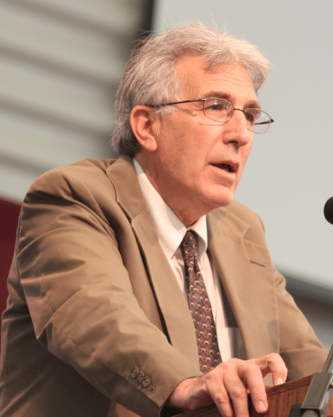
Regis Martin is Professor of Theology and Faculty Associate with the Veritas Center for Ethics in Public Life at the Franciscan University of Steubenville. He earned a licentiate and a doctorate in sacred theology from the Pontifical University of St. Thomas Aquinas in Rome. Martin is the author of a number of books, including Still Point: Loss, Longing, and Our Search for God (2012) and The Beggar's Banquet (Emmaus Road). His most recent book, published by Sophia Institute Press, is March to Martyrdom: Seven Letters on Sanctity from St. Ignatius of Antioch.












.png)




.jpg)


 English (US) ·
  French (CA) ·