

.png) 6 months ago
84
6 months ago
84
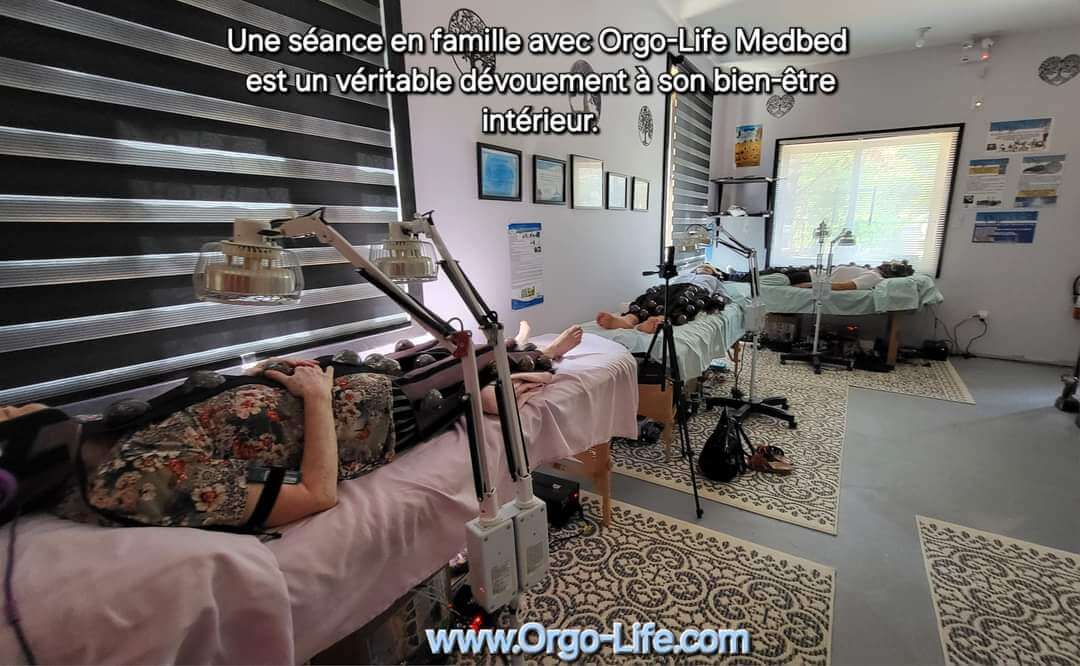
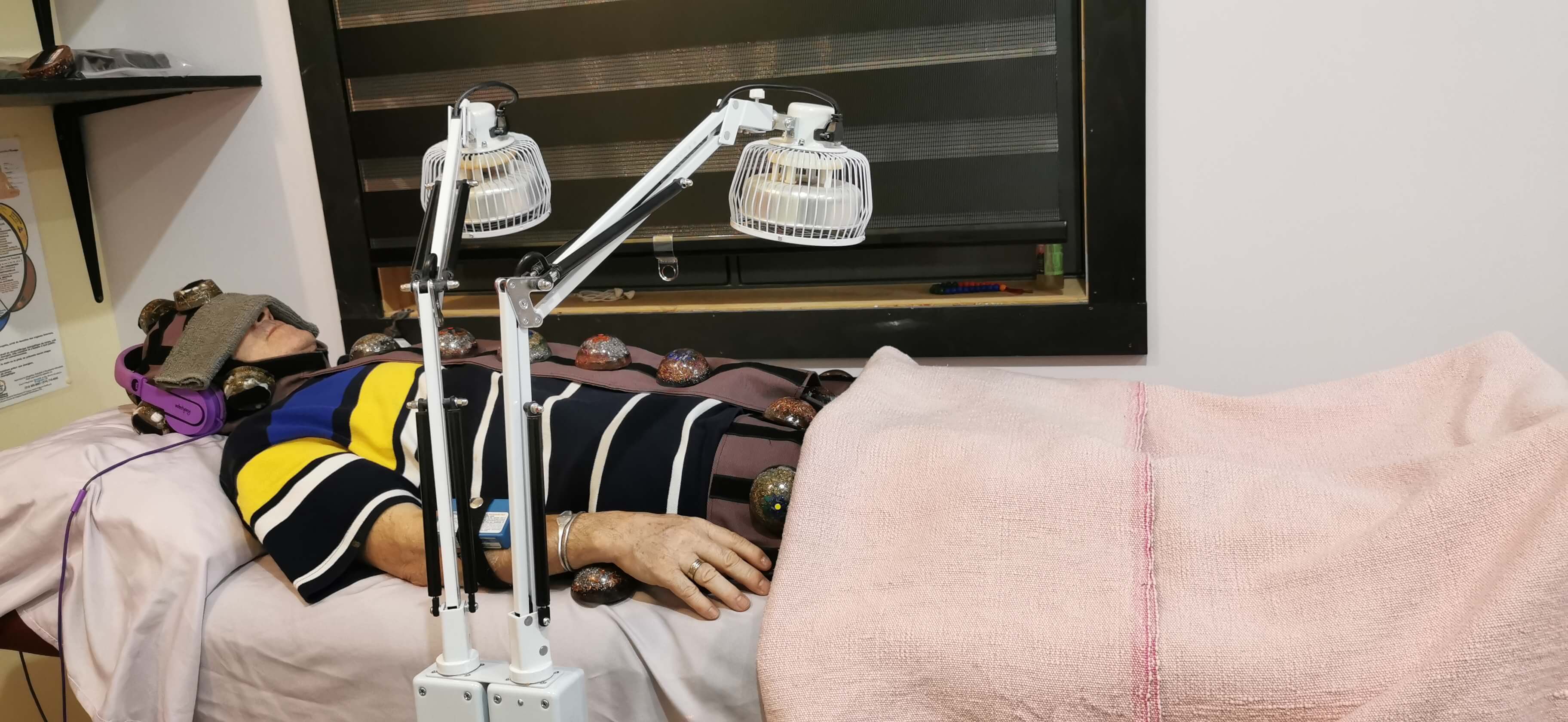
PROTECT YOUR DNA WITH QUANTUM TECHNOLOGY
Orgo-Life the new way to the future Advertising by AdpathwayIn the latest of contentious interactions between President Donald Trump and the press, the president once again opted to push back against reporters as he side-stepped further inquiry into the “absolutely perfect” results of his MRI in October.
While traveling between Florida and Washington on Air Force One on Sunday, Trump was asked about calls from Gov. Tim Walz (D-Minn.) to release his MRI results. What followed was an exchange with the press that consisted of him dismissing the idea that his results were a concern, claiming he had “no idea” what the MRI was meant to assess and ultimately attacking the intelligence of the reporters for asking a pretty obvious follow-up question, given the circumstances.
“It was just an MRI,” he said in the clip. “What part of the body? It wasn’t the brain because I took a cognitive test and I aced it.”
However, there’s often more to any interaction than what is said aloud — and the combination of Trump’s words and body language might work together to tell a more complete story of this multilayered interaction.
To get a better read on how this exchange played out, HuffPost spoke with experts in body language, verbal and nonverbal communication about what really stood out to them.
Trump appears to have some “playfulness” but also clear “irritation.”
“I see moments of playfulness, but it’s a playfulness rooted in mockery,” Beth Dawson, a communication, body language and behavior analyst, told HuffPost. “He chides the journalists — ‘you’re failing,’ ‘you wouldn’t pass a cognitive test,’ and so on. He toys with them, and the crinkle around his eyes tells us he’s genuinely enjoying the performance. At the same time, there are clear flashes of defensiveness threaded through his delivery.”
Dawson points out that Trump’s tone “blends authenticity and strategy” in a way that was pretty telling: “His laughter is real; his irritation is real.”
“But he deploys both deliberately,” she continues. “He uses humor to belittle the premise of the question and to position himself as relaxed and amused — a man so unbothered that he can joke about something as serious as an MRI.”
The lack of real, thoughtful answers about a world leader’s health can’t really be ignored here. And, as body language expert and behavior analyst Traci Brown noted, Trump’s choice of words would naturally invite more questions.
“Body language isn’t the big cue here, it’s his words,” Brown said. “He says, ‘I have no idea what they looked at.’ Everyone has an idea — at least a general one — of what they’re getting an MRI for.”
“This is the same thing in investigations that law enforcement listens for...” Brown continued. “The next question should be, ‘What’s your best guess?’”
Despite trying to keep that cool, unbothered tone, there are “cracks that reveal irritation” that Dawson points out.
His blinking, in particular, is worth noting as it reveals a more emotional reaction, she noted: “At several points, he delivers a sharp cluster of quick blinks, a reliable sign in him that a question has struck a nerve. These rapid blinks aren’t dramatic; they’re quick flashes of emotional leakage. Trump has always been skilled at using humor to brush aside topics he dislikes, but his eyes give away the fact that the subject, in this case his health, still irritates him.”
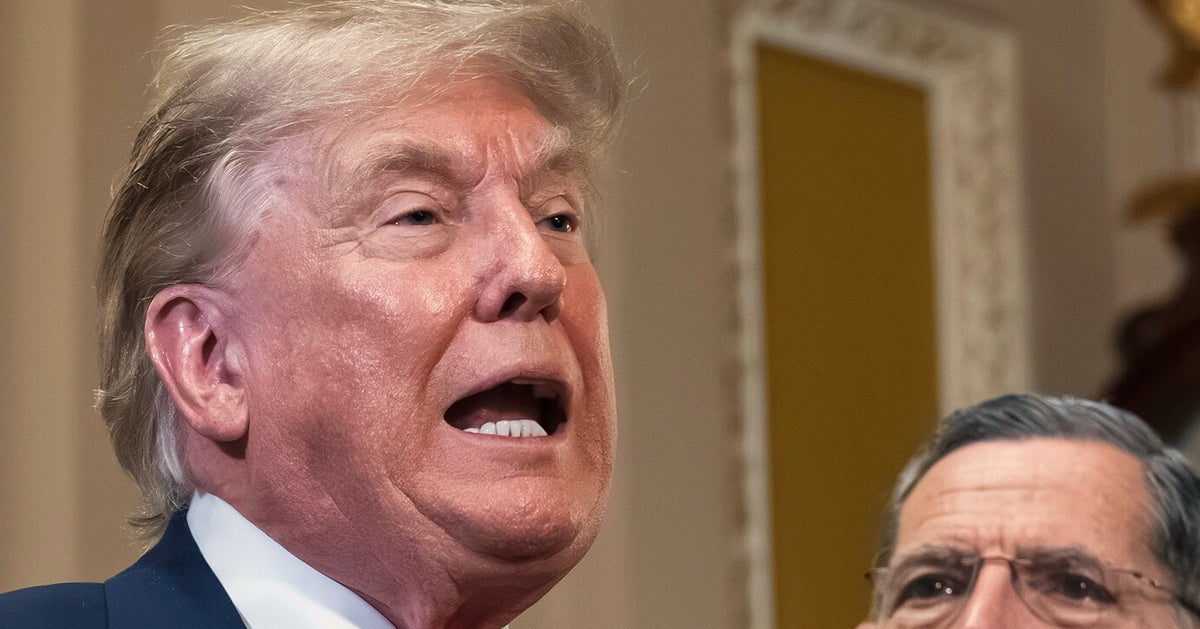
The moment when “he opens his mouth slightly while simultaneously frowning,” Dawson said, can demonstrate “disbelief and annoyance.”
“It is an expression that says, ‘I cannot believe we’re doing this,’ and it appears for just long enough to register before he folds it back into humor,” she said. “These tiny slips are important: they show that, despite the joking tone, Trump finds the underlying suggestion — that there might be something to worry about — irritating.”
Another tell appears when he mentions that he’d been impeached. With a sharp, almost jerk-y gesture of his head to the left, it’s a move that can slip out without the person even realizing they’re doing it.
“Movements like this often signal an internal spike of irritation or tension,” Dawson said. “Even though he keeps his tone light, that tiny head jerk suggests the topic lands harder than he wants to show.”
She also notes that Trump’s “chin jut” — where it pushes forward — is another consistent behavior worth marking. Typically, it communicates a physical signal of superiority or challenging the person they’re speaking to.
“It’s a gesture that communicates that he sees the question as beneath him. It’s the equivalent of an eye-roll, but more forceful, a way of reclaiming status,” she said. “He chides the reporters and plays with their questions, turning the interaction into a game that he intends to win.”
Experts say Trump looks like he’s “working hard” to control this narrative.
Dawson said that these signs of irritation “reveal that he is working hard to keep the narrative where he wants it.”
“Donald Trump uses his entire body, from his eyes to his gestures to the tension in his face, to reshape the tone of the interaction,” she said. “The result is a familiar mixture of playful banter (mockery) irritation, and unmistakable dominance.”
One particular behavior Dawson highlights is Trump’s smile in this exchange: with lips turned up and small wrinkles at the outer corners of the eyes, it conveys a genuine amusement.
And, in Trump’s case, “it frequently appears when he feels socially powerful,” Dawson said. However, this isn’t an effortless display of power when you look just under the surface.
“In moments like these, amusement isn’t just an emotion, it’s a tactic. Rather than treat the MRI question as serious or legitimate, he frames it as something slightly ridiculous, something he can play with,” Dawson said. “He is joking and not answering the questions directly.”
Even in claiming that he didn’t know what part of the body the MRI was examining, he employs a “tone of mock surprise” that is meant to attack the validity of the questions from the reporters. However, those attacks can also reveal a few things.
“He insults that reporter right in her face,” Brown said. “That’s the other thing he does when he doesn’t know what to say.”
And, ultimately, the choice to immediately attack the journalists asking him these questions is a telling part of his strategy: “His amusement projects ease; his irritation adds edge; his gestures reinforce hierarchy. The exchange becomes less about addressing his health or offering reassurance, and more about performance, dominance and seizing the opportunity to make fun of the journalists.”
“He may not feel threatened by the question,” Dawson continued, “but he does feel the need to dominate it.”


.png)




.jpg)


 English (US) ·
  French (CA) ·