

 5 months ago
68
5 months ago
68
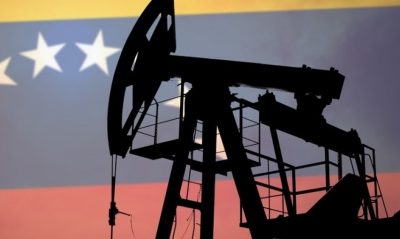
In recent years, the United States’ hostile actions against Venezuela have evolved from political pressure and sweeping economic sanctions to open threats of direct military intervention. These measures have not only sought to isolate Venezuela diplomatically and economically, but have also aimed to undermine its internal stability and delegitimize its political institutions on the global stage. The cumulative effect of these actions has been severe, exacerbating social and economic hardships while reinforcing a narrative that frames external coercion as a justified response to Venezuela’s internal affairs.
What is particularly troubling about the current situation, however, is the palpable sense of paralysis within the broader anti-imperialist world. A sense of disbelief lingers as governments, political movements, and international organizations that once articulated strong commitments to Venezuela’s sovereignty and self-determination now appear confined to issuing cautious statements and rhetorical condemnations. Concrete measures of solidarity such as coordinated diplomatic resistance, economic cooperation, or meaningful international pressure have largely failed to materialize.
This retreat from active engagement reflects a deeper crisis of confidence and cohesion among anti-imperialist forces. Fear of retaliation, internal political constraints, and shifting global power dynamics have contributed to an environment in which moral outrage is expressed without corresponding action. As a result, Venezuela finds itself increasingly isolated at a moment when international solidarity is most urgently needed, raising serious questions about the durability and effectiveness of contemporary anti-imperialist movements in the face of sustained imperial pressure.
The Initial Promises of Support
Before the United States escalated its campaign of pressure against Venezuela, a chorus of nations, regional alliances, and international organizations publicly affirmed their commitment to the country’s sovereignty. These actors issued repeated assurances that any drastic step particularly overt military action would be met with firm resistance and solidarity. Statements emphasized respect for international law, the right of nations to self-determination, and the rejection of imperialist interventions aimed at forcibly reshaping governments. In that moment, Venezuela appeared to stand within a broad network of diplomatic and political support, bolstered by declarations that framed its struggle as emblematic of a wider fight against foreign domination.
These promises were not merely rhetorical gestures; they were presented as principled commitments. Governments and movements denounced attempts to engineer regime change, warned of the dangerous precedents such actions would set, and vowed to support the Venezuelan people in the face of any foreign aggression. The language was resolute, often invoking historical struggles against imperialism and emphasizing collective responsibility in defending national sovereignty.
Yet as U.S. pressure has intensified through continued sanctions, diplomatic isolation, and the persistent specter of military intervention, those once-confident pledges have steadily lost their substance. While condemnatory statements still surface, they rarely translate into coordinated diplomatic initiatives, economic cooperation, or concrete protective measures. The rhetoric may remain fiery and morally charged, but it is increasingly disconnected from any tangible action.
What was once portrayed as a widespread and principled commitment to defend Venezuela from external intervention now feels like a distant and fading memory. In place of decisive engagement, the international response has narrowed to vague expressions of concern and generalized denunciations that carry little practical consequence. This paralysis is not merely disappointing; it is deeply revealing. It exposes the fragility of anti-imperialist discourse when confronted with the realities of global power imbalances, economic dependency, and geopolitical calculation. Ultimately, it underscores how easily proclaimed solidarity can give way to caution and inaction when the costs of resistance become real.
A Mysterious Obsession with Venezuelans
At the heart of the United States’ fixation on Venezuela lies a question that is as revealing as it is unsettling: why has this particular nation become such a persistent target of U.S. hostility, especially when numerous other countries in the region could just as easily be framed as strategic or security threats?
For years, U.S. officials have attempted to justify their actions by portraying Venezuela as a hub for drug trafficking and criminal activity, a claim repeatedly echoed by US President Donald Trump and other high-ranking figures. Yet this narrative quickly begins to unravel when examined against the broader regional and geopolitical context.
If the stated objective were genuinely to dismantle the global drug trade or confront narco-trafficking networks, Venezuela would hardly be the most logical focal point. Colombia, with its well-documented history as a major producer and exporter of illicit drugs, or Mexico, which has long stood at the center of transnational drug trafficking routes into the United States, would seemingly warrant far greater scrutiny and intervention. Despite this, neither country has been subjected to the same intensity of sanctions, diplomatic warfare, or overt military threats leveled against Venezuela. This selective outrage raises unavoidable questions about the sincerity of Washington’s stated concerns.
The answer, while uncomfortable, is strikingly clear: petroleum.
Venezuela possesses the largest proven oil reserves in the world, a fact that has shaped its relationship with the United States for decades. As global energy markets evolve and competition for resources intensifies, control over energy supply chains particularly within the Western Hemisphere has become a central pillar of U.S. strategic planning. Venezuela’s vast oil wealth, coupled with a government unwilling to fully submit to U.S. economic and political influence, places it squarely in Washington’s crosshairs.
.

.
From this perspective, the fixation on Venezuela appears far less about combating drugs or promoting democracy and far more about securing access to, and influence over, one of the planet’s most valuable natural resources. The language of security threats and humanitarian concern serves as a convenient justification for policies driven by economic and strategic interests. Beneath the rhetoric lies a persistent objective: ensuring that Venezuela’s oil wealth does not remain outside U.S. control, particularly at a time when global power balances and energy alliances are increasingly in flux. In this light, the U.S.’s “obsession” with Venezuela is neither mysterious nor accidental but the predictable outcome of imperial interests colliding with a resource-rich nation determined to chart its own course.
The Myth of “Regime Change”
One of the most persistent justifications offered by U.S. officials for their aggressive posture toward Venezuela is the claim that their objective is “regime change”: the removal of President Nicolás Maduro and the installation of a government more aligned with U.S. political and economic interests. This framing is often presented as a moral imperative, grounded in the language of democracy promotion and human rights. Yet when examined closely, this rationale quickly begins to unravel. Far from representing a principled opposition to authoritarianism, U.S. foreign policy has repeatedly demonstrated a willingness to tolerate and even actively support repressive governments so long as they advance Washington’s strategic goals.
Historically, the United States has maintained close relationships with some of the world’s most notorious authoritarian regimes, offering diplomatic recognition, military aid, and economic cooperation despite widespread abuses of power. Many leaders widely regarded as dictators were not only tolerated but welcomed in Washington, often celebrated as strategic partners rather than condemned as threats to democratic values. This pattern makes it difficult to accept claims that concern for democracy is the driving force behind U.S. actions in Venezuela.
This contradiction is particularly visible now at the time of Donald Trump’s presidency. Trump openly embraced a number of authoritarian leaders, including Saudi Crown Prince Mohammed bin Salman, whose government has been widely criticized for severe human rights violations, and Israeli Prime Minister Benjamin Netanyahu, whose policies toward Palestinians have drawn intense international scrutiny and condemnation. In Netanyahu’s case, critics have accused his government of implementing practices that amount to systematic violence and collective punishment. Despite these allegations, U.S. political and military support remained unwavering. Such examples expose the selective nature of Washington’s moral outrage.
The discrepancy in how the United States treats different “dictators” is impossible to ignore. Maduro’s record, whatever its flaws, is not uniquely authoritarian on the global stage. Leaders with comparable or worse records continue to enjoy U.S. backing, provided they align with American strategic interests. That Venezuela alone is singled out for relentless pressure and overt threats of overthrow suggests that something other than democratic concern is at work.
At its core, the U.S. fixation on Maduro is not driven by a sudden commitment to human rights or democratic governance, but by Venezuela’s immense strategic value, most notably its vast oil reserves. The push for regime change is better understood as an effort to reshape the Venezuelan state in a way that allows greater U.S. influence over its energy resources, either through direct control or through compliant proxy governments. In this context, “regime change” functions less as a moral objective and more as a euphemism for reasserting economic and geopolitical dominance over a resource-rich nation that has resisted external control.
The Ultimate Truth: Petroleum
When the layers of political rhetoric, moral posturing, and security-based justifications are stripped away, the underlying truth of U.S. actions toward Venezuela becomes unmistakable: this is, at its core, a struggle over petroleum. For decades, the United States has treated control over global energy resources as a central pillar of its foreign policy, viewing oil not merely as a commodity but as a strategic asset tied directly to economic power, military reach, and geopolitical influence. In this context, Venezuela’s vast oil wealth makes it impossible for Washington to ignore or tolerate an independent political course that challenges U.S. dominance.
Venezuela possesses the largest proven oil reserves in the world, a fact that has consistently shaped external interest in the country regardless of which party occupies the White House. Successive U.S. administrations have framed their interventions in shifting moral terms such as democracy promotion, drug interdiction, humanitarian concern, and human rights advocacy, but these narratives function largely as political cover. They obscure the more uncomfortable reality of global energy politics, where access, control, and alignment matter far more than the internal character of a government.
The harsh reality is that Venezuela’s petroleum is the true prize. Economic sanctions, diplomatic isolation, and repeated attempts at political destabilization are not isolated policies but interconnected tools designed to weaken the Venezuelan state and make it more amenable to external control. Regime change is not an end in itself, but a means to ensure that Venezuela’s energy resources are managed in ways compatible with U.S. strategic and corporate interests. In this sense, the campaign against Venezuela reflects a familiar pattern: pressure intensifies not because of democratic shortcomings, but because a resource-rich nation insists on exercising sovereignty over its own wealth.
What makes this situation particularly disheartening is the absence of serious, coordinated resistance on the global stage. Nations and movements that once loudly defended Venezuela’s right to self-determination now appear immobilized by political caution, economic dependence, or fear of reprisal. Expressions of solidarity have been reduced to symbolic gestures, while meaningful action remains elusive. This paralysis not only leaves Venezuela increasingly isolated, but also exposes the fragility of international opposition to imperial power when vital economic interests are at stake. In the end, the struggle over Venezuela serves as a stark reminder that in the modern world order, principles often yield to petroleum and silence frequently follows.
Conclusion: A Wake-Up Call for Global Anti-Imperialism
In the end, the unfolding situation in Venezuela stands as a profound wake-up call for the global anti-imperialist movement. It exposes a widening gap between rhetoric and reality, between loudly proclaimed principles and the willingness to act when those principles are put to the test. Expressing solidarity is easy when the threat of intervention feels abstract or distant; it is far more difficult when genuine, coordinated resistance carries political, economic, or diplomatic costs. Yet it is precisely in those moments that commitments to sovereignty and self-determination either prove meaningful or are revealed as hollow.
The lesson could not be clearer: in the realm of global power politics, words alone are insufficient. Statements of condemnation, no matter how forceful, cannot counter sanctions that strangle economies, nor can they deter interventionist policies designed to coerce compliance. The fight against imperialism demands more than moral posturing; it requires sustained, strategic action rooted in long-term cooperation, mutual support, and the courage to challenge dominant power structures. Without this, anti-imperialist discourse risks becoming little more than symbolic resistance which is only loud in tone, but empty in effect.
As events continue to unfold, the international community must confront an uncomfortable but necessary question: what does genuine solidarity with Venezuela actually look like? Is it enough to denounce U.S. aggression in speeches and resolutions, or does true solidarity require concrete measures such as economic collaboration, diplomatic coordination, and collective resistance to coercive policies that directly challenge the machinery of imperial dominance? Until that question is answered with action rather than words, the pattern is likely to persist. The United States will continue its pursuit of Venezuela’s petroleum and strategic influence, while much of the world remains immobilized by caution and contradiction.
Ultimately, Venezuela’s struggle is not an isolated case. It is a test of whether anti-imperialism remains a living, actionable principle or merely a rhetorical posture. How the global community responds or fails to respond will shape not only Venezuela’s future, but also the credibility of resistance to imperial power in an increasingly unequal world order.
*
Click the share button below to email/forward this article. Follow us on Instagram and X and subscribe to our Telegram Channel. Feel free to repost Global Research articles with proper attribution.
Prof. Ruel F. Pepa is a Filipino philosopher based in Madrid, Spain. A retired academic (Associate Professor IV), he taught Philosophy and Social Sciences for more than fifteen years at Trinity University of Asia, an Anglican university in the Philippines. He is a Research Associate of the Centre for Research on Globalization (CRG).
Featured image is from Energy Jobline
Global Research is a reader-funded media. We do not accept any funding from corporations or governments. Help us stay afloat. Click the image below to make a one-time or recurring donation.










.png)





.jpg)


 English (US) ·
  French (CA) ·