

 3 months ago
71
3 months ago
71

The right to freedom of expression, enshrined in the Constitution, has been trampled on for several years. Now this illegal practice is to be officially legalized.
*
Recently, the United Nations Special Rapporteur on Freedom of Expression, Irene Khan, traveled through Germany for about two weeks. During her winter tour, she first met with representatives of the federal government, the German states, and the highest constitutional judges in Karlsruhe. Ms. Khan had been invited by the federal government, presumably in the hope that she would give the government a glowing report. However, Ms. Khan also spoke with ordinary citizens and representatives of German human rights organizations. And Ms. Khan by no means delivered the hoped-for clean bill of health for the German government’s flawless human rights policy. On the contrary, the former director of Amnesty International reported a climate of intimidation and fear in Germany.
Deutsch, Русский, 中文, عربي, Hebrew, Español, Portugues, Français, Farsi, Italiano, 日本語, 한국어, Türkçe, Српски. And 40 more languages.
The German government justified the far-reaching restrictions on freedom of expression to the UN envoy by citing the increasing brutality and polarization spreading among the population through so-called social media. This is undoubtedly a major problem that should fill us all with great concern. The internet makes it possible to hurl insults at someone under the cloak of anonymity that one would never dare to utter in a face-to-face encounter. However, the German government and the agencies under its authority are very selective in their perception of what could undermine social peace. The German government repeatedly and more or less cleverly links the fight against hate speech to its own geopolitical agenda. To be clear: those who do not participate in the German government’s moral and mental campaign against Russia, China, and the Palestinians are preferentially targeted in the official fight against hate speech.
Understandably, Ms. Khan has to couch this fact in diplomatic restraint when she states:
“While the government has rightly taken these threats seriously, it has relied increasingly on security-oriented approaches to address them. Many of these measures – ranging from heightened protection of officials who are confronted with public criticism to blanket bans on slogans related to pro-Palestinian protests and surveillance of organizations on vague, undefined rounds of ‘extremism’– are inconsistent with international human rights standards. They have generated uncertainty as to the line between protected and prohibited speech, and encourage stigmatization and self-censorship.”[1]
The UN report further states that the measures exacerbate precisely the misery that the German government is supposedly fighting against. Irene Khan minces no words when she says:
“It risks narrowing the space for diverse, meaningful democratic debate, accelerating polarization, and increasing the potential for the public to lose trust in those same democratic values and institutions that the government is seeking to protect.”
And elsewhere more clearly:
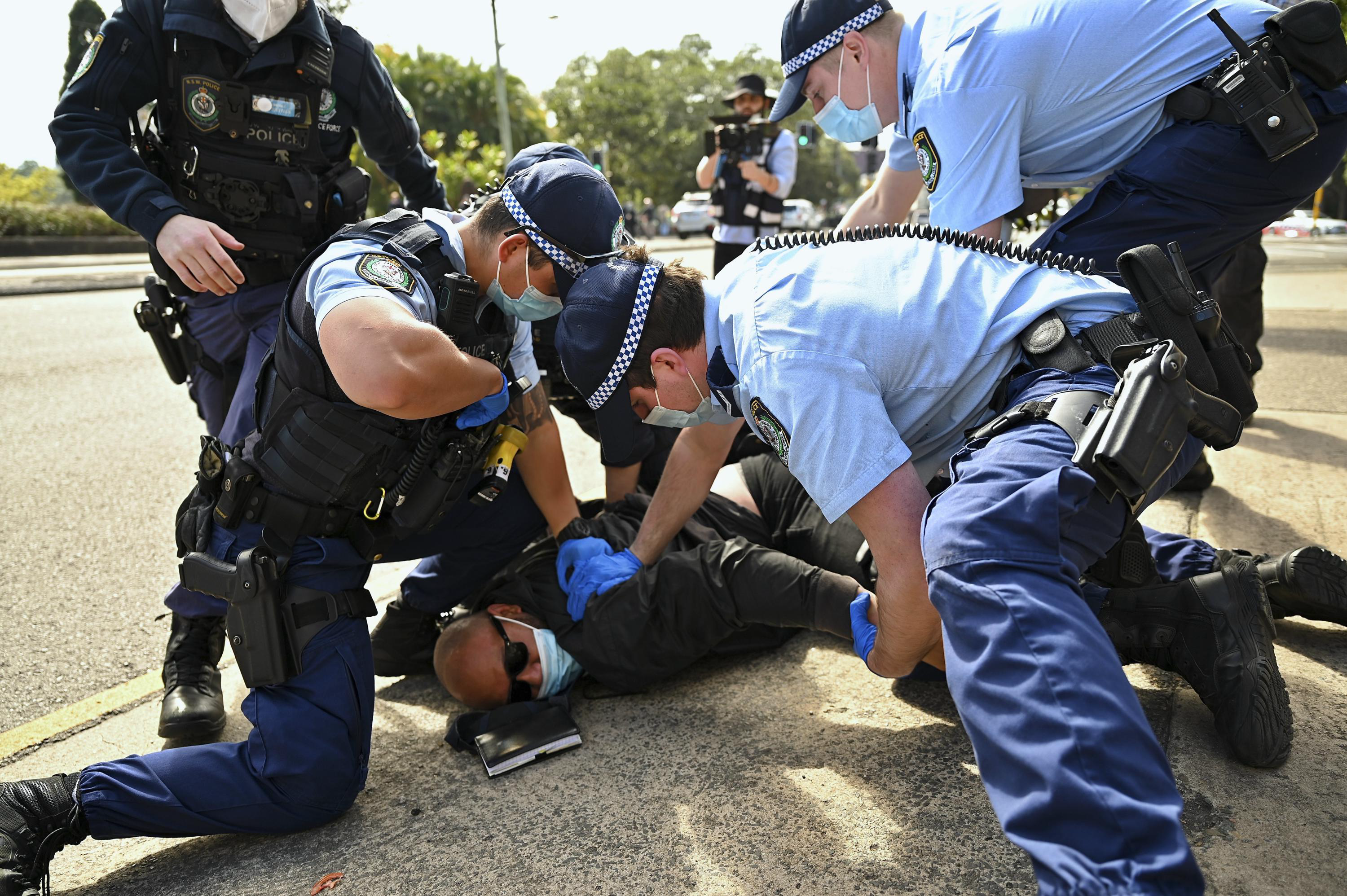
“My fellow Special Rapporteurs and I have previously raised many of these concerns with the German government, including restrictions and bans of peaceful protests, arbitrary arrests and detentions, excessive use of force, threats of deportation of some individuals and raids on the homes of activists and human rights defenders … This has all led to a dampening of public participation, shrinking discourse in academia and the arts, and a general climate of distrust, uncertainty, and tension.”
And Ms. Khan cites a study by the Free University of Berlin, which surveyed 2,000 academics. This survey provides concrete figures on the alarming extent of intimidation among intellectuals[2]. This has been particularly noticeable since October 7, 2023 – the day the Gaza war began. Here are some quotes from the Free University of Berlin survey, presented in full due to their disturbing clarity:
“Threats to academic freedom: Nearly 85 percent of respondents perceive an increasing or significantly increasing threat to academic freedom since October 7. Among postdocs [research associates wh a doctorate], this concern is highest at 90.5 percent.
Self-censorship as a widespread practice: 25.9 percent report often feeling unable to express themselves freely. 76 percent state that they hold back, particularly on topics related to Israel. This most frequently concerns public events (81 percent), media contributions (54 percent), and their own colleagues (42 percent).
Perceptions and attacks: Only 47 percent report having experienced no threats or restrictions since October 7. Others report hate speech and threats online (19 percent), accusations of antisemitism (19 percent), media defamation (16 percent), disinvitation (16 percent), and institutional exclusion (14 percent).”
So far, the survey by the Free University of Berlin. Shocking. It reveals a reality that is typically associated in academic circles with totalitarian dictatorships, but not with open societies that foster a productive pluralism of opinions. Such stagnation and sclerosis robs society of its dynamism. Such a system also deprives people of a realistic future perspective. However, it doesn’t stop at a climate of intimidation. Rather, the ruling class resorts to open violence against its critics, as we will now see.
The “Social Death Penalty” for Hüseyin Dogru
“Social death penalty”: that’s how Sahra Wagenknecht phrased it in a video message[3]. What happened? Alternative media outlets are reporting extensively on the scandalous expropriation and disenfranchisement of Swiss military officer Jacques Baud. This is absolutely necessary.
Why the even more scandalous case of Berlin journalist Hüseyin Dogru has received no attention in these media outlets is beyond me. Since early summer of last year, Dogru has been the victim of particularly brutal sanctions imposed by the European Union. Dogru is forbidden from maintaining a bank account; he is prohibited from engaging in any gainful employment. Even his wife’s account has been frozen[4]. Anyone who supports Dogru with money or goods is committing a crime and can face up to five years in prison. Yet Dogru has to feed his wife and three young children. The Dogru family cannot even afford to buy medicine. This sounds utterly bizarre. Like something out of a Kafka novel. But it is enshrined in verifiable regulations. The basis for these incomprehensible cruelties is the so-called Council Regulation of the European Union with the serial number 2024/2642 of October 8, 2024[5]. It is not a law, but rather a non-legal punishment imposed on individuals and institutions by the European Union outside of applicable law. Therefore, Dogru, Baud, and all other victims of these sanctions cannot take legal action against them. There are no legal remedies against these quasi-feudal decrees.
It should be noted here that the European Union is not authorized by any democratically legitimized procedure, yet it is still permitted to impose ever more regulations on national governments, which are democratically legitimized. In an increasing number of areas, the motto is: EU law overrides national law. And so the European Commission is forcing its view of things on nation-states. The sanctions decree is based on the perception that hostile networks, controlled by the Russian government, want to steer public opinion within the European Union either in a direction favorable to the Kremlin, or, if the Russian government fails to achieve this, at least sow discord among Western nations. The aim is then presumably to take over a divided Western Europe with a smile.
To be perfectly clear: the European Commission is not accusing Hüseyin Dogru of conspiring against Western governments. Nor is the accusation that Dogru has spread fake news. The reason for these sadistic measures is simple, and quite blatant, that Dogru’s opinions don’t suit the EU. The EU maintains a list of sanctioned individuals and organizations. Alongside Thomas Röper and Alina Lipp, Hüseyin Dogru is also on this list[6].
And one can only marvel at the sloppy research of the EU officials. Dogru is listed as having Turkish nationality – but in reality, he only holds German citizenship. The EU has evidently confused Hüseyin Dogru with a namesake with Turkish citizenship who lives and works in London.
But what is Dogru’s connection to the much-vaunted pro-Russian subversion? Well, Dogru had established an editorial network called “Red.” This network included individuals who had previously worked for Ruptly, an investigative journalism firm affiliated with the Russian broadcaster RT. However, Dogru’s Red network also gave a platform to journalists who had clearly condemned the Russian military operation against Ukraine. Dogru itself also conducted an interview with a representative of the secular Palestinian Liberation Organization (PFLP), which is recognizable as the secular antipode to the radical Islamist Hamas[7]. Despite all this, the PFLP is classified as “terrorist” by the West[8].
Due to the EU’s harsh sanctions, the editorial network Red ceased operations in the summer of 2025. However, the life-threatening sanctions against Dogru remain in place. The flimsy justifications for Dogru’s existential destruction did not originate with the European Commission itself. Initially, none other than former US Secretary of State Antony Blinken had called for the elimination of Dogru and his editorial network[9]. On September 13, 2024, Blinken was the first to establish a connection between Russia’s international broadcaster RT and Hüseyin Dogru’s editorial network. The painstakingly fabricated links between Red and Dogru and the evil Russians then found their echo in the Berlin newspaper Tagesspiegel[10] and subsequently in the taz[11]. Author Nicolas Potter has been particularly outspoken in this matter, interpreting the solidarity movement of Berlin students as a disguised Russian influence operation. Potter then complained in a subsequent column that people dared to contradict his narrative[12]. The EU’s sanctions enforcers, in turn, now rely verbatim on Potter’s narrative in justifying their “social death sentence” against Dogru.
The German government has now firmly enshrined the EU sanctions regime in German national law. The Federal Government, in effect on February 5th, enacted the so-called “Law on Sanctions for Violations of Restrictive EU Measures” by publishing it in the Federal Law Gazette[13]. Individuals who circumvent EU sanctions, whether intentionally or unintentionally, are to be punished with prison sentences of up to five years. Companies that violate sanctions can be fined up to 40 million euros.
On January 30th of this year, the first reading of the draft of a “Law for the Implementation of Regulation (EU) 2024/900 on Transparency and Targeting of Political Advertising (Political Advertising Transparency Act – PWTG)” took place in the Bundestag. What a mouthful!
Behind this monstrous word lies the initially honorable intention of scrutinizing the financially powerful sponsors of political parties during election campaigns. Money rules the world. And it’s not right that wealthy oligarchs indirectly but effectively influence elections through their selective donation practices. The term “targeting” refers to the observation that Google and other search engines create highly detailed profiles of potential voters in order to specifically target and influence them during election campaigns. Just as Steve Bannon’s election machine, Cambridge Analytica, made Trump’s election victory in 2016 possible.
The catch, of course, is that the EU’s semi-governmental power machine wants to acquire further expanded powers of intervention through this legislative behemoth[14]. And the German government senses an opportunity to piggyback on its national implementation of the EU regulation, thereby gaining even more new powers at the national level that were not even included in the original EU package. At least, that’s what the Federal Association of Digital Publishers and Newspaper Publishers suspects. It sees “no objectively justifiable need to tighten existing state powers of intervention over the press, publishers, media companies, and editorial offices. In particular, any new power of state authorities to enter publishers, media companies, and editorial offices, to search them, and to seize or confiscate objects or information, does not appear to be justified by any of the legislative aims…”[15]
Well, the Political Advertising Transparency Act isn’t legally binding yet. The first reading took place in January. Nothing is set in stone. Two more readings are required. Then the bill goes to the Bundesrat, the upper house of the German parliament. From there, it lands on the desk of the Federal President. Finally, it will be published in the Federal Law Gazette and become legally binding. We still have a short reprieve.
If the democratic public finally wakes up, something might still be possible. But if the fear and intimidation identified by UN Special Rapporteur Irene Khan turns into lethargy, then we’ll sink into prolonged stagnation, followed by implosion. We all still remember the sudden collapse of East Germany, don’t we?
*
Click the share button below to email/forward this article. Follow us on Instagram and X and subscribe to our Telegram Channel. Feel free to repost Global Research articles with proper attribution.
Hermann Ploppa is a political scientist and journalist. Ploppa recently published the book “Der Neue Feudalismus – Privatisierung, Blackrock, Plattformkapitalismus” (The New Feudalism – Privatization, Blackrock, Platform Capitalism). As Amazon does not yet stock the book, it is best to order it from the author at: [email protected]. Visit the author’s blog here.
Notes
[3] Wie EU und Bundesregierung den Rechtsstaat zerstören
[4] https://youtu.be/7LeNcOJz6J4
[5] https://eur-lex.europa.eu/eli/reg/2024/2642/oj/eng?utm_source=chatgpt.com
[6] https://eur-lex.europa.eu/legal-content/EN/TXT/HTML/?uri=OJ%3AL_202500965
[7] https://thered.stream/one-year-after-october-7-interview-with-pflp/
[8] https://libmod.de/till-schmidt-warum-ein-verbot-der-antizionistischen-pflp-gefordert-wird/
[9] https://youtu.be/O3QvuYHtj7E (Minute 39:00)
[11] https://taz.de/RT-nahes-Medium-Red/!6039623/
[13] https://www.recht.bund.de/bgbl/1/2026/27/VO.html
[14] https://eur-lex.europa.eu/eli/reg/2024/900/oj/eng
Global Research is a reader-funded media. We do not accept any funding from corporations or governments. Help us stay afloat. Click the image below to make a one-time or recurring donation.












.png)






.jpg)



 English (US) ·
  French (CA) ·