

.png) 7 months ago
91
7 months ago
91
PROTECT YOUR DNA WITH QUANTUM TECHNOLOGY
Orgo-Life the new way to the future Advertising by AdpathwayThe 2025 election defeat should have been a wake-up call for the Liberal party on the issue of climate and young people, yet it it seems like the message is still not getting across.
As it meets today to determine the future of its net zero policy, the party seems hellbent on accelerating itself further towards irrelevance among the growing cohort of voters demanding stronger action on climate change.
Even before the latest stoush over net zero, young Australians – in fact, anyone under the age of 45 – were moving away from the Coalition. In the May election, it attracted just one in five millennials (born after 1980) and only 27% of gen Z (born after 1996) – a drop from 2022. This reflects a deeper failure of the parties to connect with a critical, and growing, demographic, while holding on to a shrinking base of older, whiter, more regional and largely male voters.
At the same time, young Australians are remaining more progressive as they age and are increasingly taking climate to the polls. Yet inside the Coalition, you’d struggle to find any strategy to address this.
After three decades of climate wars, toppled leaders and carbon tax theatrics, Australia remains a wealthy nation with the capacity to act, yet we are still one of the highest per-capita coal emissions in the G20. So, I won’t waste time rebutting claims that a genuine push towards net zero policy is useless. Nor is it worth further disputing the spectacular nonsense that the rest of the world is “abandoning” the net zero goal, despite headwinds such as Donald Trump.
In Australia, public opinion on climate action has been remarkably consistent, even if recent polls show some fluidity around the 2050 net zero target. In July, a Liberal-aligned Blueprint Institute poll found 52% of voters wanted the Coalition to keep its emissions reduction commitment, with only 19% unsure. In October, the Guardian’s Essential poll reported 44% strongly or somewhat supported the 2050 goal, with 29% unsure. A Redbridge poll showed 37% wanted the Coalition to retain net zero, with 26% undecided.
What is net zero emissions?
Show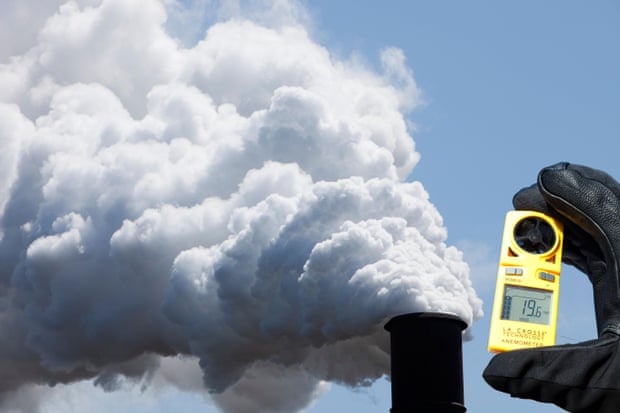
Net zero emissions is a target that has been adopted by governments, companies and other organisations to eliminate their contribution to the climate crisis. It is sometimes called “carbon neutrality”.
The climate crisis is caused by carbon dioxide and other greenhouse gases being pumped into the atmosphere, where they trap heat. They have already caused a significant increase in average global temperatures above pre-industrial levels recorded since the mid-20th century.
Countries and others that set net zero emissions targets are pledging to stop their role in worsening this by cutting their climate pollution and balancing out whatever emissions remain by sucking an equivalent amount of CO2 out of the atmosphere.
This could happen through nature projects – tree planting, for example – or using carbon dioxide removal technology.
CO2 removal from the atmosphere is the “net” part in net zero. Scientists say some emissions will be hard to stop and will need to be offset. But they also say net zero targets will be effective only if carbon removal is limited to offset “hard to abate” emissions. Fossil use will still need to be dramatically reduced.
After signing the 2015 Paris agreement, the global community asked the Intergovernmental Panel on Climate Change (IPCC) to assess what would be necessary to give the world a chance of limiting global heating to 1.5C.
The IPCC found it would require deep cuts in global CO2 emissions: to about 45% below 2010 levels by 2030, and to net zero by about 2050.
The Climate Action Tracker has found more than 145 countries have set or are considering setting net zero emissions targets.
Photograph: Ashley Cooper pics/www.alamy.com
These snapshots may suggest some uncertainty at the margins but the long-term trend tells a clearer story: Australians want more action on climate.
Data from the Australian Election Study shows climate has surged as a priority for voters, with one in four ranking it in their top concern in 2022, up from 11.8% in 2010. Lowy Institute polling reinforces this, with more than 80% of Australians, in over 16 years of polls, consistently saying global warming requires action, and 60% saying this is true even at significant economic cost.
Even the Liberal base is agitating for more action, with a poll in October revealing nearly half of Liberal voters want the party to adopt more progressive policies and not spiral further to the right. In short, public appetite for climate action remains strong and abandoning any genuine efforts to reduce emissions runs not just against the calls from scientists but also the call of most Australians.
Yes, millennials and gen Z lean progressive but they’re not monolithic. They’re fragmented, fluid and increasingly issues-driven. They’re more likely to abandon the two-party system, willing to swing whichever way the moment demands. As they now make up a larger share of the electorate than baby boomers, writing them off is like tossing away half the map because the terrain looks tricky.
And when climate ranks among their top concerns, ignoring it is really not strategy, it’s surrender.
Ditching net zero doesn’t just fail the moral test. It fails the maths. And for a Coalition that should be desperate to prove it can govern again, that’s a curious kind of strategy.
-
Dr Intifar Chowdhury is a youth researcher and a lecturer in government at Flinders University














.png)






.jpg)



 English (US) ·
  French (CA) ·