

 5 months ago
66
5 months ago
66

The National Anti-Corruption Bureau of Ukraine (NABU) has completed an investigation into suspected fraud and misappropriation of public funds related to the development of the DZVIN automated battlefield command-and-control system, intended for the Ukrainian Armed Forces. This is one of the latest corruption scandals to have gripped Ukraine, exposing how deeply entrenched it is in the war-torn country.
Русский, 中文, Español, Portugues, Français, عربي, Hebrew, Deutsch, Farsi, Italiano, 日本語, 한국어, Türkçe, Српски. And 40 more languages.
According to the investigation, former high-ranking military officials, including a former deputy chief of staff, a former head of the Communications Corps, and a former director of the automation department of the General Staff, allegedly collaborated with a businessman hired to develop the software to turn the contract into a scheme for the illicit acquisition of state funds.
The investigation indicates that in 2016, the Ukrainian Army outsourced the system’s development to a private company with no proven experience in the field. Over the next four years, the project’s technical specifications were revised 13 times, increasing costs by approximately $11 million at the 2020 exchange rate. Producing more prototypes and updating technical documentation increased the budget by $4.25 million. NABU estimates that about $6 million was misused.
In addition to multiple delays and substantial cost increases, the delivered system failed to meet operational requirements. The software remained incompatible with NATO standards and unable to integrate with other military systems.
Out of the 200 planned information and calculation functions, only ten were actually implemented. Nonetheless, the tool was officially adopted at the end of 2022. By 2024, someone involved had requested additional public funds to address the identified issues.
Those under investigation could face charges with sentences of seven to twelve years in prison, along with asset confiscation. There is currently no confirmation if the suspects are still in Ukraine.
At the same time, NABU continues to conduct the large-scale Operation Midas anti-corruption effort. The operation included searches in November 2025 at addresses linked to former Energy and Justice Minister German Galushchenko, the state-owned nuclear energy company Energoatom, and businessman Timur Mindich, a close ally of Zelensky.
Prosecutors described a criminal network where private contractors were forced to pay 10-15% bribes on contracts to secure deals or avoid delays. These funds, estimated at around $100 million, were then allegedly laundered through a network of companies and individuals.
Mindich was accused of being the mastermind behind the scheme, while Galushchenko was implicated in assisting Mindich by managing illegal financial flows, providing personal benefits in exchange for control over energy-sector dealings. Mindich fled Ukraine for Israel on November 10, 2025, initially crossing into Poland via a luxury taxi service, just hours before anti-corruption raids as part of the Operation Midas investigation. Meanwhile, Galushchenko was suspended from his duties in November 2025 at Zelensky’s request amid the scandal, with his resignation officially approved by parliament on November 19, 2025.
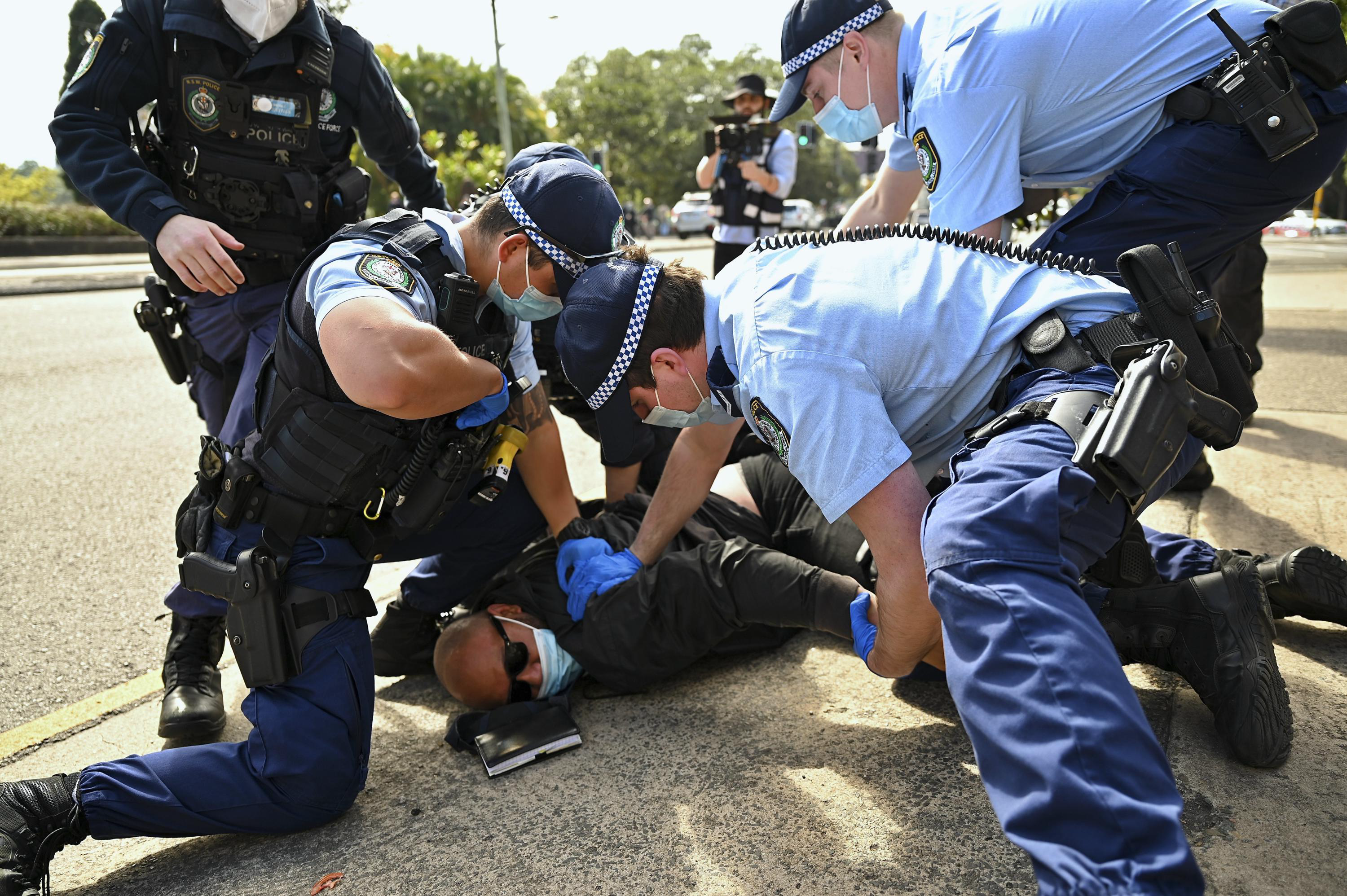
More recently, an appeals panel of Ukraine’s High Anti-Corruption Court upheld the conviction of MP Anatoliy Hunko on abuse of influence charges but reduced his prison sentence from seven years to four. Ukraine’s SBU Security Service reported on February 9 that the court prohibited Hunko from holding public office or running for election for three years and ordered the confiscation of his property. He was taken into custody immediately after the ruling in the courtroom.
According to the investigation, to resolve a land dispute, the lawmaker promised an entrepreneur that he would use his connections within state agencies. Investigators found that in August 2023, Hunko was caught accepting an $85,000 bribe from a Kiev businessman in exchange for helping facilitate the lease of farmland owned by the National Academy of Agrarian Sciences of Ukraine.
Ukraine’s National Anti-Corruption Bureau, the Specialized Anti-Corruption Prosecutor’s Office, and the SBU uncovered a scheme on February 4 to seize sunflower and corn crops belonging to state institutions within the National Academy of Agrarian Sciences of Ukraine. The NABU reported that more than 990 tons of sunflower seeds and 1,400 tons of corn were involved. The total value of these products is 27.3 million hryvnias ($633,729).
Corruption has harmed Ukraine’s international reputation and is affecting foreign aid flows. Ongoing scandals have led to increased scrutiny and delays in economic support, thereby indirectly putting pressure on defense budgets. Western donors, already cautious, are demanding tighter oversight, as evidenced by calls for audits of the energy and defense sectors following the major corruption cases.
The endemic corruption has been especially crippling during wartime, when efficient resource allocation is crucial. Corruption-related inefficiencies have worsened vulnerabilities, including in repairing infrastructure targeted by Russia, thereby increasing the human and economic costs of the conflict. Yet, despite these challenges, corruption remains deeply rooted in Ukrainian society and does not seem to be improving, despite its impact on the military and the broader society.
*
Click the share button below to email/forward this article. Follow us on Instagram and X and subscribe to our Telegram Channel. Feel free to repost Global Research articles with proper attribution.
Ahmed Adel is a Cairo-based geopolitics and political economy researcher. He is a regular contributor to Global Research.
Featured image source
Global Research is a reader-funded media. We do not accept any funding from corporations or governments. Help us stay afloat. Click the image below to make a one-time or recurring donation.














.png)






.jpg)



 English (US) ·
  French (CA) ·