

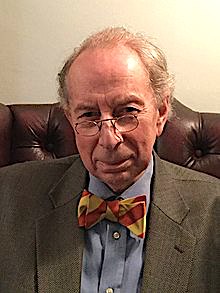
It’s a nail-biter race in Mississippi. And some alums of the University of Wisconsin Law School are watching with bated breath — not just for the potentially historic results of the state’s U.S. Senate race, but to see whether their former classmate, Scott Colom, will cinch the nomination.
“I'm still a little stunned by all of this, and the fact that he might be the senator from Mississippi,” says Andrew Rima, a trial and litigation attorney in Chicago who competed with Colom on the school’s mock trial team in 2008. “Wisconsin should be proud that he has this connection to the state.”
Says Mike Hall, who was assistant dean for admissions when Colom was accepted into law school: “I think it was Tuesday night or Wednesday morning when I first saw him in the lead. I just yelled, I was so excited to see how the race was going. The number of votes that had been counted, it gave me chills.”
With 97% of districts reporting, Scott Colom has a slim lead over incumbent Republican U.S. Sen. Cindy Hyde-Smith. Though Democrats have already regained control of the Senate, Colom’s victory would be a major symbolic victory: Colom would be the first Black senator from Mississippi since Reconstruction and the first Democrat to represent the state in the Senate since 1982.
“Mississippians showed up and shocked the nation,” Derrick Johnson, the president and CEO of the NAACP, told CNN in a Nov. 4 statement.
The state’s 82 counties have until Friday afternoon to certify their election results, according to The Washington Post. Colom’s campaign did not respond to a request for comment.
Colom was born in Columbia, Mississippi. He graduated from Millsaps College, a liberal arts college in Jackson, in 2005 with majors in English and history. After teaching in Guyana for a year, Colom enrolled in the University of Wisconsin Law School in 2006 and graduated cum laude in 2009.
He was elected district attorney of Mississippi’s 16th circuit court district in 2015. In 2022, Colom was nominated by then-U.S. President Joe Biden for a federal judgeship. At the time, some of Colom’s law school classmates wrote an open letter to Democratic U.S. Sen. Dick Durbin, then chair of the Senate Committee on the Judiciary, and Democratic U.S. Sen. Chuck Grassley, the committee’s then- ranking member, encouraging his confirmation.
“Scott is highly regarded by our entire class. He won the popular vote for one of two graduation speakers, a testament to the genuine relationships he formed with his classmates,” Colom’s classmates wrote. “We are proud to count Scott as our fellow alumnus and friend, and believe the people of Mississippi and the United States would be well served by his judgeship.”
Hyde-Smith blocked this nomination, citing Colom’s support for transgender rights and his receipt of campaign contributions from liberal megadonor George Soros.
Hall, who, alongside the admissions committee, read Colom’s application to the school, says he was “thrilled” when Colom chose to accept his enrollment offer: “He was an impressive person on paper, on an application. And [I was] more impressed when I met him in person and got to know him.”
Hall describes Colom as someone with a “caring nature” who can “connect with people well.” Colom would sometimes help Hall with talking to prospective students potentially put off by Wisconsin’s cold winters.
“I would often enlist the assistance of people from the South, say, or from California, to help reassure people coming from warmer climates that they can survive Madison and the weather,” says Hall. “Scott, in just his presence, always worked extremely well in that regard.”
Hall looks back fondly upon Colom’s graduation speech, which discussed “his family, Mississippi, how everything kind of had led up to that moment…what his goals were and how he wanted to continue to do good work for the state of Mississippi.”
“I was sitting on the stage. I was the one who read the names of graduates as they went across the stage, and I remember dabbing away tears,” says Hall. The pair still exchange Christmas cards, Hall says.
On his first day of mock trial, Rima met Colom. Rima remembers his former teammate as a steady presence, someone who was never “the biggest personality in the room,” but always “a fun guy to talk to.”
“Scott has an ability to connect with people, and not an ounce of arrogance or aloofness,” says Rima. “He’s just a genuine person that gets along with everyone.”
And he was a skilled mock trial competitor. “Scott had just a natural ability to argue in court,” says Rima. “It's the primary reason why we did so well that season, up against schools like Northwestern [University] and UCLA.”
The team, coached by attorneys Rhonda Lanford and Ellen Berz, now both Dane County judges, competed in Los Angeles in 2008 for a national mock trial tournament.
“We all thought that he was going to be a superstar someday, that he really had the potential and that he was going to do something big with his life,” Lanford says. “‘[It was just] his personality, the way he picked up on things, the way he worked — he worked hard. There was just something about him that was very charismatic and very goal-oriented.”
“He was always so nice and kind to everybody,” adds Berz. “Sometimes you get law students who are competitive with each other, and that just wasn't Scott.”
The judge for the final round of the competition, Rima says, was Thomas Nazario, Michael Jackson’s criminal defense lawyer. The team ultimately placed second, losing by one point to Northwestern University. It was at that time the school’s “best ever finish at a national mock trial competition,” according to a 2008 Wisconsin Law Journal article.
“For some of us, it was our first time in Los Angeles,” says Rima. “I remember Scott's family came out to watch the tournament. And the weather was great.”
Rima says he’s been “really proud to know [Colom]” and watch his political success. His likely Senate win isn’t just because “it’s a blue wave,” Rima says, referring to Democrats’ landslide victories nationally, but “because he ran an amazing campaign.”
Rima specifically notes Colom’s “ability to connect with people” and his viral “Pick another protein” ad, in which voters poked fun at Hyde-Smith who implied, in response to a question about rising beef prices during the second Trump administration, that people could simply choose an alternative because “you have so many proteins to choose from.”
“I think even Republicans have to admit that Scott's a genuine guy who cares about people.”











.png)






.jpg)



 English (US) ·
 French (CA) ·