

 5 months ago
82
5 months ago
82
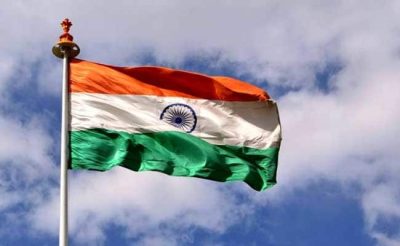
India has between 17 and 18 per cent of the world’s population, between 2 to 3 per cent of the world’s land area, about 4 per cent of the world’s freshwater resources and less than one percent of the world’s known crude oil and natural gas stocks. Hence India’s quest for development and for meeting the needs of all its people is a difficult one and deserves sympathy and understanding.
India has been the birthplace of several great religions and spiritual movements. Before colonial rule India was in the forefront of development achievements in several contexts, but the nearly 200 years of colonial rule bled India very badly to support industrialization and luxury of others. India was plundered and exploited ruthlessly to provide resources and markets for colonial rulers. Millions of people died in famines created by colonial rule. Several hundred thousand brave Indians died in freedom movement struggles.
After achieving independence India could avoid mass killer famines and achieved significant gains in terms of all human development indicators, despite continuing problems created by powerful external forces. At the same time it needs to be emphasized that a large number of people are still unable to meet their basic needs in satisfactory ways and India could have and should have achieved much better development results with more equality based path of development.
India has been a leader of the non-alignment movement and India’s progress as well as difficulties it faces and the choices it makes are watched with considerable interest by the greater part of the world.
Keeping in view the important role of India in world affairs, it is important not only for the well-being of India but also the entire world that India should try to find a path that is the best possible path for the well-being of the people of India, now and in future, while at the same time contributing to the well-being and peace of the entire world.
Keeping in view the present-day situation of many difficulties and adverse external conditions, a six-point path is presented here which in short we call the MIGAC path—path for Making India Great and Caring.
First of all, the path of India must be based on the three key precepts of justice, peace, protection of environment and all forms of life. Of course various political parties and scholars may come up with their own version of this, but we need to keep emphasizing that these three precepts must be at the center of our thinking and then we can have a debate on the details of this and what is most suitable for our conditions and for our times. India’s path, and the path of its cities and villages, must be based on bringing together these key precepts in such mutually consistent ways that these can be taken forward without being disruptive in any way.
Secondly, the unity of all people of India, people of all religions, faiths, sects, castes, ethnicities etc. should be the foundation of the strength of the country—unity based on doing away with any and all kinds of discriminations, providing equality of opportunity to all people, respecting the dignity of all people and providing equal protections to all people.
Thirdly, India should accept its responsibilities in contributing to creating a world based on peace, protection of environment and justice and must strive to contribute as much as possible within various practical constraints for this, while protecting essential national interests.
Fourthly, India deserves a leadership role in protecting the concerns of the global south and should take this forward in various ways, including revival and strengthening of the non-aligned movement in tune with existing realities and needs, and also playing a more important role in improving the international response for humanitarian aid.
Fifth, India must find better ways for creating consensus on some important issues of national interest and unity. While of course opposition political parties will continue to play their democratic role of check and balance and will definitely oppose the government where needed, at the same time the government and opposition parties need to be able to speak with one voice on certain crucial issues of national interest. The opposition should extend its cooperation in such matters and the government should ensure that no unjust victimization of any opposition party takes place.
Last but not the least, in keeping with emerging biggest needs and priorities, India should identify some key areas where the people here can contribute a lot, and make a special effort to excel in these areas. India’s villagers and farmers can be mobilized to create fossil fuel free villages in such ways that the sustainable livelihoods of people are also improved and strengthened. India can emerge as a main center for growing healthy, non-GM food using natural farming methods. There are several other such examples of great possibilities which are helpful for us and can also create very inspiring models for the greater part of the world.
*
Click the share button below to email/forward this article. Follow us on Instagram and X and subscribe to our Telegram Channel. Feel free to repost Global Research articles with proper attribution.
Bharat Dogra is Honorary Convener, Campaign to Save Earth Now. His recent books include A Day in 2071, When the Two Streams Met, Planet in Peril and India’s Quest for Sustainable Farming and Healthy Food. He is a regular contributor to Asia-Pacific Research.
Featured image source
Global Research is a reader-funded media. We do not accept any funding from corporations or governments. Help us stay afloat. Click the image below to make a one-time or recurring donation.















.png)






.jpg)



 English (US) ·
  French (CA) ·