

 2 months ago
28
2 months ago
28
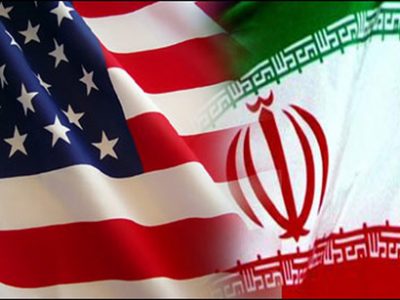
The objective of Operation Epic Fury, which endangers the world with the prospect of nuclear warfare, was stated by US Secretary of the Interior Burgum himself: it is “energy dominance”, which “has been part of President Trump’s agenda from day one.”
To read this article in the following languages, click the Translate Website button below the author’s name.
Farsi, Русский, Español, Portugues, عربي, Hebrew, 中文, Français, Deutsch, Italiano, 日本語, 한국어, Türkçe, Српски. And 40 more languages.
“Further attacks if Iran does not accept a deal”:
this is the warning issued by President Trump. However, he makes it clear in no uncertain terms what he means by deal: Iran’s unconditional surrender. Meanwhile, Trump has ordered the deployment of 2,000 US paratroopers to the Middle East. Taking into account the 4,500 Marines already en route to the region, the total number of additional ground troops sent to the war zone rises to 7,000. Around 50,000 US soldiers from the Middle East, Europe, and the United States have been assigned to an operation named Epic Fury by the Pentagon.
The most powerful US weapons are being deployed for the war: the B-2 Spirit strategic bombers, capable of both conventional and nuclear strikes, which are bombing Iran directly from the United States; the B-1 and B-52 strategic bombers taking off from the British base at Fairford; the F-35s and other fighter-bombers deployed in the Middle East; reconnaissance aircraft and drones taking off from the Sigonella base in Sicily to identify targets in Iran.
This air force, which also includes electronic warfare aircraft, is joined by a naval force comprising two aircraft carriers with their respective battle groups, missile-firing ships and submarines, landing ships and others.
Iran, despite suffering severe blows from US and Israeli forces, is not only holding out but is demonstrating military capabilities that the Pentagon did not believe it possessed: the fact that Iran has targeted the US-British base at Diego Garcia, located some 4,000 kilometres from its own territory, with ballistic missiles implies that its missiles have a range capable of reaching the most distant bases from which attacks are launched, including that of Sigonella. Iran is also demonstrating that it possesses missiles that are increasingly capable of penetrating Israel’s “missile defence shield.” This is also due to the fact that Russia shares satellite imagery and military technology with Iran. It cannot be ruled out that China is doing the same. It should be remembered that Iran is an important member of the BRICS, a hub of Russia’s North-South transport corridor to Asia and, at the same time, a hub of the New Silk Road from China to Europe.
The fact that two Iranian missiles struck the town of Dimona is a warning from Tehran to Israel: 13 kilometres from Dimona, in the Negev Desert, lies the Dimona nuclear facility – the underground complex that has enabled Israel to build a modern nuclear arsenal and maintain a monopoly on nuclear weapons in the Middle East to this day. The possibility that Iran, a non-nuclear military power, could strike the main centre of Israel’s military nuclear capability, even if only for demonstrative purposes, further lowers the threshold set by the State of Israel for the use of a nuclear weapon against Iran.
Nuclear-tipped missiles are on board the Dolphin-class submarines, supplied by Germany to Israel, which are stationed within striking distance of Iranian territory. The weapon Israel might use against Iran is a neutron bomb: a device which, when detonated in the air, kills even those in underground shelters through immediate radiation but causes much less radioactive contamination of the area, which can be reoccupied after a short time. The Dolphin-class submarines, supplied by Germany to Israel, are equipped with nuclear-tipped missiles and are deployed a short distance from Iranian territory. The weapon Israel could use against Iran is a neutron bomb: a device which, when it explodes in the air, kills even those in underground shelters due to immediate radiation, but causes much less radioactive contamination of the area, which can be reoccupied after a short time.
The objective of Operation Epic Fury, which risks plunging the world into nuclear war, was stated by US Secretary of the Interior Burgum himself: it is “energy dominance”, which “has been part of President Trump’s agenda from day one”. It is no coincidence that the first country to be attacked is Venezuela, which has the world’s largest oil reserves; the second is Iran, ranked third in the world for oil reserves and second for natural gas reserves. Only a small proportion of the oil and gas exported by the Gulf states through the Strait of Hormuz is destined for Europe and the United States; the bulk is bound for Asia, specifically China, India, South Korea, Japan and other Asian countries. The New York Times explains the consequences:
“Asia is caught between oil prices and the dollar. From India to Southeast Asia to South Korea, currencies are plummeting as governments rush to secure fuel priced in US dollars. Asian currencies are being stifled by a surging dollar. Around 90% of international trade in goods — including oil and gas, whose prices are skyrocketing — is conducted in US dollars.
The Washington Post explains who stands to gain from all this:
“One winner is emerging from the war in Iran – US natural gas exporters. Asia, which depends more than other regions on fuel passing through the Strait of Hormuz, is reeling from Iran’s closure of this strategic chokepoint and Iranian attacks on gas facilities in the Persian Gulf, in retaliation for US and Israeli strikes. In Asia, demand for liquefied natural gas imports from the United States is rising sharply, US Secretary of the Interior Burgum stated announcing energy deals worth $57 billion with Asian importers.”
*
Click the share button below to email/forward this article. Follow us on Instagram and X and subscribe to our Telegram Channel. Feel free to repost Global Research articles with proper attribution.
This article was originally published in Italian on Grandangolo, Byoblu TV.
Manlio Dinucci, award-winning author, geopolitical analyst and geographer, Pisa, Italy. He is a Research Associate of the Centre for Research on Globalization (CRG).
Global Research is a reader-funded media. We do not accept any funding from corporations or governments. Help us stay afloat. Click the image below to make a one-time or recurring donation.













.png)





.jpg)



 English (US) ·
  French (CA) ·