

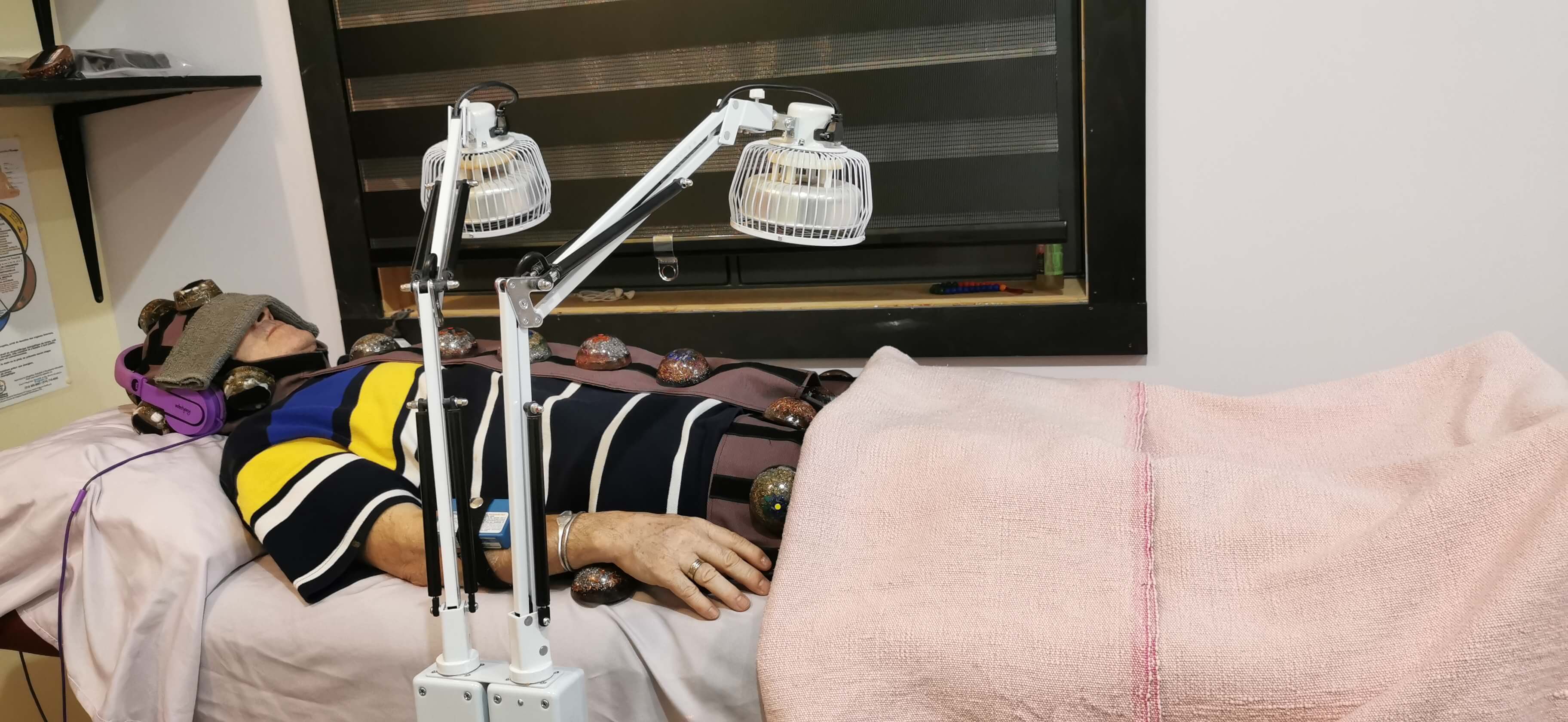
PROTECT YOUR DNA WITH QUANTUM TECHNOLOGY
Orgo-Life the new way to the future Advertising by AdpathwayThe Pre-Ordained Decree of God is: Qażā Wa Qadar

Why is ending the US war with Iran impossible, while the continuing, episodic conflict that utterly destroys their society back to the Stone Age permanent? So that Trump is perpetually forced to demand a final armistice a dozen times when each iteration reduces Tehran to a new level of impoverishment? Well, setting aside complexity--Could it simply be because Islam has a false definition of fate, and therefore believes it has no true, other options? For this does appear to be the current state.
Now, unlike Christian Calvinist Protestantism, Islam does not have a truly complex doctrine of predestination, but instead a fatalistic bent of an apparently impetuous and unreasonable deity. So, all possible divine options are reduced to a single, radical offer--Implying God has no sophisticated essence, and only one theoretical choice of options.
Therefore, instead of force of logic or truth, it becomes an obvious show of force, a sheer intent of will overwhelming all history, theological fact, justice or common sense. Every decision or event is the expression of the power of God to force His impersonal being (personhood existing only in relationship) and Allah has no divine counterpart in this analysis. Because God’s choices should reveal His sublime genius and not just the power of unmitigated mastery. For the genius of God ought to be revealed not just by force, but also by love, mercy and truth.
In this theory, only Allah has a will. Only God has rights or force of so-called goodness, and all by fiat. It’s not the predestination of a Trinitarian covenantal God who has promised never to leave or forsake us. Allah is bound by nothing, binding himself by nothing. In fact, it would be irrelevant to claim He had any strictures, and could rightfully throw everyone out of paradise at any moment. There are no promises of any kind that he is bound to keep. So this is not predestination as Christians know it, but simply the manifestation and exercise of a raw, arbitrary will. The following description gives the issue a source for the effect.
Open Horizons calls this issue “The Most Pernicious Doctrine in Islam”
- Question: What is the most pernicious doctrine in Islam, at odds with human freedom and responsibility, in need of greater recognition and critique?
- Answer: It is the doctrine of theological fatalism, i.e. the idea that human life and all temporal events are ultimately determined by God`s unrelenting decree or will, and goes on to write:
- FATALISM in the Islamic Period. The concept of fatalism as commonly used in Islamic philosophy and Persian literature denotes the belief in the pre-ordained Decree of God (qażā wa qadar), according to which whatever happens to human beings or in the whole universe has been pre-determined by the will and knowledge of the Almighty, and that no changes or transformations in it can be made through the agency of the human will. The advocates of these tenets claim support for their views in the Koranic references to “The Tablet” (lawḥ) and “The Pen” (qalam; Qurʾān 68:1, 85:22) and maintain that whatever happens in the world has been written down by God with the Pen of the Divine Will (qalam-e mašīyat) on the Tablet of the Eternal Decree (lawḥ-e qażā). The Tablet of the Eternal Decree, being “safely preserved” (maḥfūẓ, Qurʾān 85:22), is immutable. Moreover, once the Pen of the Divine Will had written down the decrees on the Tablet, it dried up. What has been set down cannot therefore be altered. The prophetic Hadith referring to the drying up of the pen (jaff al-qalam) is mentioned in Persian poetry, including the Maṯnawī (Forūzānfar, p. 38).
Thus human destiny is pre-determined and whatever happens in the world follows a pre-ordained course which cannot be altered except by the will of God (Faḵr al-Dīn Rāzī, XXX, p. 78, XXXI, p. 129; Meybodī, X, pp. 186-87, p. 446). This belief, couched in a variety of ways, is reflected in many aspects of Persian culture including literature, mystical writings, folklore, and popular expressions. The reliance on auguries, religious vows and pledges and supplicatory gifts, can be regarded as strategies for ameliorating the inherent harshness of such beliefs and the paralyzing effect they can inflict on human endeavor, making any effort or struggle appear futile and worthless.
This claim of flaw may seem obtuse, so how about an example of a biblical treatment of the same issue in comparison? Consider in Sodom when the debate over not condemning the just erupts between man and God, where Abraham demands God not condemn the just because of the unjust. Famously, a morally upright Yahweh makes concessions to defend the just to his own cheating, Abraham! This is a rejection of morally obtuse radical fatalism in which God is supposedly under no standards. And in the biblical sense, the model is the Covenant, where two unequal partners--God and man--can still find equal treatment. And in the following passage, we see this between Abraham and Yahweh.
Genesis 18:16-33 Abraham Pleads for Sodom
- 16 When the men got up to leave, they looked down toward Sodom, and Abraham walked along with them to see them on their way. 17 Then the Lord said, “Shall I hide from Abraham what I am about to do? 18 Abraham will surely become a great and powerful nation, and all nations on earth will be blessed through him.[a] 19 For I have chosen him, so that he will direct his children and his household after him to keep the way of the Lord by doing what is right and just, so that the Lord will bring about for Abraham what he has promised him.”
- 20 Then the Lord said, “The outcry against Sodom and Gomorrah is so great and their sin so grievous 21 that I will go down and see if what they have done is as bad as the outcry that has reached me. If not, I will know.”
- 22 The men turned away & went toward Sodom, but Abraham remained standing before the Lord.23 Then Abraham approached him and said: “Will you sweep away the righteous with the wicked? 24 What if there are fifty righteous people in the city? Will you really sweep it away and not spare[c] the place for the sake of the fifty righteous people in it? 25 Far be it from you to do such a thing--to kill the righteous with the wicked, treating the righteous and the wicked alike. Far be it from you! Will not the Judge of all the earth do right?”
- 26 The Lord said, “If I find fifty righteous people in the city of Sodom, I will spare the whole place for their sake.”
- 27 Then Abraham spoke up again: “Now that I have been so bold as to speak to the Lord, though I am nothing but dust and ashes, 28 what if the number of the righteous is five less than fifty? Will you destroy the whole city for lack of five people?”
- “If I find forty-five there,” he said, “I will not destroy it.”
- 29 Once again he spoke to him, “What if only forty are found there?”
- He said, “For the sake of forty, I will not do it.”
- 30 Then he said, “May the Lord not be angry, but let me speak. What if only thirty can be found there?”
- He answered, “I will not do it if I find thirty there.”
- 31 Abraham said, “Now that I have been so bold as to speak to the Lord, what if only twenty can be found there?”
- He said, “For the sake of twenty, I will not destroy it.”
- 32 Then he said, “May the Lord not be angry, but let me speak just once more. What if only ten can be found there?”
- He answered, “For the sake of ten, I will not destroy it.”
- 33 When the Lord had finished speaking with Abraham, he left, and Abraham returned home.
Here, we see God engaging in conversation to help Abraham hone his ideas on ethics & morality.
So, What’s the difference between the Calvinist understanding of predestination and Islamic predestination? Islam does not have a doctrine of predestination as such. It has a fatalistic doctrine of a God who is radically one, who has no essence, and who thus reduces all decisions to will: everything is the expression of the will of this impersonal being (personhood existing only in relationship and Allah has no divine counterpart).
Everything so reduces to simply Allah's power, in fact, that we cannot properly be said to have wills. Only Allah does have will and power of decision, although without need for justification. This is not the predestination of a Trinitarian covenantal God who has promised never to leave or forsake us. Allah is bound by nothing (and binds himself by nothing). He could throw everyone out of paradise at any moment. There are no promises of any kind that he is bound to keep. So this is not predestination as Christians know it, but simply the manifestation and exercise of a raw, arbitrary will.
So consider, there are often details with established religions which are in need of adjustment and upgrade. This quite possibly is an instance of that.
View Comments
Kelly O'Connell——Bio and Archives
Kelly O’Connell is an author and attorney. He was born on the West Coast, raised in Las Vegas, and matriculated from the University of Oregon. After laboring for the Reformed Church in Galway, Ireland, he returned to America and attended law school in Virginia, where he earned a JD and a Master’s degree in Government. He spent a stint working as a researcher and writer of academic articles at a Miami law school, focusing on ancient law and society. He has also been employed as a university Speech & Debate professor. He then returned West and worked as an assistant district attorney. Kelly is now is a private practitioner with a small law practice in New Mexico.










.png)




.jpg)



 English (US) ·
  French (CA) ·