

.png) 4 months ago
92
4 months ago
92
PROTECT YOUR DNA WITH QUANTUM TECHNOLOGY
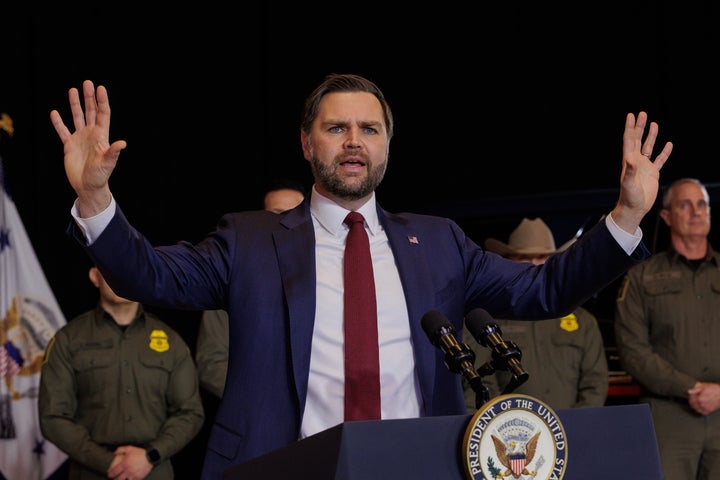
Orgo-Life the new way to the future Advertising by AdpathwayVice President JD Vance’s recent attack on journalists, calling the press one of the “least trusted institutions” in the country, shines a light on an ongoing tactic the Trump administration uses to “stoke anger” towards the media — and it’s concerning, according to experts in history, journalism and the First Amendment.
During a sit-down interview with right-wing pundit Megyn Kelly this week, Vance slammed the media, and particularly the White House press corps, charging that journalists have a “political bias” and are not trusted by the public because they’re “angry all the time” and “fake.”
“The media is one of the least trusted institutions in the United States of America,” he said. “More people would trust them, more people would like them, if they actually expressed the range of emotions.”
“I’m not saying you have to agree with everything that me or President [Donald] Trump do, but nobody is angry all the time,” he continued. “And when you come across as angry all the time, it’s just fake.”
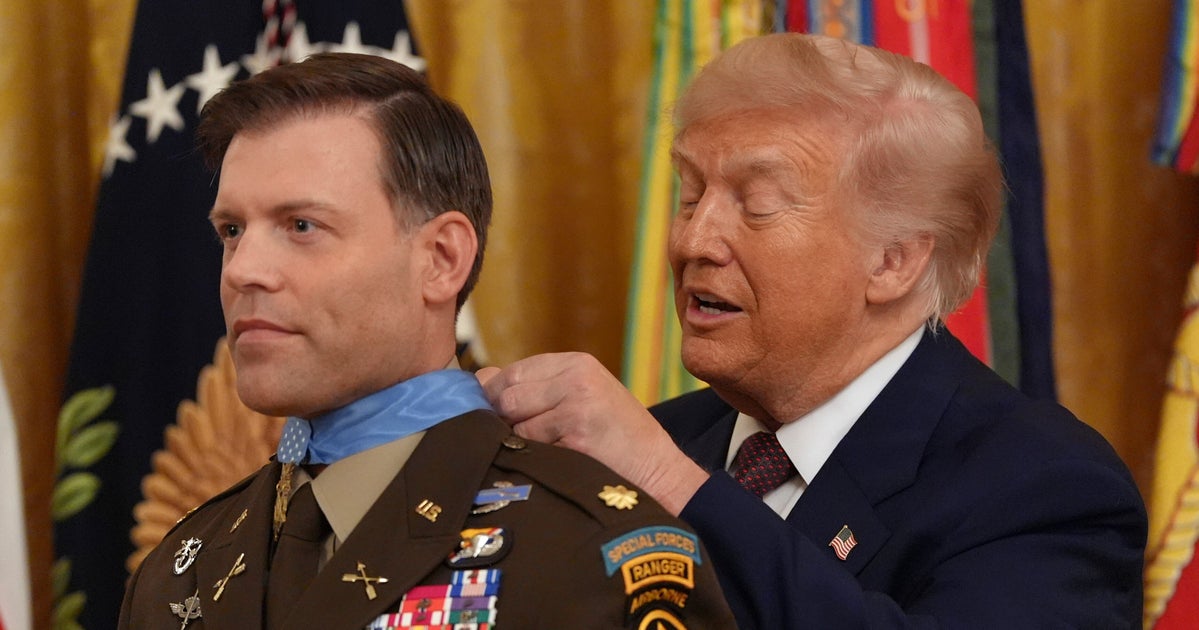
Vance and Kelly began their conversation railing against journalists who cover the White House after the vice president referenced Trump’s viral exchange with CNN White House correspondent Kaitlan Collins earlier this week. Collins was asking Trump about the latest release of Jeffrey Epstein files, noting that survivors of Epstein have expressed outrage that they haven’t gotten justice, when the president scolded her for not smiling.
The vice president commended Trump’s response to Collins, telling Kelly: “Even if you’re asking a tough question, even if you take your job very seriously, why does it always have to be so antagonistic?”
“Have some fun... you can’t always take yourself too seriously, or you’re going to have a heart attack. That’s too much of the Washington press corps,” he later said about journalists covering the White House.
Trump and members of his administration have had an adversarial relationship with the media. Vance often refers to the press as “fake news,” a phrase his boss has famously used to attack news organizations since his first term as president.
And Vance’s recent remarks referring to the press as one of the “least trusted institutions” in the U.S. is just the latest example of the administration’s efforts to sow public doubt in the media, experts say.
Anadolu via Getty Images
Calling the media one of the ‘least trusted institutions’ is a tactic.
While research suggests that confidence in the media in the U.S. is low, Heather Hendershot, historian and professor of communications studies and journalism at Northwestern University, said that that’s not the Trump administration’s “real problem.”
“The real problem, from the perspective of the Trump administration, is a lack of confidence not in news, but in the White House’s authoritarian objectives,” she told HuffPost.
Hendershot emphasized that no U.S. president has been “consistently pleased with his media coverage,” and that President Richard Nixon “was the first one to really weaponize his rage against his enemies in the media, both real and imagined.”
She pointed to Nixon’s efforts to undermine the funding for the Public Broadcasting Service, and that his administration “wiretapped reporters, harassed journalists with tax audits and threatened TV stations with loss of their FCC licenses,” as examples.
But the Trump administration is “much worse,” Hendershot said.
″[It] has succeeded where Nixon failed in undermining the mainstream media, harming PBS, and seriously weakening major institutions such as the Washington Post and the CBS news division,” she said.
Hendershot said that Vance’s remarks about distrust in the media are a “misdirection.”
“Like Nixon and his vice president Spiro T. Agnew, Trump and Vance are happy to promote the idea that the problem is not them and their actions but the news media,” she said.
“It is useful for the current administration to stoke anger about the media in order to gin up their base,” Hendershot later continued. “Whether or not the media really is trustworthy is beside the point, if your objective is to foster and expand a right-wing constituency that finds part of its motivation in collective hatred of journalism.”
Bryan Adamson, a law professor who teaches First Amendment law at Case Western Reserve University School of Law, said that Vance’s latest attack on the press boils down to “public opinion manipulation.”
“It is a tactic that is part of the strategy to diminish trust in venerable institutions, and redirect that trust towards the President and his preferred media outlets,” he told HuffPost. “It’s core public opinion manipulation that has worked like so much of Trump’s efforts to control narratives.”
Adamson said that the Trump administration creates the “rhetorical straw man” — which is, what they call, “fake news” — and they “repeat it, or variations of it, over and over, no matter how baseless.”
“Compatriots amplify the message, and eventually opinion polls on public trust in the news erodes,” he said. “Then, Vance, Trump and their ilk are able to point to the very conditions they have cynically created as proof. ”
Vance’s complaint that reporters are too serious reveals his disinterest in the function of journalism, Hendershot says.
Hendershot emphasized that despite what Vance thinks about reporters taking themselves “too seriously,” in a healthy democracy, journalists serve as “a watchdog function.”
“This might mean revealing cover-ups, ferreting out injustices, or simply holding those in power accountable,” she said. “That’s truly serious work, and I can’t imagine how one might undertake such work ‘too seriously.’”
And as it relates to Vance and Kelly’s reaction to Trump’s exchange with Collins, Hendershot said that it’s not only “obviously sexist but just plain foolish.”
“Collins is covering topics that deserve gravitas, like the fallout from the Epstein files for survivors of his abuse,” she said.
Hendershot thinks that Vance’s conversation with Kelly might be understandably viewed as a “feeble attempt at image correction and control,” considering, among other things, that Trump’s approval ratings are low and he is “increasingly understood, quite rightly, as an authoritarian.”
“Republicans are often shown in the news as the party promoting violence and an end to democracy, and minimizing the importance of the Epstein files, but Vance seems to be saying that the problem is not that accurate perception of the party but, rather, the fact that the people who produce the news just need to lighten up,” she said.
She also noted that Vance appeared smiling and relaxed in his interview with Kelly, “attempting to convey an image more likable than villainous.”
“Journalism is so important that it is protected in the First Amendment — not the 17th or the 27th,” said Les Rose, a professor of broadcast and digital journalism at Syracuse University’s Newhouse School and longtime CBS News staffer.
“Seeking the truth should not be confused with anger,” he continued. “Asking tough, probing questions is not an act of hostility, and providing a check on government power should not be characterized as emotional or self-important. These are core functions of a free press in a democratic society.”
Overall, Hendershot thinks that Vance’s critiques of journalists reveal his disinterest in the role of the media.
“When Vance suggests that journalists are too serious, he might seem to be making a lighthearted comment, but implicitly, he’s revealing his disinterest in journalism’s watchdog function,” she said, before adding:
“That, of course, is just one symptom of our current political crisis: Our democracy is not healthy.”







.png)





.jpg)


 English (US) ·
  French (CA) ·