

 4 hours ago
10
4 hours ago
10
PROTECT YOUR DNA WITH QUANTUM TECHNOLOGY
Orgo-Life the new way to the future Advertising by Adpathway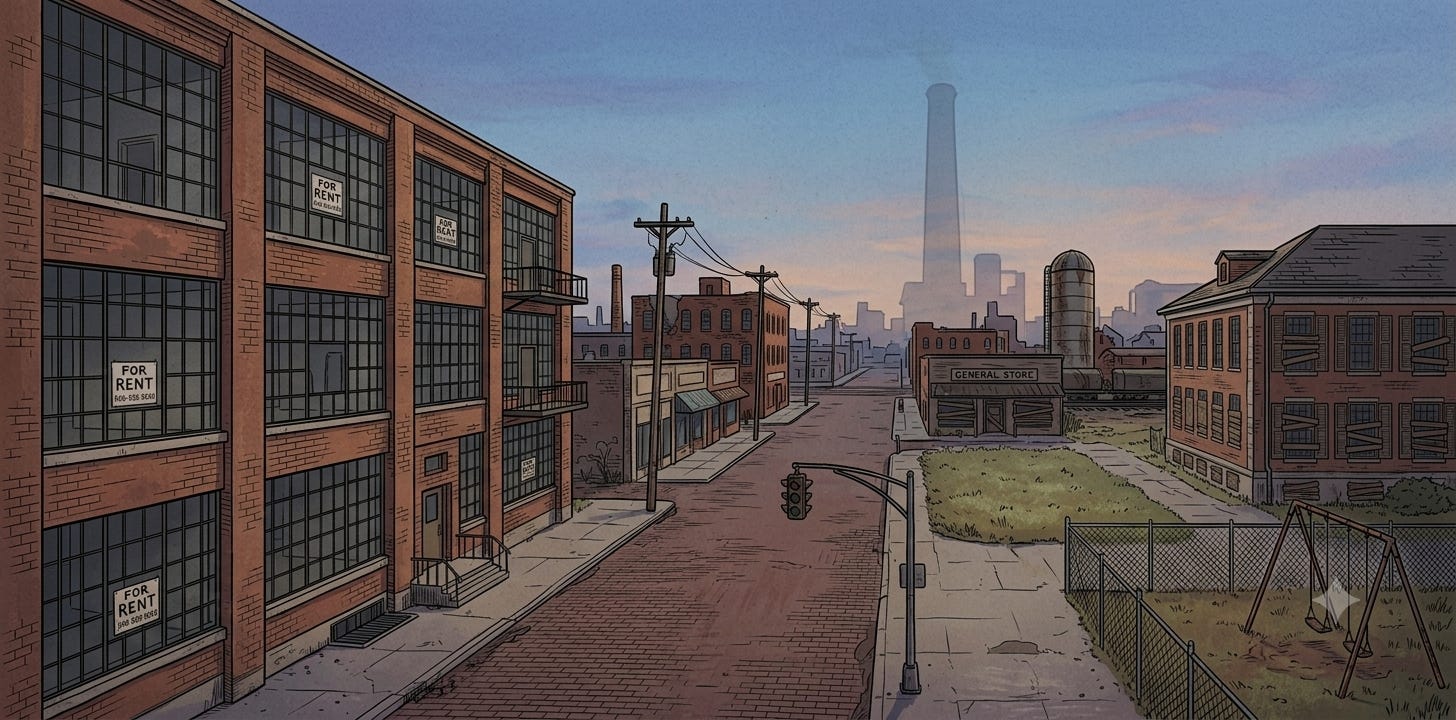
There are towns across the American Midwest that once woke to a factory whistle. The whistle stopped decades ago. The buildings didn't come down, though — they were gutted instead, their windows enlarged, and someone started calling them lofts. The old schoolhouse got the same treatment. Brick walls, soaring ceilings, exposed beams: real estate agents call this authenticity. None of it sells. The people who stayed in these towns can't get a mortgage large enough, and no bank will lend them one, because the wages left when the factories did. What remains where the factories once stood is speculation on housing nobody nearby can afford.
Vijay Prashad describes this scene in a video interview recorded in Colombo — not as an aside, but as the concrete evidence for a diagnosis. The interview followed a conference held in Sri Lanka's capital from July 16 to 18, 2026, titled "Hands Off Asia: A People's Call for Sovereignty and Solidarity." The gathering was organized by the International Peoples' Assembly, with support from the Tricontinental Institute for Social Research, which Prashad directs. Delegates numbered more than seventy, drawn from forty-three organizations across seventeen countries, and the three days closed with the adoption of the Colombo Declaration. Its demands summarize the article's subject well enough on their own: "An end to military encirclement: AUKUS, the Quad, and foreign bases rejected. An end to economic domination: IMF conditionalities and tariff coercion rejected. The right to self-determination, free of regime change, is demanded."
The interviewer, Taimur Rahman, is a Pakistani Marxist academic and musician. As for those empty luxury units — they are, if nothing else, plain evidence that capital has no loyalty to place.
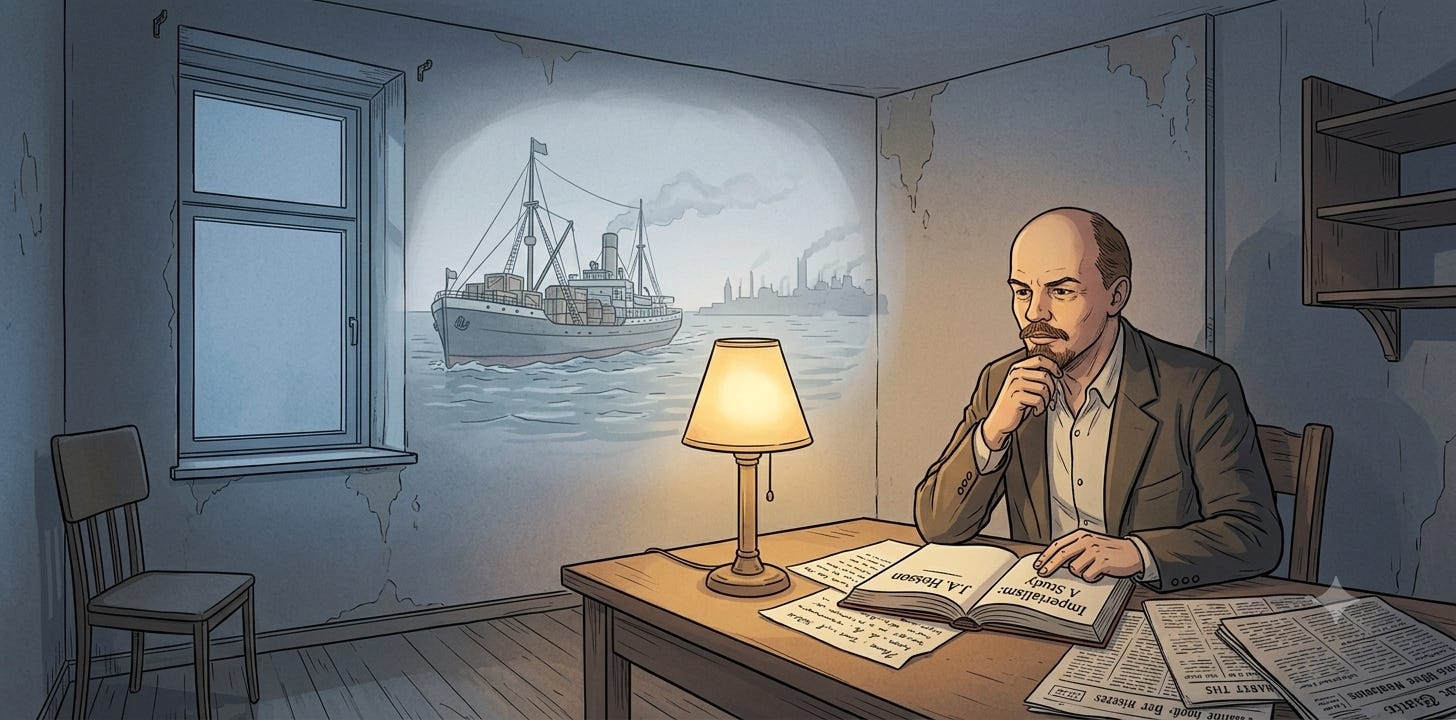
There's a term Prashad has been circulating with some insistence in recent years: hyper-imperialism. Understanding it, he says, requires going back a century. At the close of the nineteenth century, "imperialism" was a word liberal economists used for the wealth flowing from colonies to the metropole. Dadabhai Naoroji — the first Indian elected to the British Parliament — called it the "drain of wealth": India deindustrialized so that England could industrialize. The concept found its theoretical form in 1902, when the British liberal economist John Atkinson Hobson published Imperialism: A Study. Hobson's book didn't treat imperialism as a structural necessity of capitalism; it treated it as a distortion born of underconsumption, correctable through reform. When the First World War broke out in 1914, Lenin, exiled in neutral Switzerland, read this liberal literature — Hobson above all — and drew a very different conclusion from it: capital groups, crossing national borders in search of markets and resources, collide with one another, drag states into their collisions, and the collisions become an inter-imperialist war. This was a far more serious explanation than the shooting of Archduke Franz Ferdinand, or the mechanical logic of "once the armies mobilize, war becomes inevitable."
Here Prashad makes an important observation, and then advances a claim. Because Lenin titled his book Imperialism, he argues, the text got mistaken for a general theory of imperialism. It was, in fact, a conjunctural analysis — an explanation of why a particular war broke out at a particular moment. What should be inherited from Lenin isn't the conclusions; it's the method: reading interstate relations and inter-capital relations together.
There's something right in this. The text really does need its historicity restated, against readers who memorize imperialism's five features like a timeless statute. But consider the circumstances of its writing. Lenin wrote the book in Zurich, yet it wasn't underground literature — it was commissioned for legal publication by the Parus publishing house in Petrograd. Censorship applied not where the text was written but where it was printed, and Lenin says as much in his preface: he wrote with the tsarist censor in mind. The book bears the fingerprints of Aesopian language throughout. Rather than naming Russia's own territorial annexations directly, Lenin tests the sincerity of anti-annexationist rhetoric by pointing to Japan and Korea instead. There was also censorship from within the movement. By the time the manuscript reached the publisher, Menshevik elements running it had cut the sharpest attacks on Kautsky and Martov, softening "reactionary" — describing ultra-imperialism — down to merely "backward." And yet what got cut wasn't the economic analysis; it was the political verdict that followed from it. Monopoly, finance capital, capital export, the partition of the world: all of that survived intact, because none of it tripped the censor's wire. The censorship record, in other words, runs against the conclusion Prashad draws from it. What was constrained wasn't the periodization — it was the revolutionary judgment the periodization licensed. And the text's addressees are hardly obscure. Its principal target is Karl Kautsky (1854–1938), the leading theorist of the Second International and official ideologue of German Social Democracy, who during the war years had stopped treating imperialism as a stage of capitalism and started treating it as a policy finance capital merely "preferred" — floating the possibility of an ultra-imperialism in which capitals might merge peacefully. The economic backbone of Lenin's analysis, meanwhile, came from Rudolf Hilferding (1877–1941), the Austrian-born Marxist economist whose 1910 study Finance Capital first analyzed the fusion of bank capital with industrial capital — Hilferding would later serve as German Social Democracy's finance minister and die in Gestapo custody. What Prashad does here, though, is substitute one concept for another. Analysis explains a conjuncture; intervention transforms one. What Lenin did was an intervention, and it cannot be reduced to conjunctural analysis on that account. What the book yields isn't the causes of a war — it's the reconstruction of a strategic terrain.
The break with Kautsky and social-chauvinism, uneven development, the idea that the chain could snap at its weakest link, the characterization of the age as the eve of proletarian revolutions: these are the findings of that terrain-mapping. The April Theses rest on this same ground, as does the call to turn the imperialist war into civil war. To reduce a text that made the October Revolution possible to a list of a war's causes is to strip it of the very quality that made it effective.
Nor does the periodization wait to be inferred — it's printed on the cover: The Highest Stage of Capitalism. Lenin isn't characterizing a war there. He's characterizing an age: the shift from free competition to monopoly, the fusion of industrial and bank capital, the replacement of commodity export by capital export, the completed partition of the world. This is a periodization, and it carries the weight of a general theory. The real argument isn't between conjuncture and general theory — it's about which components of that periodization still hold today and which have eroded. The dominance of finance capital and the determining role of capital export remain valid; what has eroded is the assumption that national bourgeoisies compete each other to the death.
This periodization, moreover, splits the world into a small cluster of rich, powerful nations and the far larger community of nations they subordinate — the formulas of rentier state and usurer state descend from exactly this division. The split is the international form class struggle takes, and a strategy follows directly from it: the right of nations to self-determination, the colonial question treated as a revolutionary question, an alliance between the proletariat and the oppressed nations. No policy toward the peoples of the East grows out of a text that merely lists a war's causes. The asymmetry built into the principle follows the same structural logic: the socialist of an oppressing nation recognizes the right to secede unconditionally; the socialist of an oppressed nation advocates voluntary union. Recognizing a right and recommending its exercise are two different things from the start, in Lenin as everywhere else — recognizing the right to divorce is not the same as recommending divorce. The right is a matter of principle; whether exercising it makes sense depends on the concrete situation. The relevant test isn't some abstract sympathy for secession as such — it's who the secession is aimed against. Secession against imperialism is just; separatism that fractures a country already under imperialist pressure from within works in the opposite direction, whatever name it goes by.
And if it had been merely conjunctural, it should have lifted when the conjuncture did. The war ended in 1918; the division of the world into two camps did not. Versailles redistributed the spoils, colonies changed hands under the name of mandates, the underlying arrangement held, and twenty years later the same structure arrived at a second war. What changed was the composition of the camps — not the division itself.
A theory isn't measured by the freshness of its examples in any case. The statistics filling Lenin's pages were ammunition drawn straight from the apologists' own mouths. The railway mileage of 1913 explains nothing today; what explains something is the theoretical determinations behind it. That monopoly arises out of free competition and persists above and alongside it rather than abolishing it, that force is the sole criterion of distribution, that the world divides into oppressor and oppressed nations — these are the theoretical determinations. What belongs to the period are the data and the legal forms. The colony was the era's particular shape for what Lenin gathered under the phrase "economic territory in general"; today's shapes are debt, conditionality, patents, standards, the currency system. The form changed; the relation of dependency remained. To pin the text to the dates of its data is just another way of reducing it to its conjuncture. No tradition that claims Lenin as an inheritance inherited the numbers — what it inherited were the determinations.
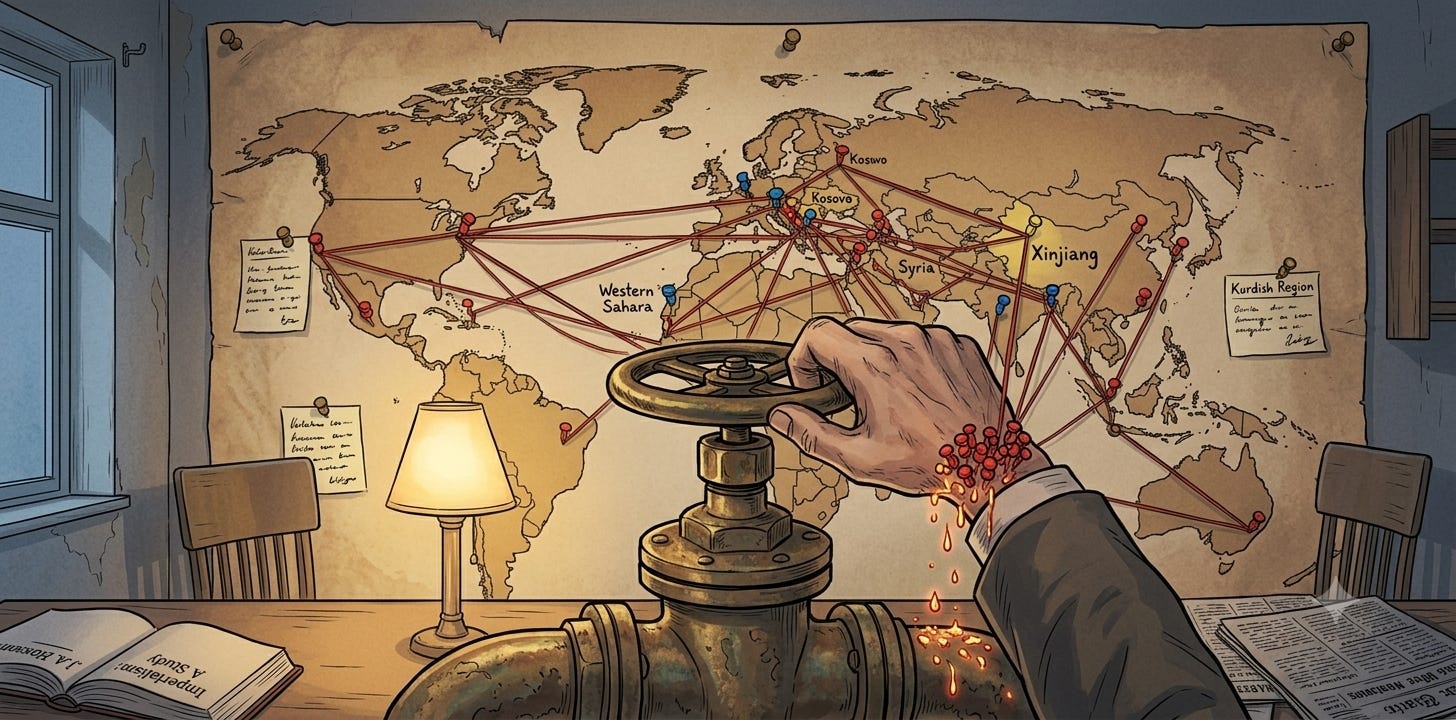
The question of secession has changed shape for the same reason. Formal colonialism was liquidated; neo-colonialism took its place, and so the direction of a secessionist claim today reads off a different map than it did a century ago. Movements aimed at the imperialist center or its subcontractors are in the right. Polisario's claim in Western Sahara runs against Morocco and the capitals that back it; Kanak independence in New Caledonia runs directly against France; Puerto Rican independence runs against Washington. Movements aimed at fracturing an encircled state from within, by contrast, function as instruments of the encircling power regardless of what their proponents believe they're doing, and they receive support accordingly — money, personnel, arms, diplomacy. Syria's separatist structure was propped up with weapons, trainers, air cover, and control of the oil fields; in Kosovo, the tangible outcome of separation was one of the region's largest military bases; the Xinjiang and Tibet files stay perpetually open because they target China's continental corridor. In the Kurdish case, the decisive evidence is that a single people is scattered across four states, and the dosage of support rises and falls with how tense the relationship with each of those governments happens to be. A people's right isn't a tap that opens and closes according to someone else's interest; whoever operates that tap is supporting whatever instrument serves them, not the right itself.
The historical ledger points the same way. The partition of India was the product of a structure prepared decades in advance, through separate electorates, and one of the resulting states joined both flanks of the Soviet containment line within a few years of its founding. Who benefited from the partition is answered by the alliance map drawn up afterward. When the Soviet Union dissolved, the UN body charged with regulating multinational corporations was shut down, the World Trade Organization was founded, NATO — its stated rationale for existing having just disappeared — expanded from sixteen members to thirty-two, and the wars of the unipolar era became possible only in the absence of any counterbalancing weight. Yugoslavia shows the sequence step by step: first debt and structural adjustment, then early-recognition diplomacy, then arms, and finally the base.
One cannot answer this with "every society has internal contradictions" — that's not an explanation, it's simply a condition that's always present. The income gap between northern and southern Italy runs more than double; a separatist party has actually attempted to declare its own state; three distinct linguistic regions exist — and no one has ever sent weapons to Padania. Bavaria was the sole state to reject ratifying the postwar German constitution in 1949, still calls itself a free state, and has maintained a continuous separatist party; its supreme court has rejected any right to secede, and no one has ever objected. Switzerland, while still poor, once came to the brink of dissolution: in 1847 a bloc of cantons formed a separate league and fought the federal army, seeking outside support, but none came, because Austria and France were consumed by their own revolutions, and the contradiction was closed by constitution the following year. What determines the outcome, then, isn't whether a contradiction exists — it's who has an interest in activating it. Contradictions inside one's own camp get smoothed over; contradictions inside the target get deepened.
A conclusion follows for our own camp from this. A non-antagonistic contradiction can be resolved through institutional arrangement and material improvement. What imperialism does in its targets is the reverse: it turns what's resolvable into what isn't, converting an internal popular contradiction into an antagonistic one. Resolving a contradiction before it hardens into antagonism isn't a law for the anti-imperialist camp — it's a duty, and the price has been paid wherever it was neglected. This is why resolving national oppression is not merely a question of rights but an anti-imperialist necessity. Every unresolved internal contradiction is a ready-made tool left lying around for the other side to pick up.
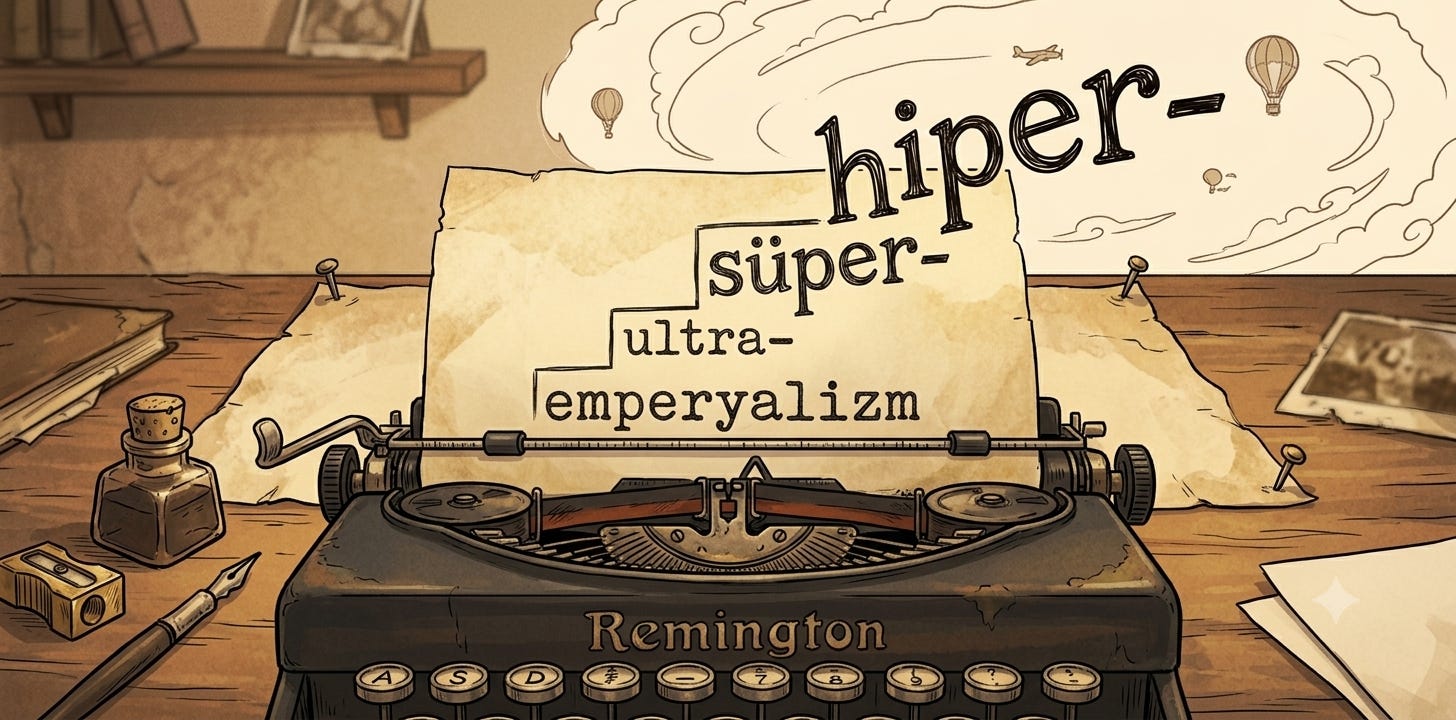
Prashad's objection, as it turns out, is built with a borrowed apparatus. Hyper-imperialism speaks of monopoly, finance capital, capital export, the partition of the world; it keeps state and capital in the same frame of analysis; it treats military force as a moment of accumulation. All of this belongs to the conceptual machinery Lenin built. Prashad isn't bringing a new apparatus — he's adjusting the dial on the same one, which is both legitimate and necessary. But then what's the point of confining Lenin to a conjuncture? He doesn't need to shrink Lenin's theoretical claim in order to build his own concept — quite the opposite: showing which part of that claim still stands would give hyper-imperialism firmer ground to stand on. The prefix, for that matter, is a prisoner of its own logic. Kautsky said "ultra" because he was claiming that the monopolies would arrive at a peaceful super-merger — a wrong claim, but a logically coherent one, in which quantity converted into quality. "Hyper" proposes no such conversion; it only intensifies. This is terminological inflation: each prefix legitimizes itself by declaring the last one insufficient, without ever marking a genuine conceptual threshold. Inflation has no natural stopping point — if ultra, super, and hyper aren't enough, interplanetary, galactic, intergalactic, universal, even multiversal imperialism wait in the wings, because the issue was never the size of the universe. It was the size of the word.
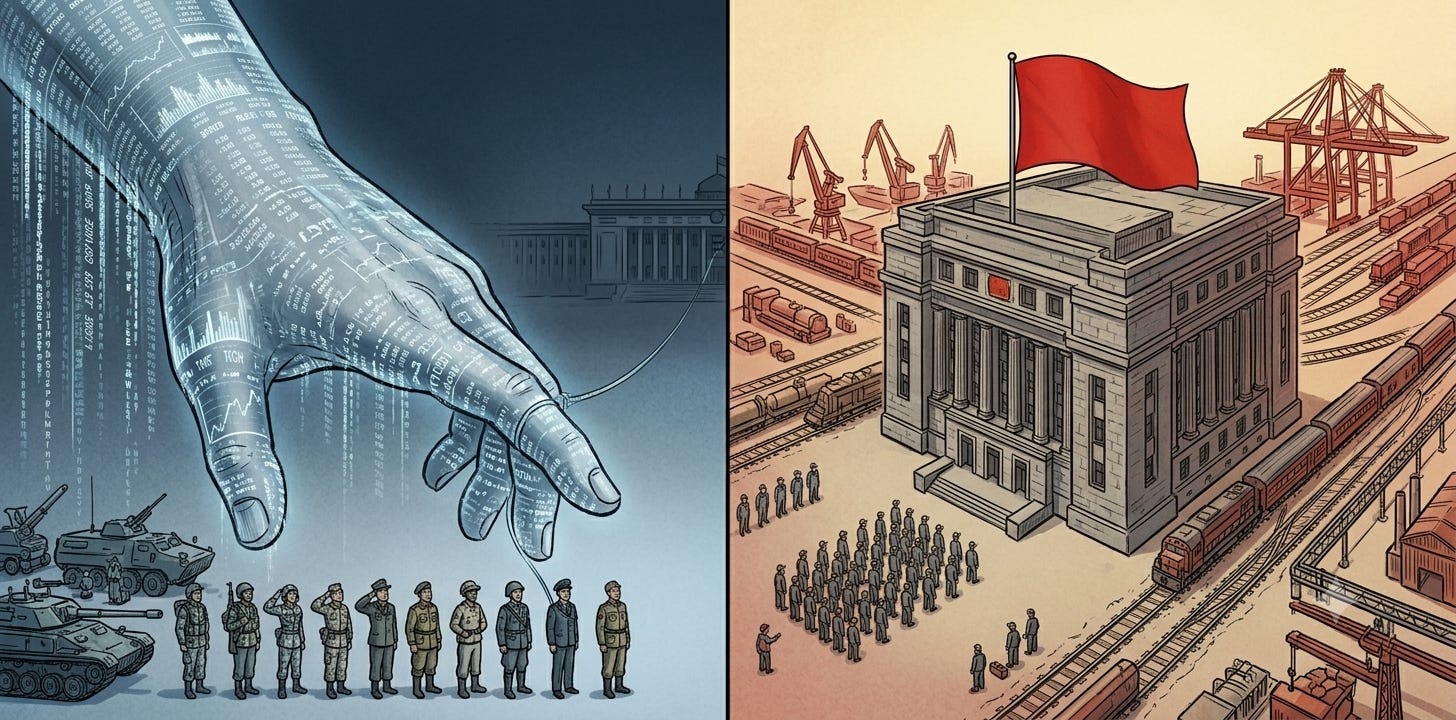
Apply the method to the present and the picture that emerges is this: over the course of the twentieth century, corporations cracked the shell of the nation-state. An asset manager like BlackRock today holds more wealth than most of the world's states, and can summon armies into action to serve its own interests. This is where Prashad's objection to "multipolarity" comes from. In his view, multipolarity still assumes that what needs explaining is interstate relations — Russia, China, the United States. What actually needs explaining, he argues, is the fused whole of interstate relations and inter-corporate relations. Hyper-imperialism isn't one country directly colonizing another; it's a segment of the world responsible for eighty percent of military spending, under U.S. leadership, suppressing the sovereignty of the rest, thereby clearing the way for a conglomerate stretching from mining companies to financial institutions.
This military-financial architecture didn't emerge on its own. A year after Lenin's pamphlet came the October Revolution, and capitalist states were already attacking Soviet territory by 1918. According to Prashad, that assault simply changed shape and continued until 1991 — it never stopped, not even during the years of alliance against fascism. He's right about this much: the Cold War had already begun before 1945. Bretton Woods came in 1944, NATO in 1949, followed by CENTO in Baghdad and SEATO in Manila — Pakistan was one of the few countries to join both. Once the Soviet Union dissolved, attention turned to building permanent institutions. The World Trade Organization was founded in 1994. In the same period, the UN Centre on Transnational Corporations — established in 1974 at the insistence of Third World countries to draft a code of conduct for multinationals — was shut down. The Clinton administration transferred its mandate to UNCTAD and reversed its function entirely: a body meant to regulate corporations became one that strengthened corporate leverage over the Third World instead. The idea of oversight lasted exactly as long as the threat that had made it necessary.
Prashad's most original contribution is his identification of how this order shot itself in the foot. Companies that relocated production to Asia because wages were too high assumed they could keep the countries they relocated to as a permanent reservoir of cheap labor for Western consumers. What resulted instead was an economy in which their own people became detached from productive activity. The American consumer sustained a standard of living on debt. The countries actually producing surplus value began running surpluses of their own, which they then lent back to the North. Prashad's sharpest formulation from the interview: China wasn't only buying Treasury bonds — it was lending directly to American banks, which meant the credit limit on the card of a consumer demanding "get China out of my life" was itself flowing through China. When the music stopped in 2008, China, India, and others did the math again. They saw the unsustainability of producing for someone else's consumption while their own populations went hungry, and turned toward domestic markets and South-South trade. BRICS is a product of that turn. Eliminating poverty was a humanitarian goal, yes, but it was also a market-creation strategy.
The West's inability to reverse course follows from the same logic. Even if capital were summoned back from the tax havens, you'd still need to force a society that has lived without factories for two generations back into factory discipline. Prashad, suspending moral judgment for a moment, puts it plainly: surplus value isn't produced by affection, it's produced by very hard work — and when a Taiwanese chip manufacturer builds a massive facility in the American Southwest and complains that "the workers don't work like they do in Taiwan," the problem isn't laziness, it's the dissolution of an entire cultural layer. Manufacturing's share of Britain's GDP sits around eight percent; in China, it's roughly forty. No election victory closes that gap. This is why both "Make America Great Again" and "Build Back Better" never get past being slogans. Expel the immigrants and you've expelled the one population still willing to accept intensive labor; bomb Venezuela and you still haven't solved the drug crisis, because the problem was never on the supply side — it's the loneliness and atomization hollowing out entire towns.
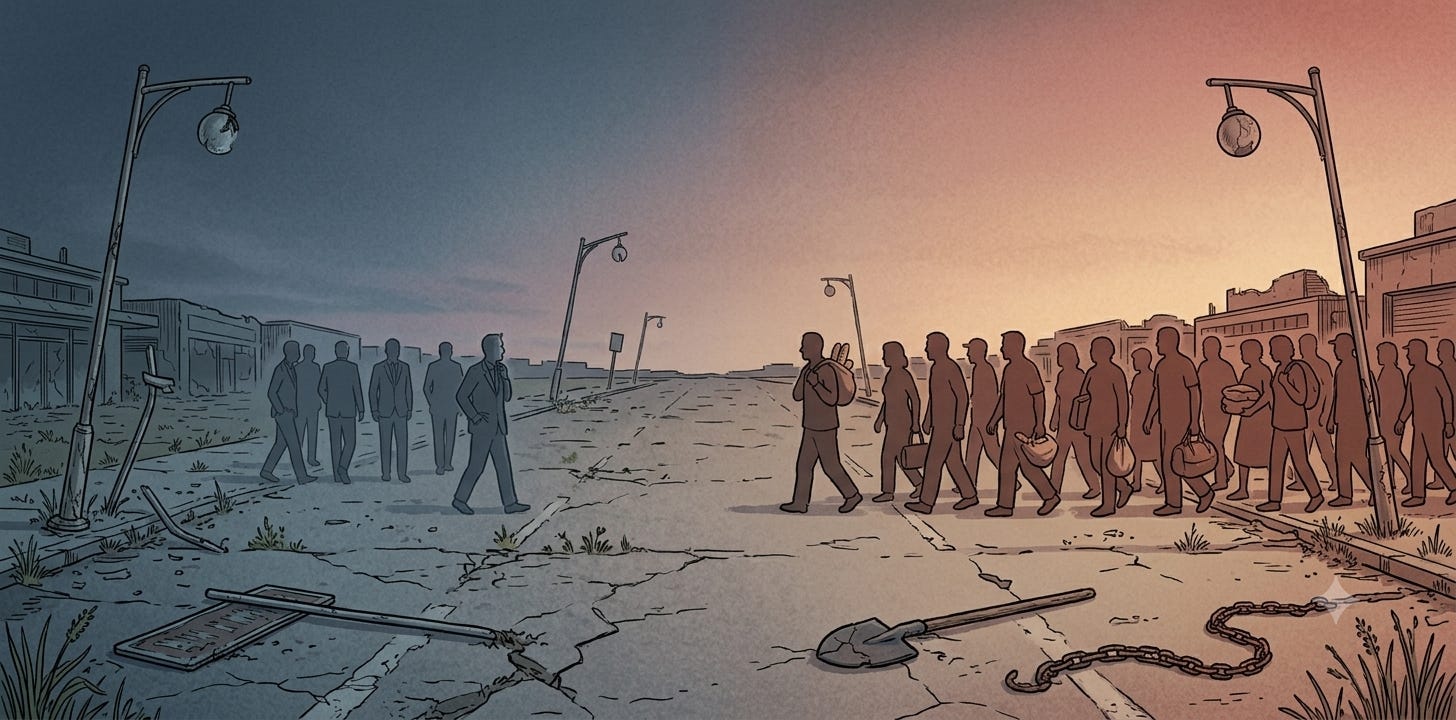
The strongest part of the interview is the section on the rise of the right. Prashad refuses to let the bill land on the left alone. When the Soviet Union collapsed, socialism wasn't the only thing that went down — liberalism and social democracy collapsed with it. The center didn't vanish; it converted into neoliberalism and liquidated, in a single stroke, a hundred and fifty years of welfare thinking — Fabianism, French soft socialism, Bismarck's social insurance. This liquidation proceeded across South Asia under the name of liberalization. In Pakistan, Zia-ul-Haq opened the economy outward in 1977, in the shadow of his Islamization program. In India, during the Emergency, a parliament reduced to a rubber stamp pushed through a series of liberalization laws. Both Nehru and Jinnah came out of the Fabian tradition of welfare thinking; both believed the state's job was to keep the poorest from dying in the street. Once that lane was abandoned, what remained was the personal charity an elite extends to its own domestic help. Prashad's point, rightly made, is that welfare provisions exist so that people you'll never meet don't starve — not so you can help someone you know.
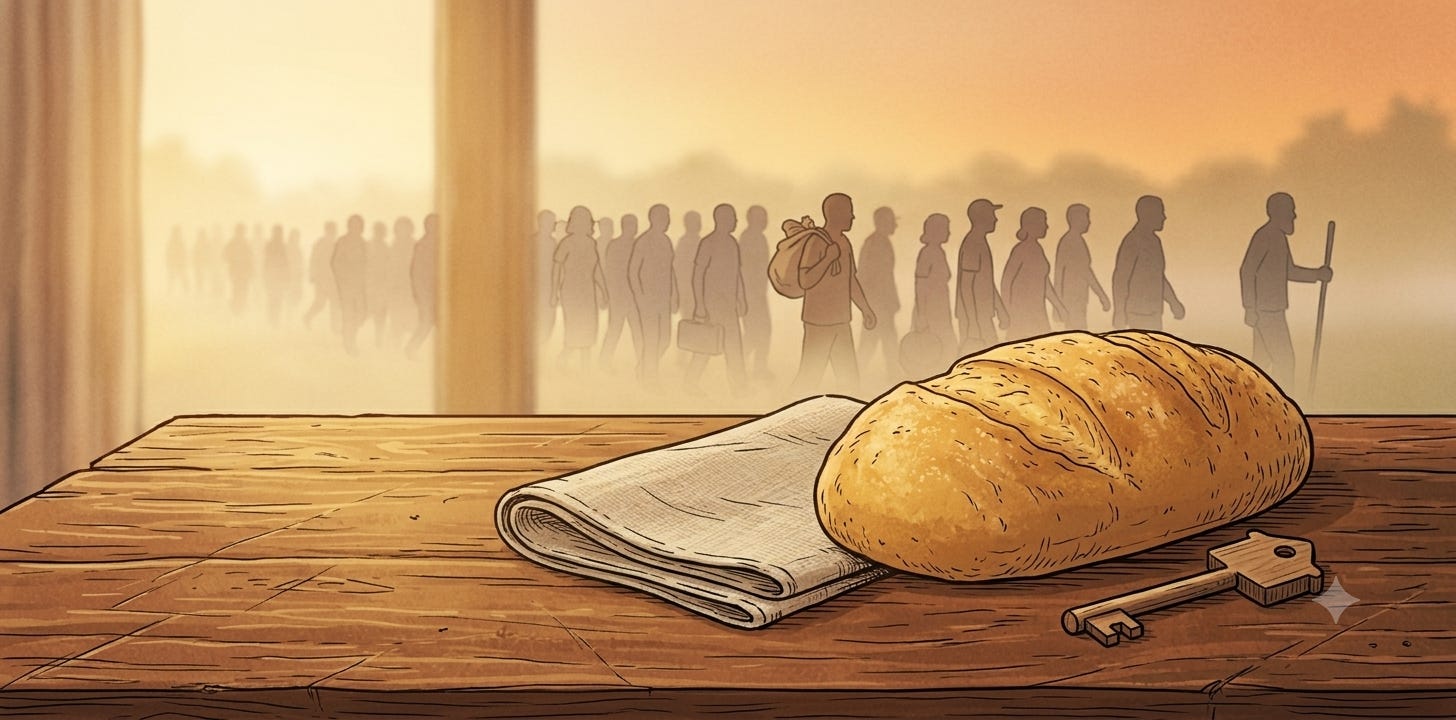
The anger that accumulated in the abandoned lane became fuel for the right. Unions weakened, labor got distributed through precarious contracts, and a left whose carrying capacity had shrunk couldn't reach the masses anymore. Prashad's formulation here is worth holding onto: the left didn't choose the terrain of welfare struggle, it was pushed onto it by necessity — that isn't reformism, it's simply the human condition. The choice was never between identity and economics. The oldest left slogan in the Hindustani-speaking world is Roti, kapda aur makaan — bread, cloth, house. Identity doesn't enter the slogan, because what does a hungry, unclothed person's caste matter? These are the preconditions of a dignified life. The claim that the left should abandon economic questions is, as Prashad puts it with some bite, a sentence only someone who commutes by car could construct.
This links back to a distinction of Marx's: history begins when human beings pass from the realm of necessity into the realm of freedom. A person with their nails dug into the ground, hanging on at the edge of a cliff, doesn't make history — at best, they survive. What a human being wants isn't work; work is a means. What a human being wants is free time — friendship, children, music, politics, conversation. This is what those waiting for retirement like a kind of nirvana are after, the ones who die on the job before they ever reach it. "Work sets you free" was the phrase the Nazis put over the gate of a concentration camp; what we want isn't the freedom to work, it's freedom from work.
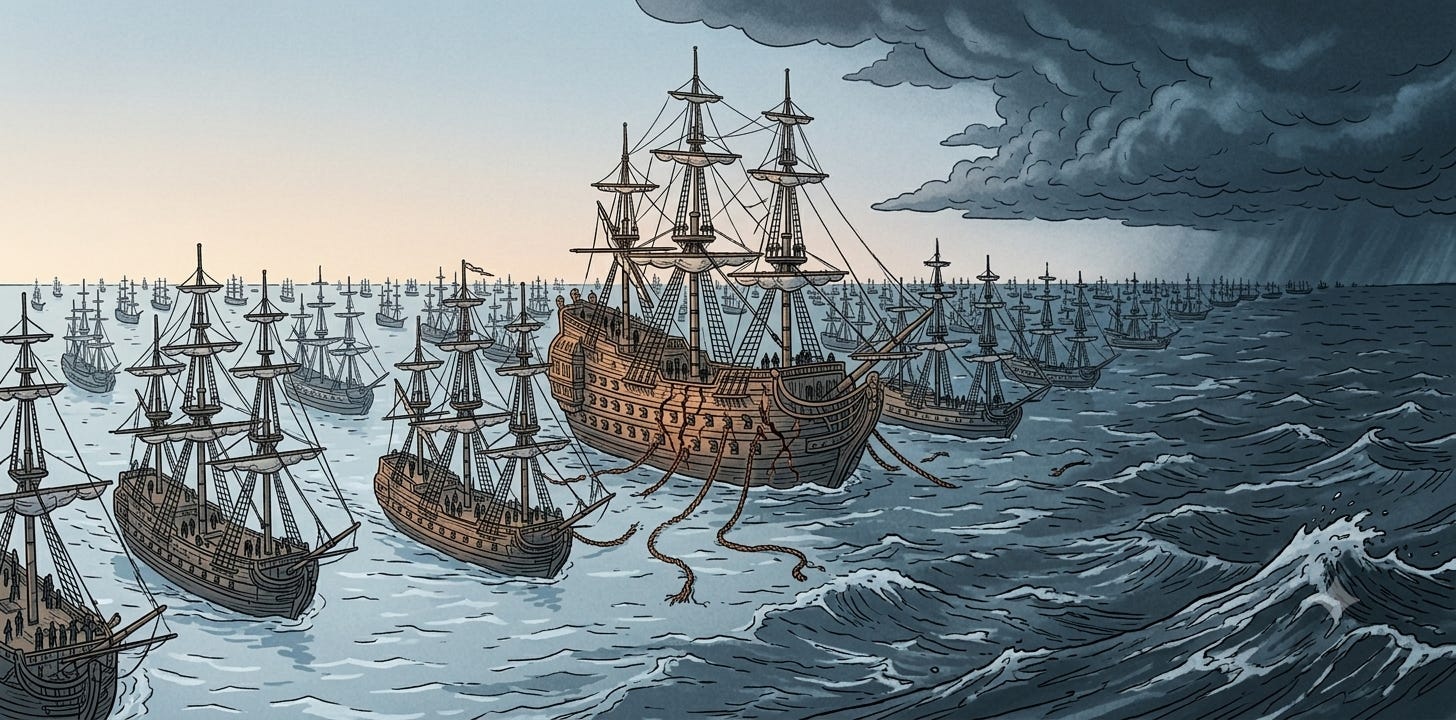
This is where the thesis is strongest, and where its limits begin. The concept of hyper-imperialism is persuasive in exposing the military-financial unity of North Atlantic capital. But drawing from that unity the conclusion that the corporation has superseded the state doesn't square with the facts on the ground today. Chip export controls weren't imposed by corporations — it's the state that tells ASML and Nvidia whom they may sell to. Industrial policy is an attempt to place capital through subsidy. Expulsion from SWIFT, seizure of central bank reserves, the destruction of pipelines — none of this is a corporate decision. The asset manager operates in the space the army has opened; it isn't the one calling the army into service. On the other side of the ledger, the question answers itself even more easily: in China, accumulation is directed by the party-state; the Belt and Road runs through state banks; in Russia, capital exists at the state's discretion; and across the Global South, the ongoing struggle is precisely a struggle over sovereignty. The corporation's weight is greater than it was in Lenin's day — but weight is one thing, and determination is another.
The same weakness shows up in the objection to multipolarity. Prashad finds the concept inadequate because it still tries to explain interstate relations. But a pole isn't a state — it's a configuration of alliance. Russia, China, Iran, and North Korea are separate states whose interests don't align at every point, and yet, against the sanctions regime, the dollar system, and military encirclement, they function as a single pole in practice. Hyper-imperialism's own definition, in fact, is symmetrical: what it describes is a cluster of states, led by the United States, responsible for eighty percent of military spending. Denying that the opposing side can constitute a multi-state pole while defining one's own side in exactly those terms fails to meet the concept's own standard.
The third limit lies in China. Gandhi's yardstick is a civilizational one, not a mode-of-production one. The elimination of absolute poverty is a genuine historical achievement, and any left position that belittles it isn't being serious. But that achievement doesn't by itself determine the character of Chinese capital's movement abroad. The call for a "concrete analysis of concrete conditions" is only complete when the analysis also covers China's own capital relations beyond its borders.
The real problem, underneath all these objections, comes down to a single misreading. Prashad mistakes a conditional arrangement for a permanent structure. The unity of the imperialist camp isn't an institutional achievement — it's the product of two conditions. The first is that surplus flowing in from external exploitation provides the material means to soften internal contradictions — class, regional, sectarian. Lenin's writing on how monopoly super-profits buy off a section of the working class is the first formulation of exactly this. The second condition is that inter-imperialist contradictions can only be disciplined for as long as a common rival stands on the other side. What happens in the absence of both conditions is well known: 1914 and 1939. What happens in their presence is equally well known: Bretton Woods, NATO, the dollar system. The observation that "transatlantic capital doesn't compete to the death" is a snapshot of the period in which the second condition held — not a description of a structure.
Today that condition has changed shape. There's no alternative system on the other side; neither Russia nor China is offering the exploited world a different accumulation model. But the military strength of both is frustrating the imperialist camp's project all the same — blocking the completion in Russia of the very model that was actually implemented there in the 1990s (deindustrialization, transfer of resources, erosion of central authority), while never allowing that process to begin in China at all. The bond holding the imperialist camp together has thus flipped from positive to negative. After 1945, Washington was buying its leadership by distributing markets, technology, and growth to its allies; today there's no spoils left to share — only the expectation of spoils that haven't materialized and won't. An alliance held together by expectation strains once the expectation is delayed. Tariff walls raised against allies, a subsidy race, a fight over who bears the cost of energy, and the destruction of an ally's own pipeline are all symptoms of exactly that strain.
Lenin's own answer finds its place right here. Inter-imperialist alliances, whatever form they take, are nothing more than truces between wars; peaceful alliances prepare the ground for wars and are themselves born out of wars. Because the sole criterion of distribution is force, and force changes unevenly. A blocked project either raises the pressure or splits those who can't agree on how to divide the spoils. What Prashad takes for permanent unity is nothing more than how that criterion happens to look in the present conjuncture. And mistaking a conjuncture for a structure is the same error, run in reverse, that he accuses Lenin of making.
Still, the interview's most durable conclusion survives all these objections intact: the right feeds not on the left's weakness, but on the ground the liberals and social democrats abandoned. That ground is bread, cloth, and a house. When the left returns to it, it won't be returning to its past — it will be returning to its own proper work.【●】
◇Artificial Intelligence has been used solely as an enhanced search engine for the purpose of data verification.
















.png)






.jpg)



 English (US) ·
  French (CA) ·