

 1 week ago
9
1 week ago
9
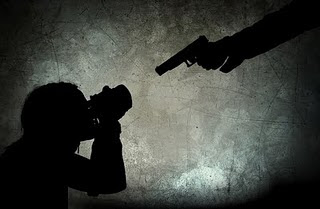
A journalist is, above all, a witness to history. The events that shape societies, alter political destinies, and redefine the future are first recorded by journalists before they become the subject of history books. What future generations understand as “history” often begins as a report filed under the pressures and uncertainties of the present moment.
For this reason, accuracy, impartiality, and responsibility are among the highest obligations of journalism. Yet perhaps the most important quality a journalist can possess is critical thinking—the ability to see reality as it is rather than as it is presented by those in power, by popular opinion, or by ideological narratives.
Critical thinking allows journalists to recognize patterns that may not be immediately visible to the broader public. Journalism is not merely about accepting what the world says; it is about asking questions the world prefers not to answer. It is about investigating what remains unsaid, identifying underlying causes, and connecting seemingly unrelated events into a coherent picture.
 This responsibility has become increasingly important because humanity is living through a period of profound global transformation. Political, economic, social, environmental, technological, and security challenges are converging simultaneously in ways unprecedented in modern history. Many of the crises confronting the current generation have no direct historical equivalent.
Today, the world appears to be approaching another dangerous crossroads.
The escalating tensions between the United States and Iran, the broader instability across the Middle East, uncertainty surrounding the security of the Strait of Hormuz, and growing threats to global energy supply routes all carry the potential to trigger another major shock to the world economy.
The Strait of Hormuz remains one of the most strategically important maritime chokepoints on Earth. A significant portion of the world’s oil exports passes through this narrow waterway. Any disruption could lead to a sharp increase in energy prices, higher transportation costs, renewed inflationary pressures, and deeper economic hardships for countries already struggling with debt and slow growth.
Should regional actors such as Yemen’s Houthis become further involved in the conflict, disruptions could spread beyond the Persian Gulf into the Red Sea, creating additional challenges for global shipping and international trade. Such developments would reverberate across economies worldwide, affecting everything from food prices to industrial production.
Yet economics may not be the most frightening aspect of the current situation.
The greater concern is security.
Humanity survived two world wars in the 20th century. Those conflicts caused immense destruction, but they occurred before the emergence of today’s vast nuclear arsenals. The modern world possesses weapons capable of destroying civilization many times over.
A miscalculation, an uncontrolled regional escalation, or a reckless political decision could set off a chain of events with consequences unprecedented in human history.
Following the devastation of the First and Second World Wars, the international community attempted to construct safeguards against future catastrophe. Arms control agreements were negotiated. Diplomatic institutions were strengthened. Political leaders often spoke of coexistence and restraint. Efforts to build understanding among peoples and nations were widely regarded as essential components of global stability.
Many of those safeguards now appear to be weakening.
The symbolic “Doomsday Clock,” maintained by scientists and security experts as a measure of existential global risk, now stands at 85 seconds to midnight.
*
Click the share button below to email/forward this article. Follow us on Instagram and X and subscribe to our Telegram Channel. Feel free to repost Global Research articles with proper attribution.
Vijaya Dissanayake is a journalist at Sri Lanka Rupavahini Corporation (SLRC), where he currently leads the Sports Unit. A graduate of the University of Kelaniya with an MA in Public Archaeology, he previously served as the Head of News at SLRC. In addition to his editorial role, Dissanayake is a regular guest on a daily current affairs TV show focused on international news.
Global Research is a reader-funded media. We do not accept any funding from corporations or governments. Help us stay afloat. Click the image below to make a one-time or recurring donation.









.png)



.jpg)


 English (US) ·
  French (CA) ·