

PROTECT YOUR DNA WITH QUANTUM TECHNOLOGY
Orgo-Life the new way to the future Advertising by Adpathway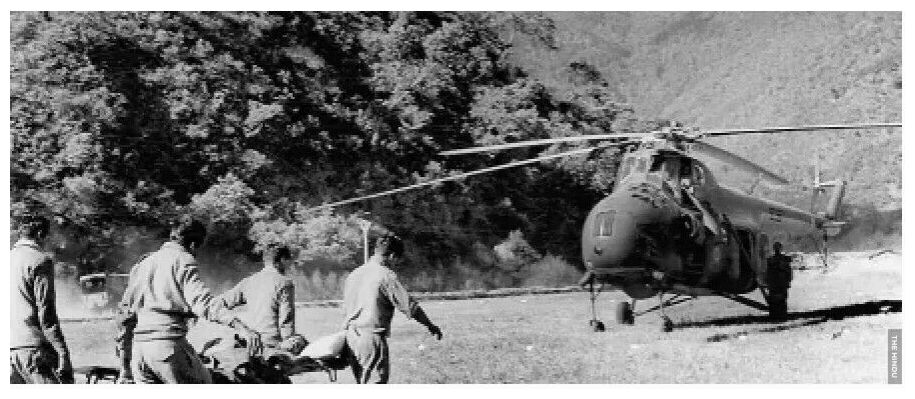
© Pressreader.comAerial Evacuation. A wounded victim of the Chinese aggression being carried to an Air Force helicopter in then NorthEast Frontier Agency for evacuation to a hospital.
A new study published in a leading US academic journal argues that the 1962 IndiaChina war was driven not primarily by border disagreements or diplomatic failures, as long accepted in mainstream historical accounts, but by a deliberate American strategy pursued through the 1950s and early 1960s.
Drawing on declassified CIA records, diplomatic archives at the Prime Minister's Museum & Library, the Foreign Relations of the US, and documents from the Cold War International History Project, the seminal research challenges longheld narratives about the conflict.
The findings — "Unravelling the Geopolitical Dimensions of the 1962 SinoIndian Conflict: How the US Shaped the SinoIndia Split" — appeared in the April edition of the Affairs (Wiley). Author Lakshman Kumar of the Jindal School of International Affairs told business-line that Washington's objective at the time was to intensify tensions between India and China and block any political rapprochement.
PRIMARY REASON
The study argues that China's primary reason to launch the offensive against India in 1962 was Tibet. This move was made since the US deliberately turned Tibet into a political and psychological lever to influence India's foreign policy, fracture Asian solidarity and draw the region into a confrontation aligned with America's Cold War goals.
In the early 1950s, the US pinned its hopes on India for a strategic alliance in Asia. But when New Delhi chose nonalignment, Washington turned to indirect methods to cultivate influence, with Tibet quickly becoming one of its key pressure points.
Tensions intensified after 1959 when the Dalai Lama fled to India. CIA activity increased sharply, with funds, supplies and reconnaissance missions, some launched from Pakistan, then a close US military ally, directed to Tibetan guerrillas.
Pakistan's cooperation, the paper argues, allowed American influence to penetrate the Himalayan frontier and contributed to China's perception of an emerging anti-Beijing alignment.
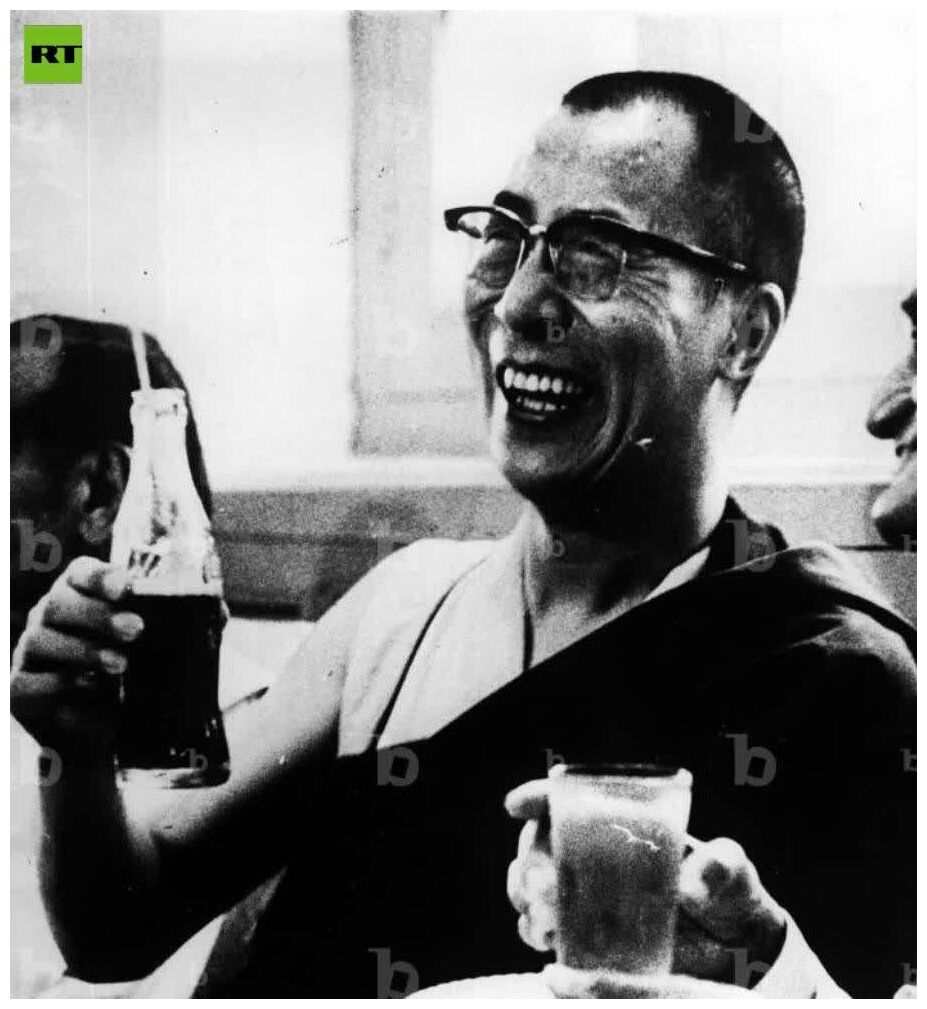
© Pressreader.comNEWLY declassified docs shows Dalai Lama was on CIA payroll.
COVERT ACTIONS
According to the study, these covert actions were never intended to support Tibet's political cause. Instead, their purpose was to widen the India-China divide and block any possibility of bilateral accommodation.
Former US Ambassador John Kenneth Galbraith's memoirs corroborate the scale of CIA influence. Galbraith described intelligence operations that shaped media narratives, funded political groups and influenced debates within India. Kumar characterises this as early "cognitive warfare", the use of ideas and perceptions as strategic weapons.
MILITARY AID
By the early 1960s, India's position had become increasingly vulnerable. American military aid to Pakistan fuelled an arms race in the subcontinent, while India's dependence on Western financial assistance constrained its diplomatic autonomy.
The contradiction was stark: Washington was arming Pakistan even as it was extending financial support to India.
When the 1962 war broke out, China interpreted India's actions through the lens of years of covert US activity in Tibet, viewing India as tacitly aligned with a Western effort to weaken Beijing's hold over Tibet.
As the conflict unfolded, the US moved quickly to position itself as India's saviour, offering military and diplomatic support that drew New Delhi closer to the Western bloc.
The study concludes that the 1962 conflict was fought as much in the realm of perception as on the battlefield. One declassified policy note from the JFK Presidential Library, quoted in the study, stated that the US must "restrain expressions... so as to give the Chinese no pretext for alleging any American involvement." Nevertheless, the author argues, US covert operations achieved "much more than they desired", pushing India and China toward collision.
Ultimately, the conflict forced Prime Minister Jawaharlal Nehru to request military assistance from the US, a significant departure from India's longstanding nonaligned stance and an outcome Washington quietly welcomed.












.png)




.jpg)



 English (US) ·
  French (CA) ·