

 12 hours ago
6
PROTECT YOUR DNA WITH QUANTUM TECHNOLOGY
Orgo-Life the new way to the future Advertising by Adpathway Christians in Egypt face prosecution under blasphemy laws and mob attacks on churches and homes, while authorities have been reluctant to investigate possible abductions of Coptic women and girls. Photo courtesy of Ahram Online.
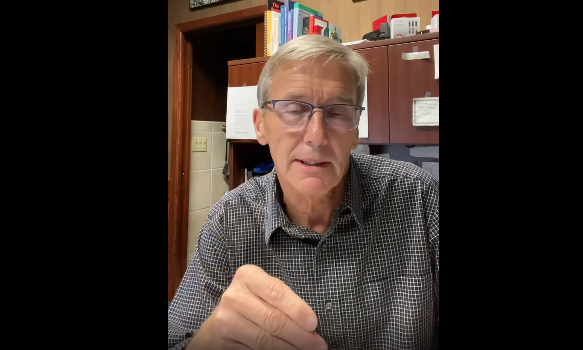
Egypt’s Court of Cassation, the country’s highest criminal appeals court, is scheduled to hear on Nov. 15 the appeal of Coptic Christian scholar Augustinos Samaan, who is serving five years of hard labor for YouTube videos defending Christianity.
Samaan was convicted of “contempt of religion” and “misuse of social media” under Article 98(f) of the Egyptian Penal Code, the country’s blasphemy law. Five years is the maximum penalty under that law, according to International Christian Concern, a U.S.-based advocacy group.
Masked special-forces officers arrested Samaan, a 37-year-old Coptic researcher, on Oct. 1, 2025, for “derision of Islam.” His YouTube channel has about 100,000 subscribers and focuses on responding to anti-Christian material circulating in Egypt. After interrogation and reported torture, he was first charged with terrorism-related offenses.
Prosecutors later dropped those charges and replaced them with the blasphemy and social media counts. His lawyers say they were not notified that his trial was taking place and were denied timely access to the case file, according to Coptic Solidarity, a U.S.-based advocacy group for Egypt’s Coptic Christians.
Article 98(f) dates to Egypt’s 1937 Penal Code and was amended in 2006. It punishes anyone who “exploits religion” to promote extremist ideas or show contempt for “any divine religion.” The U.K.-based group Christian Solidarity Worldwide reports that people charged under such laws have been held longer than the maximum pretrial detention allowed under Article 143 of Egypt’s Code of Criminal Procedure.
The U.S. Commission on International Religious Freedom (USCIRF), a bipartisan federal advisory body, recommended in March 2026 that the State Department place Egypt on its Special Watch List. USCIRF found that the government continues to systematically restrict religious freedom for minorities and for people whose ideas differ from the state’s interpretation of Islam.
Samaan is one of several Christians arrested or charged over their faith or speech. National Security forces arrested Coptic engineer Sherif Wagih Fahmi at his Alexandria home on Oct. 5, 2026, and accused him of contempt of Islam over material he shared on Facebook. Romany Gharib Adly Azer was arrested after complaining that a police officer at Cairo International Airport confiscated his documents. He remains in State Security detention in Supreme State Security Case No. 4832/2026. Investigators questioned him about a satirical post showing him riding a donkey because of rising gasoline prices.
Six young Christians from Minya, including a minor, were charged with promoting extremist ideas, contempt of religion, and blasphemy after recreating a scene from “Khalawis,” a 2018 Egyptian comedy film approved by state censors. The six were released pending proceedings on Oct. 19, 2026, but the charges have not been dismissed.
Egypt’s constitution restricts which religious groups can worship publicly. Article 2 names Islam as the state religion, with the “principles of Shari’a” as the primary source of legislation. Article 64 provides for freedom of belief, but only followers of Islam, Christianity and Judaism have a legal basis to practice their religion publicly and build places of worship. Christians make up about 10 percent of Egypt’s roughly 111 million people and form the largest Christian minority in the Middle East and North Africa.
Egypt has ratified the International Covenant on Civil and Political Rights, which protects the right to change one’s religion, but it attached a declaration “taking into consideration the provisions of the Islamic Sharia.” Open Doors, a Christian persecution watchdog, ranks Egypt 42nd worldwide, reports that the state makes it impossible for conversions to be officially recognized, and names converts from Islam as the most vulnerable Christians in the country.
Christian convert Said Abdelrazek, who was charged with terrorism after he sought to change the religion on his identity card, is on trial before the First Criminal Terrorism Circuit Court in Badr. Prosecutors asked on Nov. 3, 2026, for the maximum penalty, which his lawyer said means execution or 25 years in prison. His defense presents its arguments on Dec. 8.
Building a church requires state approval. Under the Church Construction Law (Law No. 80 of 2016), authority to approve the building and renovation of churches was extended to governors after previously being limited to the security agencies. A government committee has approved 3,804 churches and church buildings since 2016, out of 5,415 applications. Legalization becomes final once the building meets structural and safety requirements and the applicants prove land ownership and pay the required fees.
Coptic Solidarity reports that mosque construction, or converting existing buildings into mosques, typically occurs without comparable requirements. USCIRF noted that in February 2025 the Ministry of Endowments announced plans to reopen 115 mosques, part of a 2024 plan to spend 18.6 billion Egyptian pounds on more than 12,000 mosques.
Mobs have attacked Christians over church construction and repairs. In December 2022, attackers stoned the Church of the Virgin and St. Samuel in Abis al-Thawra, Beheira, on two consecutive days while concrete was being poured for its new roof, according to the Egyptian Initiative for Personal Rights (EIPR), an Egyptian human rights group. A local governor then halted the repairs, according to Coptic Solidarity.
When parishioners asked how they could pray under a broken roof in the rain, he told them to cover it with a tarp and threatened to demolish the church if work continued. On Dec. 18, 2023, in Al-Azeeb, a Minya village of about 3,000 Copts that had just received a permit to build its first church, a mob threw stones and Molotov cocktails that set fire to several Christian homes and burned livestock owned by Christians.
The attacks spread in April 2024. On April 20, villagers in al-Fawakher, Minya, attacked three Christian houses with Molotov cocktails after a rumor spread that a Copt’s house would be used for worship. The Archdiocese of Minya then asked authorities for help and was largely ignored, according to EIPR. Hundreds of Muslims attacked Christians in al-Fawakher on April 23 and in nearby al-Kom al-Ahmar on April 26. In al-Kom al-Ahmar, an evangelical congregation had bought land for a church in 2000 but could not obtain a license until 2023.
Clergy have been killed. On April 7, 2022, a man stabbed Coptic Orthodox priest Father Arsanios Wadid from behind while he was organizing parishioners after a church outing in Alexandria. An eyewitness testified that the attacker shouted “Allahu Akbar” (God is greatest) and chose Wadid because of his priestly garments. The Court of Cassation upheld the killer’s death sentence in January 2025, and he has since been executed.
On July 8, 2026, a mob surrounded and attacked a Coptic church in Tal Al-Quiblya, Minya, while local Christians attended Mass. Police could not control the situation until the Minya security chief arrived with rapid-response units. Police then arrested four Christians who had been beaten by the mob and freed them two days later, after they dropped their complaint against their attackers.
Trending: BREAKING UPDATE: FAA Issues Nationwide Ground Stop (Air Traffic Control Audio) – UPDATE: National Ground Stop Lifted
All detainees were eventually released after what the Coptic news outlet Watani called a “voluntary conciliation” between the Copts and the Muslim detainees. Anba Macarius, the Coptic Orthodox bishop of Minya, said the attack followed previous incidents in the same village that local authorities had been told about on multiple occasions.
The release in Tal Al-Quiblya followed a common pattern. Egyptian authorities settle many attacks through customary “reconciliation sessions,” which government bodies convene and local security services supervise. EIPR documented nearly 50 such sessions between 2011 and 2014, and in most cases Christian families were forced to leave, pay fines or give up property, according to the Washington Institute, a U.S. think tank.
In October 2025, rumors spread online of a relationship between a 17-year-old Christian boy and a 16-year-old Muslim girl in Nazlat Jalf, Minya, and Muslim residents attacked Christian homes and property. A reconciliation session convened by authorities the next day ordered the boy’s family to pay a fine of one million Egyptian pounds and to leave the village.
USCIRF found that while security services sometimes moved quickly to stop attacks on churches in Upper Egypt, authorities often failed to investigate them and hold perpetrators to account. Authorities did not fully investigate a February 2025 fire at the Church of Archangel Michael in Qena. After a May 2025 fire at St. George Church in Qift, they blamed a candle placed in an incense holder, a practice USCIRF said was inconsistent with Coptic ritual.
Coptic women and girls continue to disappear. USCIRF reported that the disappearances persisted in 2025 and that authorities were reluctant or unwilling to investigate possible religiously motivated abductions. Silvana Atef, a Coptic minor with a mental disability from Fayoum, disappeared in October 2025. Police failed to investigate, and in January 2026 an Egyptian court declined jurisdiction, according to the Foundation for Defense of Democracies (FDD), a U.S. think tank. Marina Rizk, a 20-year-old Coptic woman from Al-Omraneya, Giza, disappeared on Feb. 26, 2025. In another case documented by Coptic Solidarity, a Coptic woman disappeared on May 25, 2025, and a certificate of her conversion to Islam was dated the same day.
Christians are also underrepresented in senior government posts. Egypt appointed 164 officials across its governorates in October 2025, and none were Coptic. Two Christians serve in Egypt’s 31-member cabinet, and one of 27 appointed governors is Christian, according to State Department figures reported by Fox. The Century Foundation, a U.S. think tank, found that Copts are wholly absent from parts of Egypt’s security state.
Easter is not a public holiday. On April 30, 2026, an Egyptian court declined to rule on a petition to make it one and said the Prime Minister should decide. Because Sunday is a regular working day in Egypt, Christians who observe Easter often miss work and school obligations and face penalties as a result, according to the legal group ADF International.
On Oct. 1, 2026, Secretary of State Marco Rubio waived a restriction on $320 million in military aid to Egypt that had been withheld over human rights concerns, citing Egypt’s help in dealing with Iran.
USCIRF has recommended that Washington press Egypt to repeal Article 98(f) and tie religious freedom improvements, including the release of prisoners of conscience, to U.S. security cooperation and foreign assistance. The commission also called on Congress to hold a hearing on religious freedom in Egypt, covering attacks on and forced disappearances of Copts, before the next designation of foreign military funding.
Ad block users: Some site features may not work correctly while an ad blocker is enabled, because they break scripts and content this website depends on. If you can't see comments below, for example, please disable your ad blocker.










.png)





.jpg)



 English (US) ·
 French (CA) ·