

 4 days ago
8
4 days ago
8
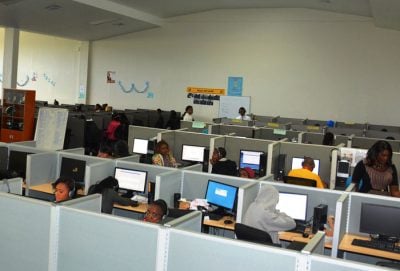
Special economic zones (SEZs) are geographically delineated areas established to facilitate foreign direct investment (FDI) and job creation. SEZs are frequently promoted as engines of development in many countries and regions of the Global South.
Jamaica offers a particularly revealing case study of these dynamics.
For five decades, development policy narratives in Jamaica have framed SEZs as central to economic growth, export diversification, and international competitiveness.
Today, Jamaica hosts more than 213 SEZs across ten of its 14 parishes. The country has become a major call centre outsourcing hub in the Caribbean region.
In 2022, it became the first Caribbean country to host the 8th World Free Zones Organization Annual Conference—an event that symbolically reinforced its position within global investment networks.
Since 2023, the call centre outsourcing sector has attracted an estimated JMD$136 billion in foreign direct investment and employs more than 60,000 Jamaicans, hosting several Fortune 500 corporations from North America (Ministry of Investment, Industry and Commerce Jamaica, 2023; Jamaica Gleaner, 2023).
Most of the call centre outsourcing companies are located in special economic zones (Jamaica Promotions Corporations, 2026).
Yet beneath these celebratory discourses lie some crucial questions: whose stories and lived experiences are made visible within development policy, and whose are erased? What those numbers do not show is this: Jamaica’s special economic zones are as much sites of erasure as they are of economic growth and workers inside them are refusing to disappear quietly.
Development as Erasure: Whose Knowledge Counts?
Development policy is often framed as a neutral, technocratic exercise focused on improving macroeconomic outcomes.
Caribbean development economist Patricia Northover argues that erasure occurs when the knowledge systems, histories, and lived experiences of marginalized communities are systematically excluded from development policy formulation and implementation.
In the Jamaican and broader Caribbean context, development cannot be understood outside of colonial history. Jamaica’s political economy was shaped by Indigenous genocide, the transatlantic enslavement of African peoples, and more than three centuries of plantation slavery under British colonial rule. These systems relied on the racialized exploitation of labour and the systematic dehumanization of Black bodies.
Today, these colonial logics are not simply remnants of the past. They persist through neoliberal capitalist configurations of development that prioritize foreign investment and profit generation while obscuring the lived realities of workers.
Within Jamaica’s SEZs, the call centre outsourcing industry illustrates these tensions clearly.
While official policy discourse emphasizes job creation and investment inflows, the everyday experiences of workers many of whom are young people and women of African descent remain largely visible as job creation statistics in dominant development narratives. In other words, these workers are only visible as hard quantitative data but not as full embodied people with histories, rights and voices.
The Human Cost of Global Outsourcing Economies
Development statistics tell one story. Workers’ testimonies tell another – and a far more unsettling one.
Anonymous accounts published in Jamaican media outlets reveal troubling working conditions within some call centres. One worker described the situation starkly:
“The working conditions are worse than slavery. The pay is minimal and the workers are treated with little or no empathy. People faint and have to be rushed to the hospital in near-death situations.”
These testimonies reveal how development metrics can obscure the erosion of human dignity. Workers often endure constant surveillance, strict performance monitoring, and emotionally demanding customer interactions while receiving relatively low wages.
Yet their grievances rarely influence development policy discussions.
Instead, workers’ bodies are framed primarily as productive assets necessary for sustaining economic growth indicators.
Their labour sustains national development statistics, even as their own wellbeing remains precarious and undervalued.
Questioning Development for “Everyone”
My own engagement with international development theory highlights how these erasures persist within global knowledge production.
During my Master of Arts in International Development Studies in Canada, one widely used textbook defined development as “the process of making life better for everyone.”
At first glance, this definition appears inclusive and aspirational. However, it raises a crucial question: who counts as “everyone”?
For many call centre workers in Jamaica, development does not necessarily translate into improved wellbeing.
To better understand this contradiction, I turned to the work of Jamaican theorist Sylvia Wynter. Wynter argues that modern conceptions of “the human” are historically constructed around the figure of the white, bourgeois European male. Those who fall outside this category—particularly people of African descent—are positioned as “Other” and subjected to recurring patterns of social inferiorization, material deprivation, and institutional neglect.
From this perspective, labour exploitation within global outsourcing industries is not accidental. It reflects deeper historical and structural inequalities embedded within contemporary systems of development. This occurs often at the expense of undermining labour protections.
Neoliberal Policy and the Role of the State
Government policy frameworks also contribute to sustaining these dynamics.
Under the administration of Prime Minister Andrew Holness, Jamaica has aggressively courted foreign direct investment as a pathway to economic growth.

Image: Jamaica Caymanas SEZ (Source: Shutterstock)
Legislative provisions governing SEZs prioritize creating a business-friendly environment for multinational corporations. For example, Section 39 h (1) of the 2017 Special Economic Zones Regulations Act allows outsourcing companies or SEZ occupants to transfer profits freely in and out of Jamaica (Jamaica Trade Information Portal, 2026).
While such policies aim to attract investment, they often provide limited protections for workers. Labour unions face strict limitations on organizing within SEZs, restricting workers’ ability to negotiate better wages and working conditions.
Caribbean feminist scholar, Rhoda Reddock has described neoliberal restructuring in the region as producing a gendered and working-class crisis, where the social responsibilities of the state are reduced while private sector interests are elevated.
Profit repatriation by multinational outsourcing companies thus represents not only an economic practice but also a continuation of longstanding patterns of wealth extraction from the Caribbean.
Refusing to Be Happy for the Broken Promises of Development
Government agencies frequently market Jamaica as an attractive outsourcing destination by highlighting the service-oriented nature of Jamaican workers and their competitive labour costs.
Such narratives implicitly expect workers to feel grateful for the employment opportunities created by foreign investment.
This expectation is not neutral – it is political.
Yet workers’ testimonies increasingly challenge this expectation. As one former call centre employee explained:
“Most former and current workers are disgruntled and unhappy about their working conditions. We are treated like robots who are constantly watched and berated by managers.”
These acts of speaking out can be understood through the work of feminist scholar Sara Ahmed. Ahmed argues that societies often demand that individuals perform happiness in order to sustain dominant social arrangements.
Workers who refuse to express gratitude for exploitative conditions are frequently labelled ungrateful or disruptive. Ahmed refers to such figures as “killjoys”.
“Killjoys” are individuals who expose the cracks in narratives that promise collective happiness.
By sharing their experiences through newspapers and social media platforms, Jamaican call centre workers challenge the illusion that SEZ-driven development benefits everyone equally.
Imagining Alternatives Beyond the SEZ Fence
Recognizing development as erasure also creates opportunities to imagine alternative pathways forward.
The government must enforce labour regulations and protect workers’ rights to organize collectively.
Progressive taxation of outsourcing companies could redistribute profits toward comprehensive social protection systems that support workers’ wellbeing.
Jamaica may also consider Caribbean regional labour struggles and policy experiments, including emerging efforts in Belize where trade unions are actively advocating for unionisation, improved wages, and strengthened working conditions in the business process outsourcing sector.
Family-inclusive and care-centred workplace policies should be developed to re-centre social reproduction, dignity, and well-being as core development priorities rather than peripheral concerns.
The digital testimonies of call centre workers remind us that development cannot be measured solely through macroeconomic indicators.
For the development to be meaningful, it must centre the lived experiences, dignity, and rights of those whose labour sustains global economies.
The fences surrounding special economic zones may define the boundaries of investment regimes, but they should not define the limits of our political imagination.
*
Click the share button below to email/forward this article. Follow us on Instagram and X and subscribe to our Telegram Channel. Feel free to repost Global Research articles with proper attribution.
Tina Renier is a member of the Editorial Advisory Board for the Global Social Challenges Journal and a UNESCO Policy Lab Expert. This blog is a creative form of her international research conference presentation at the 8th Critical Race, Indigenous and Feminist Studies Conference about constructing and resisting erasure at Mount Saint Vincent University, Canada in April 2026. Tina’s research focuses on global development strategies and their impact on labour conditions in Jamaica.
She is a regular contributor to Global Research.
Sources
Ahmed, S. (2010). The Promise of Happiness. Duke University Press.
Crichlow, M. and Northover, P. (2025). Decoloniality in the Break of Global Blackness: Movement, Method, and Poethics. Routledge.
Guttierez-Rodriguez, Encarnacion and Reddock, Rhoda. (2021). Decolonial Perspectives on Global Inequalities: Europe and the Caribbean. Anthem Press.
Jamaica Gleaner. (2019, August 31). BPO conditions worse than slavery. Letter to the Editor. https://past.jamaica-gleaner.com/article/letters/20190831/bpo-work-conditions-akin-slavery
Jamaica Gleaner. (2023, May 21). BPO Jobs grow beyond 60,000. https://www.pressreader.com/jamaica/jamaica-gleaner/20230521/281921662408406
Jamaica Promotions Corporation. (2026). Global Digital Services Sector- Sector Profile. https://dobusinessjamaica.com/invest/sectors/global-digital-services/#
Jamaica Special Economic Zone Authority. (2026). Sustainable Development Framework for Special Economic Zones. https://www.jseza.com/about-us/sustainable-development-framework
Jamaica Trade Information Portal. (2026). Special Economic Zones Regulations Act 2017. https://www.jamaicatradeportal.gov.jm/en-gb/site/display/890
Ministry of Industry, Investment and Commerce. (2023, June 7). Government looking to expand Business Product Outsourcing Sector. https://www.miic.gov.jm/govt-looking-expand-bpo-sector/#:~:text=MIIC%20Author,domestic%20product%20(GDP)%20annually.
Wynter, S. (2003). Unsettling the Coloniality of Being/Truth/Power and Freedom: Towards the Human-After Man, its Over-representation-An Argument. The New Centennial Review, 3(3), 257-333.
Global Research is a reader-funded media. We do not accept any funding from corporations or governments. Help us stay afloat. Click the image below to make a one-time or recurring donation.














.png)






.jpg)



 English (US) ·
  French (CA) ·