
 4 months ago
48
4 months ago
48
PROTECT YOUR DNA WITH QUANTUM TECHNOLOGY
Orgo-Life the new way to the future Advertising by AdpathwayI was at a coffee shop with my brother, he a Protestant and I a not-so-recent convert to the Catholic Faith, when the subject of his friend’s conversion to Catholicism came up. His friend’s family was having a hard time with it, and I said that I could understand why it would be difficult for his family. “It’s not so much the religious disagreement,” he clarified, “it’s just that his whole personality has been consumed by his identity as a Catholic. I’m sure you got the same kind of criticisms.”
This set me to meditate on my own conversion 10 years ago and the initial difficulty of figuring out how to integrate various aspects of my “old life” into my newfound Catholic Faith. My conversion to Catholicism was not merely a change in belief and religious practice, it was a total shift in worldview, a change in what I perceived to be the nature of reality and the purpose of my life on earth. Christ led me to His Church, and just like He does in the Gospels, He demanded everything. My relationships, hobbies, material goods, future plans, finances, habits, etc. all had to be submitted to His Holy Will. This was troubling to some of my friends and family, who didn’t want to see me “lose myself.” To some it may have seemed like Catholicism was oppressive—that I was changing who I was to fit a Catholic mold.
This conversion of every aspect of my life was not primarily a conscious endeavor but rather a natural fruit of my newfound love for Christ in His Church. As a new convert, I was as annoying as a lovestruck teenager. I had become convinced of the truth of Catholicism through study, but the final push I needed to cross the Tiber was an encounter with Jesus in the Eucharist. After this encounter, I was in love. Jesus (through the Catholic Church) had captured my heart, mind, and imagination. He and His Church were all I wanted to read or talk about; I wanted to spend all my time at Mass or adoration. My interest in other things faded; my aspirations for the future changed.
Ultimately, my former self had to die and be resurrected. Many of my old interests and values faded into the background for a time, and it has been interesting to see how they have slowly been reintegrated into my life as a Catholic. That doesn’t mean that all of my old interests and values had to go through a sort of Catholic filter, like I used to listen to rock music and now I listen to Christian rock music. It means that my conversion changed the way I see the world and it changed my primary loves, and this naturally affected every aspect of my personality.
For example, I have always liked to read. I have always especially loved historical fiction. Right after I converted, all I wanted to read was apologetics and books about the Faith. A few years later, in my senior year of college, my love for literature was rekindled when I decided to read The Brothers Karamazov. The world of 19th-century Russia did not feel foreign to me. I understood Alyosha’s spiritual journey and his attraction to the monastery. Even though the book is set over a hundred years ago in a very different culture, that culture was informed by traditional Christianity.
It was fascinating to see how the Spirit of the Age worked against the Gospel in 19th-century Russia in ways similar and different to today. I didn’t start the novel with the expectation that people in the past were backward because my Faith had challenged the progressivist view of history I had been educated in. My appreciation and love for literature, now the classics and not just historical fiction, was deepened and expanded because of my Catholic faith, which has given me a connection to history and an appreciation of the Good, True, and Beautiful conveyed through art that I didn’t have before.
Although my newfound love for God and His Church made giving Him most aspects of my life natural, some things were difficult to let go of. Some things I clung to, saying, “No, this can’t die. This is mine. This is part of who I am. If I let it go, I risk losing my identity.” Every time I did that, I caused myself pain and suffering—as following our own will always does. The Lord has been faithful and gentle, like when a dog is obstinately clinging to a toy and his owner rubs his head to make him drop it. And when I have submitted to His Love and given whatever I am clinging to to the Lord, it has brought so much peace. Often, He gives it back in surprising ways.
For example, my role as a woman in the Church was something that I really wrestled with when I first entered Catholicism. I wasn’t comfortable with the emphasis that the Church puts on motherhood, and I was afraid of losing my identity in a vocation to marriage or religious life. When my now husband proposed to me when he was 20 and I was 21, I chose to go through the painful process of letting my own ideas of femininity go. Through the love of a faithful husband, several years of infertility, and the joy of becoming a mother through adoption, the Lord has not only quieted my fear but also given me an appreciation and a love for my femininity that I never could have dreamed of. While I was a high school teacher, He led me to begin a small group for high school girls to encourage them to embrace their femininity as well.
So, if you’ve newly converted and are not sure who you are now that you are a Catholic, my advice to you is to let it all die. Trust in the Lord. He created you and everything that has influenced you. He has been with you throughout your entire life, and He led you to His Church. He can give life to every aspect of you through union with Himself. Have courage, and do not fear—because in the words of C.S. Lewis, “The more we get what we now call ‘ourselves’ out of the way and let Him take us over, the more truly ourselves we become.”
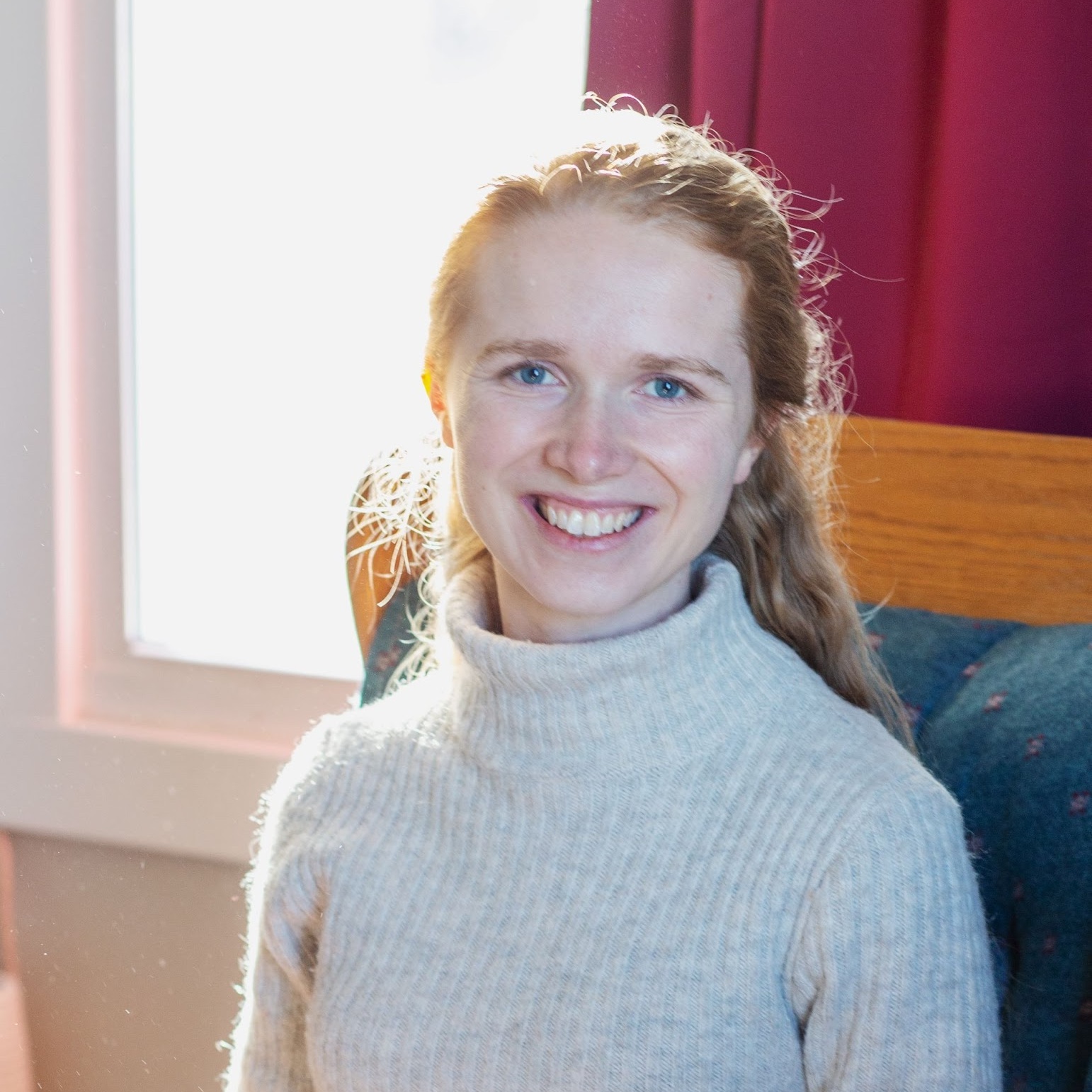
Grace Schmiesing is a convert to the Catholic faith. She spent four years teaching Spanish in a Catholic High School and two years teaching English to adult immigrants and refugees. She now stays at home with her three adopted children.











.png)





.jpg)



 English (US) ·
  French (CA) ·