

 7 hours ago
3
7 hours ago
3
PROTECT YOUR DNA WITH QUANTUM TECHNOLOGY
Orgo-Life the new way to the future Advertising by AdpathwayA vampiric Vrykolakas from Greek folklore was said to terrorize the inhabitants on Mykonos island. To stop the haunting, they exhumed, burned and buried the remains of the body on an inhabited island. But did it work?
On the sunny Greek Island, Mykonos, people mostly think of vacationing, the blue sea and nightlife lights. What Greece was known to the western Europeans centuries ago was a wild and haunted country, and many came back with ghost stories.
Read More: Check out all ghostly tales from Greece
One of the stories told from the time when the Venetians and Ottomans fought for the island at the start of the 1700s. A story about the dead coming back from the dead to terrorize the living.
 Mykonos: Is a Greek Island part of the Cyclades islands. Today it’s known for its booming tourism and vibrant nightlife. It was in ancient times a poor island though, windy where the locals worshiped many gods, and where stories about the dead coming back was plentiful.
 The Manic Panic of the Fear of the Vrykolakas
In 1701, a French botanist named Joseph Pitton de Tournefort arrived in Mykonos and witnessed something that he didn’t believe in himself, but swept the whole local community in a panic.
 Joseph Pitton de Tournefort: French botanist sent by Louis XIV to catalog plants in Greece and Asia Minor. He detailed his journey in, A Voyage Into the Levant, posthumously published in 1717 after he was run over by a carriage. It turned out to be one of the most detailed accounts of the belief in Vrykolakas and what the community did in face of a supposed haunting.
 An annoying local resident was murdered and buried in a chapel in the remote countryside. It’s not specified what happened to his killer and if someone ever paid for his death. In life he had been ill natured and argumentative, and not many liked him alive. No one liked him in his afterlife.
Read Also: The Atoning Vrykolakas Vampire in Santorini
A few days after his burial he was reported by the locals to be stalking the village as a vrykolakas, harassing people in their homes, emptying wine barrels, and causing much disturbance of a poltergeist nature. Doors rattled and the lights went out on their own.
Exorcising a Vrykolakas
The things and haunting the vrykolakas caused were said to be mostly harmless, but when he started harassing the wealthy people and when a donkey was found beaten up. The villagers gathered to call a priest to stop it all.
Locals insisted that the man be exhumed and exorcised to stop the haunting of the vrykolakas. The church allowed it, at least, the rituals went ahead anyway and they buried the man up to look at his corpse. The witnesses claimed that the body was not decaying as it should have and that it was unnatural how well preserved it was.
It’s worth noting that according to de Tournefort and his other foreign associates, it was well decayed. How it really was is unknown today, but as we have seen in other stories about the Vrykolakas, a decaying corpse in the ground doesn’t necessarily stop people from believing it needs to be exorcised.
 The Vrykolakas Vampires: In Greek folklore, they believed in the vampiric Vrykolaka. Traditionally believed that a person could become a vrykolakas after death due to a sacrilegious way of life, but also through other means, like A cat leaping across a fresh grave, Consuming meat from a sheep slain by a wolf or werewolf. Some believed that a werewolf itself could become a powerful vampire after being killed. This revenant wasn’t after just the blood, but also the flesh, some saying the liver was its favorite.
 Burn the Heart of the Vrykolakas
As a final thing, they decided to remove the person’s heart to burn it, but there were no trained doctors there, and they brought a butcher to the chapel instead. The butcher had problems finding the heart however and ended up mutilating the body in search for it. It was a horrible stench, and although the priests burned incense to cover it up, fear spread through the crowd. The author things that the smell, sight and superstition caused people to hallucinate, and they started screaming “Vrykolakas” to his mutilated body, warm with what seemed like fresh blood.
Read Also: The Shoemaking Vrykolakas Vampire from Pyrgos Castle
The corpse’s heart was removed, taken to the seashore and burned. A detail of the ritual that also happened on the other side of the world in the New England Vampire Panic a century later. His body was reinterred, but then the haunting of the vrykolakas’ only increased. He was apparently entering their homes now, beating people up in their sleep. According to lore, knocking on people’s doors appears in many stories about the vrykolakas. They only knocked once, calling the names of those living there. If you opened for the vrykolakas, everyone inside could die. That’s why there still is a saying in Greece, you should only answer the door on the second knock.
They tried holding a chanting march of prayers through the village, but it didn’t work. They tried hammering nails into the body, but no luck. People fled their home, the streets were empty after dark.
Read More: The Vrykolakas Vampire in Patmos
Finally the body was taken to another island and cremated. Lore tells that the Vrykolakas can’t cross salt water on their own, so on the Greek islands, bodies of those suspected of being vampiric would be put on uninhabited islands. In this case, his body was transported in secret, since this was apparently against Orthodox canon and the local priest feared an official reprimand. According to Ortodox doctrin, it’s not compatible with the doctrine of bodily resurrection. On January 16th, 1701, they took the boat out, some believing it could be to the islet of Baos just off the coast of Mykonos. With that extreme measure, all phenomena ceased, according to de Tournefort’s account.
When the travel account was published in 1717, the timing coincided with the European vampire panic that would take hold of the continent, and the cases of vampires in Serbia and other places in eastern Europe would cement the lore of vampirism into modern folklore.
Newest Posts
A Vrykolakas Vampire in Sunny Mykonos30. June 2026
A vampiric Vrykolakas from Greek folklore was said to terrorize the inhabitants on Mykonos island. To stop the haunting, they exhumed, burned and buried the remains of the body on an inhabited island. But did it work?
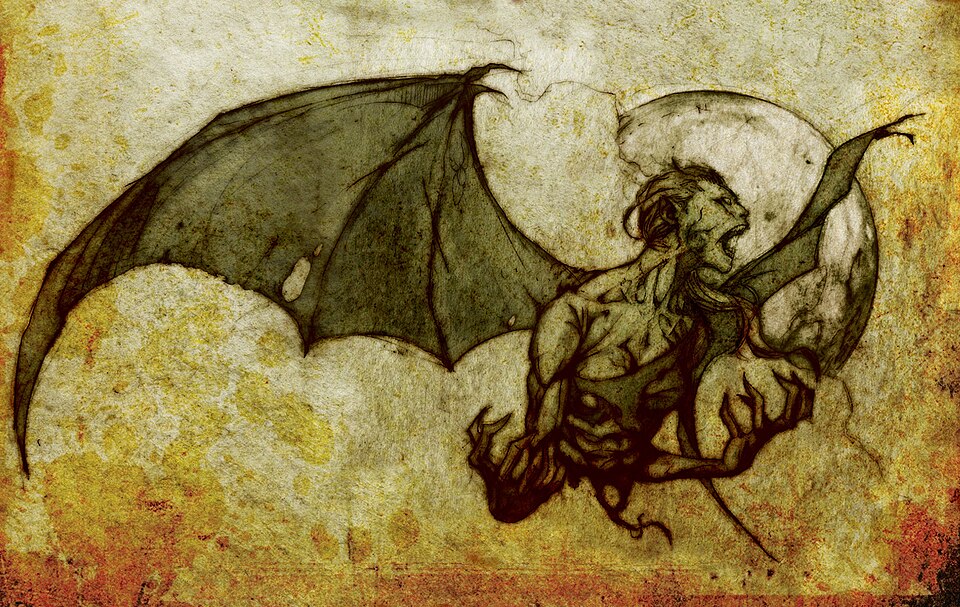
Manananggal: The Night Splitter of Filipino Folklore29. June 2026As part of the shapeshifting Aswang demons of the Phillipines, the Manananggal was soaring the sky in her bat-like appearance on her hunt for human blood.
The Atoning Vrykolakas Vampire in Santorini25. June 2026After a man died before atoning for his crimes, he came back from the dead as a vampiric Vrykolakas when his wife failed to follow his final wishes. What followed was a month full of terror and haunting.
The Vrykolakas Vampire in Patmos23. June 2026After terrorizing his village, the Vrykolakas Vampire from Patmos in Santorini were taken to an inhabited island and set on fire. The question is, did it really work?
The Churel: The Vengeful Vampire Woman of South Asian Folklore22. June 2026Fueled by anger and vengeance, the vampiric Churel of South Asian folklore, is said to haunt down men to drain their blood as a vengeful spirit brought back from the dead.
The Shoemaking Vrykolakas Vampire from Pyrgos Castle19. June 2026After a humble life as a shoemaker on Santorini in Greece, a man was said to have come back as a Vrykolakas, the vampire of Greek folklore. But for this Vrykolaka, it wasn’t to devour human life that kept him going.
The Sea Draug: The Ghostly Fisherman of the Norwegian Coast18. June 2026Thought to be haunting the dark seas of the north, the Sea Draug is a ghost of the drowned fishermen’s and other unfortunate souls who perished on the waters.
The Haunted Jane Street Hotel: Echoes of the Lost Sailors17. June 2026After tragedy struck and the Titanic sank to the bottom of the Atlantic ocean, the surviving crew members were sent to The Jane Street Hotel in New York. According to stories, they are still haunting the rooms, where the trauma of their tragedy lingers.
The Silent Music Haunting Hald Pensjonat16. June 2026Who can be haunting the old Hald Pensjonat in Mandal? Playing soft piano music in the afterlife, and rumours about the footsteps of a Norwegian pirate seems to linger.
The Mandurugo Vampire Bride of Philippine Folklore15. June 2026Hidden among human society, the vampiric Mandurugo creature is slowly draining her unassuming husbands of their blood and life to sustain her eternal youth and beauty.
The Ghostly Guardian of MS Nordstjernen12. June 2026The MS Nordstjernen spent decades bringing passengers north across the arctic sea, and although the waters can be brought this far north, it always seemed to reach port unharmed. Some think that it could be Ernst, the ship’s ghosts.
The Cabin in the Woods where the Forest Watches Back 11. June 2026The DNT Cabin Flisberget deep in the mystical forest of Finnskogen, bordering Norway and Sweden has a lot of strange tales coming from it. So much so, that it was voted the scariest cabin in the country.


References:
By Light Unseen – Vampires in Media and Culture
The Vroucolaca of Mykonos: An Enlightenment Eyewitness to Greek Vampire Panic
https://babel.hathitrust.org/cgi/pt?id=gri.ark:/13960/t4th9mz1d&seq=368






.png)




.jpg)

 English (US) ·
  French (CA) ·