
 5 months ago
81
5 months ago
81
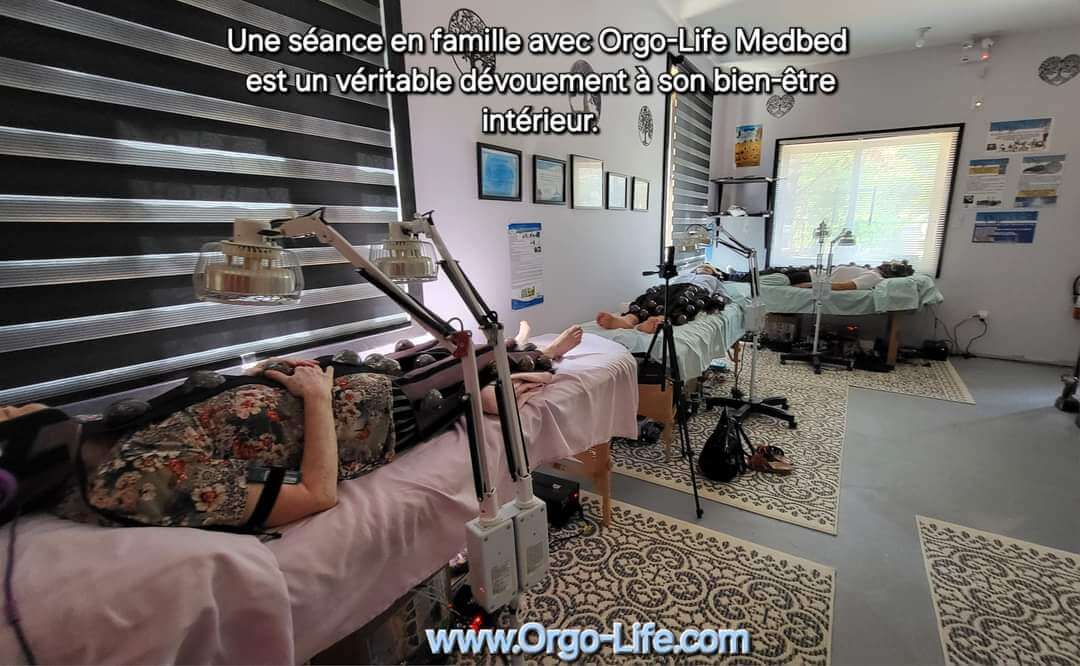
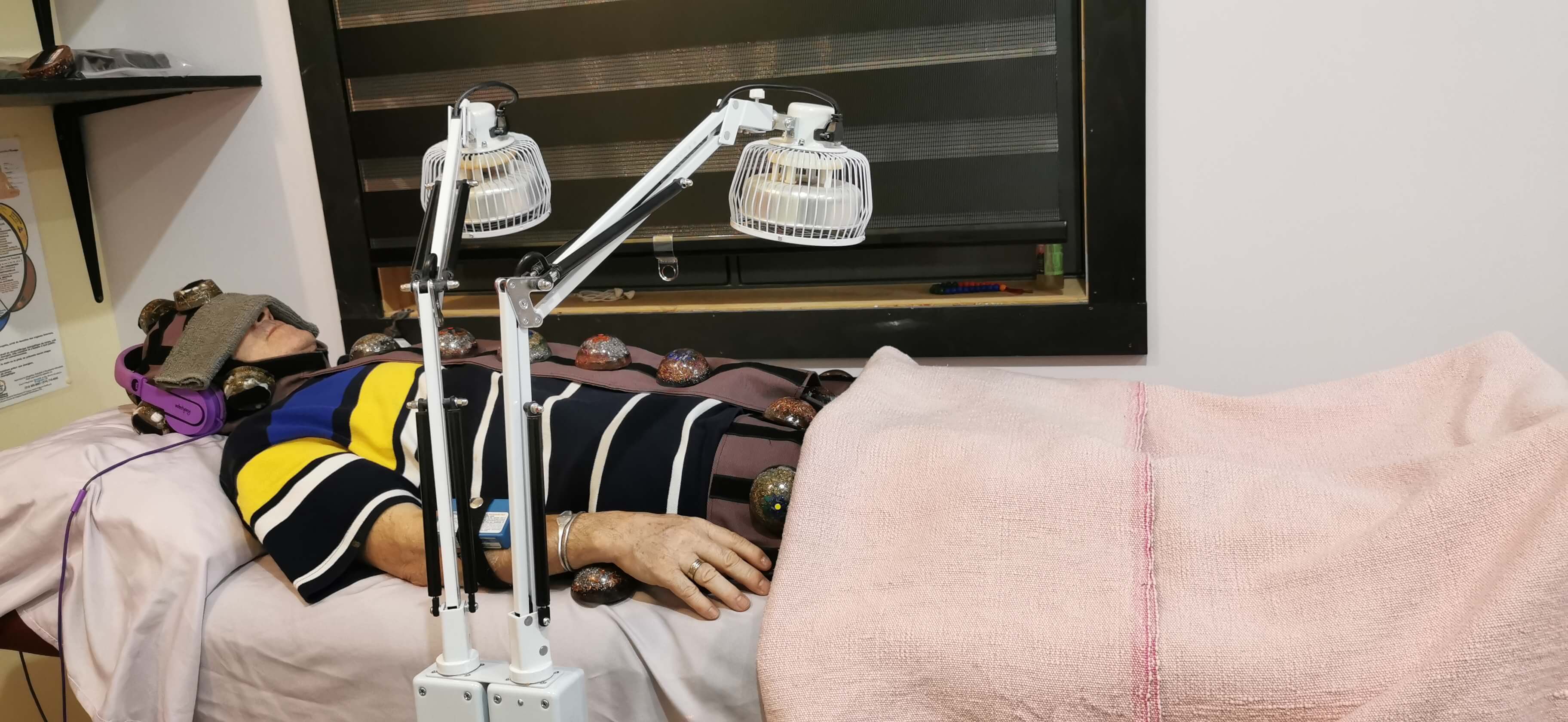
PROTECT YOUR DNA WITH QUANTUM TECHNOLOGY
Orgo-Life the new way to the future Advertising by AdpathwayThe reader is likely well aware of what is commonly known as the “vocations crisis” in the Church. Vocations to the priesthood and religious life are at a historic low, even as Gen Z flocks to Catholicism.
To say we are in unprecedented times is simultaneously a trite insight and a gross understatement.
That there is a crisis, no one disputes. The possible cause (or causes) of this crisis, however, is a hotly contested topic. Some may say worldliness is the reason for the crisis. Others place the blame on a disordered attachment to our own desires and a refusal to carry our cross. Still others point to the struggle to listen to God in prayer as a potential cause of diminished vocation numbers.
All of these theories—and others besides—are valid, in one way or another. It is impossible to reduce the vocations crisis to a single underlying cause. But something is missing from much of the commentary on the vocations crisis. A problem that desperately needs addressing goes unaddressed.
Allow me to explain. How many times have you heard someone say they’re “discerning their vocation”? Countless times, no doubt. Nothing wrong here. This is a common expression, an innocuous phrase, a noble declaration of pious determination.
Here’s the problem. How many people actually know what a “vocation” is? How many people really know what “discernment” means?
My educated guess is that, were you to conduct a survey of average Catholics and ask them what these words mean, you’d get a vast and even disjointed array of answers. Appeal to your own selection of anecdotal evidence. I would be shocked were your experience much different from mine.
At the risk of causing the soapbox I stand upon to collapse under my feet, I must admit that I am in a sense terribly unqualified to answer these questions myself. I don’t “have my vocation” yet. I’m not married; not a religious; not a priest.
I did, however, spend several years during and after high school seriously discerning a vocation to the priesthood and religious life. I am also very blessed to know a whole host of people wiser than I who are faithfully living out their vocations—priests, religious, and married people. I have learned a lot from them.
What follows will primarily be their advice, guidance, instruction, and insight—together with that of some esteemed spiritual authors—stitched together by me into what I hope is a coherent whole, providing some answers to these questions and at least a semblance of a solution to what I see as a major problem deep down at the root of the vocations crisis.
Two Pitfalls
There is a reason why it is hard for most people to explain what “discerning a vocation” means. This phrase entered into common Catholic parlance only relatively recently in the history of the Church. The majority of times that I have heard it used in regular Catholic life, it has been used in a “spiritual” context. This is not a bad thing; “discerning your vocation” is obviously very spiritually important.
The problem here is turning the process of discerning a vocation into a primarily “spiritual” one—by which I mean a disturbingly Gnostic quest for a sort of “hidden knowledge” buried deep in one’s “heart of hearts” (whatever that means). Fr. Richard Butler, O.P., illustrates this point quite well at the beginning of his book Religious Vocation: An Unnecessary Mystery. He claims that vocations to the religious life—and I would add, vocations in general—have been given an overly mysterious quality in the modern age.
A Catholic of the traditionalist persuasion will be quick to point the finger at those terrible, horrible, no-good Catholics influenced by the Charismatic Movement. They’ve really gone and done it this time, haven’t they—them and their awful emotionalism, all caught up in their feelings, making such a convoluted mess out of vocations and discernment!
The traditionalist, true to form, proposes an apparently traditional solution: a cold, calculated evaluation of one’s abilities. If you can handle the demands of the religious life/priesthood, then you should become a religious and/or a priest. Otherwise, you should just get married. Simple as that!
Perhaps you have already begun to see the problem. The blind are leading the blind. The misguided charismatic and the restoration-minded traditionalist have fallen into two different ends of the same pit. Both of these approaches to discernment—the overly spiritual and the overly judicial—are far too inwardly-focused. Of course, there should be some inward focus in discernment; a healthy amount. Both of these approaches betray an unhealthy amount (or an unhealthy style) of inwardly-focused discernment. But I digress—more on this later.
I must give my imaginary traditionalist friend credit where credit is due. A more serious, academic perspective on the topic of vocations is lacking. This is what the traditionalist desires, and he desires rightly. Let us, therefore, be a little Thomistic.
Vocations
To understand discernment, we first have to understand what it is we’re discerning. What is a vocation?
A common definition seems to be the following: one’s state in life, a long-term commitment with permanent obligations, to which one believes they have been called by God. Generally, four different “vocations” are acknowledged: marriage, the priesthood, religious life, and consecrated single life. (There is some debate about that last one, and it is beyond the scope of this article—but feel free to draw your own conclusions from the matters treated herein.)
This is the popular, modern Catholic understanding. But this is not how the word “vocation” has traditionally been used and understood.
Returning to Fr. Butler’s book: the use of the word “vocation,” from the Latin vocare (“to call”), was originally only used in reference to God’s “calling” each person to holiness; our common “vocation” to salvation. Fr. Butler links this understanding to the traditional view of religious vocation (i.e., vowing to observe the evangelical counsels of poverty, chastity, and obedience) as “useful, or better” for answering God’s call to holiness and salvation.
The Thomistic understanding, Fr. Butler goes on to say, is that all are called—not commanded, mind you, but invited—to the religious state. This is the original meaning of “religious vocation” in its proper context.
While Fr. Butler is primarily concerned with dispelling the mystery surrounding the vocation to religious life, he also quickly dispatches any confusion regarding the “vocation of marriage”: there is no such thing.
Okay—that was a little hyperbolic. In a sense, you could say there’s a “vocation” to marriage—but everyone has it. It’s inherent to our nature. No special “call” is required.
To sum it up: marriage is the natural “vocation” of all, religious life is a supernatural invitation given to all. But this is not the whole picture. It only addresses the objective side of things.
Subjectively, regarding the universal “call” to the religious life, Fr. Butler says that “God does move some to respond and others He does not.” One has to factor in the operation of grace in the human soul before one can properly understand God’s invitation of all to the religious state—and His efficacious moving of some to answer that call. While important to understand, this is more a matter for theologians and not something particularly relevant to our discussion. (If you would like to understand this subject better, then I recommend reading Fr. Butler’s book.)
There is another objective/subjective distinction that is critical for us to understand before we move on. An oft-quoted canon from the Council of Trent declares: “If anyone says that the married state excels the state of virginity or celibacy, and that it is better and happier to be united in matrimony than to remain in virginity or celibacy, let him be anathema.”
This may lead to some confusion. St. Thomas will once again provide us with clarity: Objectively, yes, the religious state is “better.” However, subjectively—i.e., for a particular individual—married life may be “better” and a surer path to perfection.
Both states of life are objective goods. The last thing we want is for marriage to be viewed as “deficient” or to believe that those who choose it are somehow “lesser.” As one priest I know put it: “Marriage is not a ‘compromise vocation’ for those who think they’re too ‘weak’ for the religious life.” Herein lies another error of the previously outlined “overly judicial” approach to discernment—it treats marriage like a consolation prize.
You may have noticed that I haven’t said much regarding the priesthood. Fr. Butler deals briefly with this topic, and so will I.
Fr. Butler notes that the Church is involved in a more direct way with priestly vocations than with vocations to the religious life, since the priesthood is primarily for the service of the Christian faithful, whereas the religious life is primarily for the sanctification of one’s own soul (though the Christian faithful do, of course, profit from the practice of religious life through the prayer and/or apostolic activity of each religious).
Citing an official document confirmed by Pope Pius XI addressing a controversy over priestly vocations, Fr. Butler outlines three important points made by that document regarding vocations to the priesthood that also apply to vocations to the religious life. They are quite simple and straightforward, which should come as no surprise, given our examination of vocations in general. I will summarize them as follows:
- No one has a right to ordination or religious profession except by free choice of a bishop or religious superior, respectively.
- No sensible attraction/unusual or ordinary manifestation of the Holy Spirit is necessary to have a vocation to the priesthood or the religious life.
- “Nothing is more necessary than a right intention and suitability” in pursuit of the priesthood or religious state.
Fr. Butler also points out that the Church uses in an official manner the language of “vocation” (in the sense of a special calling) in reference to the priesthood—you have what is called an “ecclesiastical vocation” when you are ordained; the Church has “called” you in a special way through its ministers to a particular state in life. The same is the case when you are admitted by the Church to profession of religious vows.
It is important to note, however, that this “ecclesiastical vocation” does not guarantee a “divine vocation”—which means, simply, that the Church cannot see into the heart of the individual. Perhaps he lacks the right intention or the proper suitability for this vocation and has successfully hidden this from the Church; only he knows.
Which begs the question—how would he know in the first place? All of this is well and good, and we have (I hope) cleared up some of the confusion surrounding the idea of vocations. But—especially after outlining those three points regarding priestly and religious vocations—it seems like we’ve also fallen into the aforementioned traditionalist’s end of the inwardly-focused pit.
How are the bare-bones requirements of “suitability and right intention,” together with the statement that you need not be “sensibly attracted” to have a vocation to the priesthood/religious life, any different from the traditionalist’s proposal of a cold, calculated examination of your abilities to determine which vocation is right for you?
More importantly, if everyone is “called” (naturally) to marriage while also being “called” (supernaturally) to the religious life, and both of these things are fundamentally good—but one may be better for me than the other—how do I know which one I’m supposed to pick?
We have addressed the confusion surrounding vocations, but we have not yet addressed the confusion surrounding which particular vocation one should choose. The idea of “discernment” is shrouded in perhaps even more mystery than the idea of vocations. Let us attempt to dispel some of that mystery.
Discernment
Fr. Bob Bedard, founder of the priestly order Companions of the Cross, has a quote that goes something like this: “Ever since discernment became fashionable, no one has made a decision.”
This is the negative side of discernment that most people are familiar with. It is easy to become a “perpetual discerner,” oscillating back and forth between the different states in life, never making a decision. But why is this such a common occurrence?
The answer is simpler than you might think. Many people suffering from “analysis paralysis” regarding their vocation are afraid of making the wrong decision; of choosing the “wrong vocation.”
But even this is a symptom of a deeper cause. To explain what that cause is, I defer to the present Superior General of the Carthusian Order, Dom Dysmas de Lassus, and his exceptional book Abuses in the Religious Life and the Path to Healing. (As an aside: I happened to buy this book immediately after reading Adam Lucas’ review of it in Crisis. I highly recommend it to anyone discerning religious life, especially with newer, more traditional communities.)
In the ninth chapter of the book, Dom Dysmas highlights what he calls a “strange account” of the way God works in our lives. Many people, he says, believe that God has a sort of “roadmap” He has planned out for them in advance. Our job, then, is “discovering the map and not straying from it too seriously.”
Take note of that word, discovering. Dom Dysmas says that people treat following God’s will like it’s a treasure hunt. The route is predetermined, and mysterious clues are hidden along the way, but it’s up to you to figure it all out. Getting it wrong, he says, is like playing a piece of music incorrectly. “Any deviation will lead to wrong notes and thus to dissonance.”
The justification for this deterministic, interventionist view of God’s will for us is that He knows better than we do about what will be good for us. Indeed, He does; no doubt about that. But in Dom Dysmas’ words:
We have to get rid of this “treasure hunt” idea if we want to understand the way God acts in our lives, a way that is worthy of Him—and of us. Our respect and esteem for our freedom need to be in proportion to the respect and esteem God Himself has for it.
To this point, I remember being genuinely shocked when the superior of a religious community reminded me that I was, in fact, free. I had heard that thousands of times, but I never realized what it meant.
The fact of the matter is, those of us who are paranoid about choosing the “wrong” vocation spend too much time trying to “figure out” God’s will for us and not enough time asking ourselves what we want.
It sounds almost scandalous, but it’s true. Our desires are important. God “fulfills the desires of those who fear Him” (Psalm 145:19). It is true that you need not have a “sensible attraction” to the religious life or the priesthood to have a vocation, but this presumes that you want to be a religious or a priest in the first place.
Can our desires mislead us? Of course. But if you’re deathly afraid of picking the “wrong” vocation, then I think it’s safe to say that your heart’s in the right place. At least the part of it that’s trying to do God’s will. Just put that “wrong vocation” idea out of your mind; God’s not setting traps for you. And even if you were, somehow, to choose the “wrong vocation” (which you can’t do by accident)—even then, your life’s not over, like the whole “treasure hunt” idea seems to imply. God won’t abandon you. He’s right there with us every step of the way, and He always brings good out of evil.
The question we must now ask ourselves is the one Jesus asked St. Andrew and another of his soon-to-be disciples at the beginning of the Gospel of John: “What are you looking for?” (John 1:38).
The landscape of discerning your vocation will now hopefully seem a little simpler, a little clearer. Of course, not everyone’s journey will be the same. Some people will need more time; some people will need less. Some may follow a more intellectual path; others may follow a more emotional or “spiritual” path.
The most important thing here is your relationship with God. This is the antidote to that unhealthy, “inwardly-focused” discernment that I spoke of at the beginning of this article. You can only look inward once you have looked outward, to God. You have to know how He looks at you before you can look at yourself. Paraphrasing Dom Dysmas, “you have to respect yourself the way God respects you.”
Beyond this, good discernment means active discernment. Prayer is important, but you have to do things, too. If you think marriage is for you, then go on dates. If the priesthood or religious life interests you, then visit seminaries or religious communities. Talk to people who are faithfully living out their vocation. Ask them for advice. Take it one step at a time (even if it’s a tiny, baby step) and trust in God. But most importantly—make a decision!
Conclusion
When I was discerning the religious life, a friend’s dad asked me a question that completely stumped me. We were talking about my discernment, and I repeated a common piece of advice that I had often heard: I should go where I find peace. He asked me: “What do you mean by ‘peace’?”
At the time, the best answer I could give him was something along the lines of, “peace is…uh, well, it’s sort of a feeling, I guess?”
I think that I have a better answer now.
St. Augustine defines peace as the “tranquility of order.” Peace is a fruit of the Holy Spirit. You certainly won’t “feel at peace” at all times in your discernment, or in your vocation—far from it. But if you are trying to live a good Catholic life, then you will find peace, even if you don’t “feel at peace.” Peace is more a sign of good discernment than it is a conclusive answer that this or that vocation is right for you.
With that in mind, I hope this article helped bring the “tranquility of order” to some of the confusion you may have had about vocations and discernment. In this chaotic world, we could all use a little more peace.
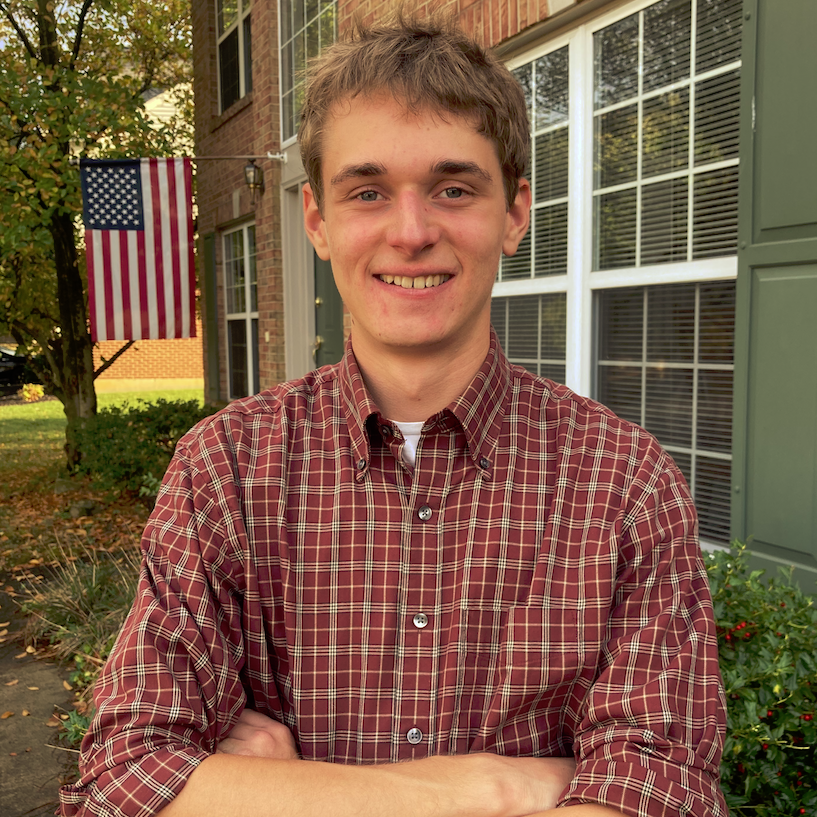
Braden Hock is a Catholic writer from Cincinnati, OH. He enjoys reading, art, and music, but knows that none of these statements make him particularly original. He does not enjoy writing biographies.






.png)




.jpg)

 English (US) ·
  French (CA) ·