

.png) 5 months ago
69
5 months ago
69
PROTECT YOUR DNA WITH QUANTUM TECHNOLOGY
Orgo-Life the new way to the future Advertising by AdpathwayLITTLE CANADA, Minn. — Jimmy Williams Jr. doesn’t shy away from difficult conversations. As a union leader in the building trades, he’s become accustomed to making the case for progressive policies to skeptical members who support President Donald Trump. But there’s one issue that never gets easier to talk about, no matter how often it comes up.
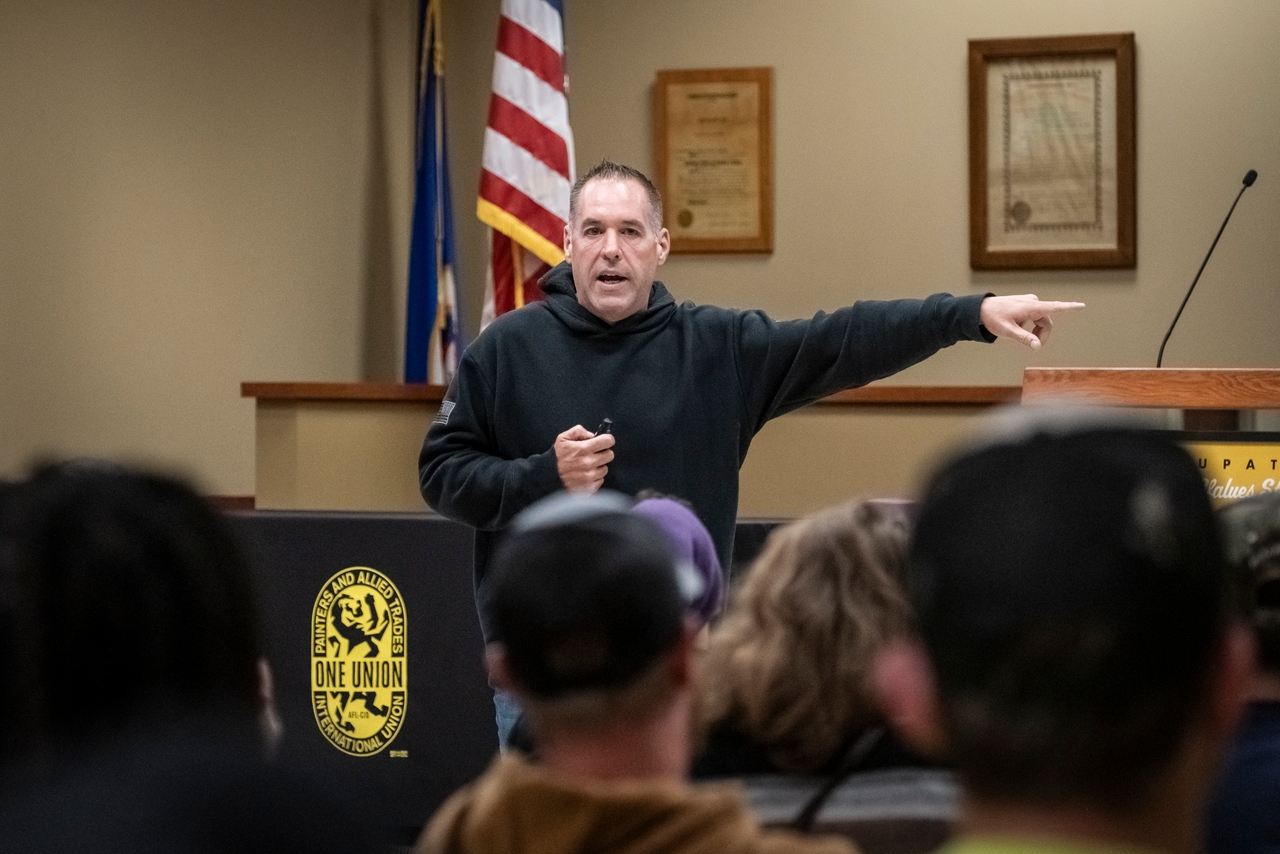
“Every single conversation that I have with our membership around immigration is a tough one,” Williams said recently at a union hall outside Minneapolis.
He went on, “People break my stones all the time and say I’m too ‘woke.’ They say we focus on too many things, like DEI and stuff like that. We are a union that represents workers, period.”
Williams was talking to local union representatives about how to forge tighter bonds within their membership at the International Union of Painters and Allied Trades, which represents more than 100,000 painters, glaziers and drywall finishers around the country. He said he wants members to overcome their political differences to see their common economic struggle.
A “broken” system has been pitting U.S.-born workers against immigrants, weakening the union’s solidarity and bargaining position, Williams explained. To illustrate the stakes, he said one of the union’s predominantly Latino local councils hasn’t held a mass public membership meeting for months.
“Out of fear that one of our members will call ICE on their own brother or sister,” he said.
Caroline Yang for HuffPost
The Trump administration claims mass deportations will boost wages for American citizens by rooting out workers who came to the country illegally and compete for jobs. Even though plenty of economists say widespread deportations will have the opposite effect, many of the union construction workers who voted for Trump last fall believe they can benefit from the president’s anti-immigration agenda.
Williams, though, is convinced Trump’s crackdown will actually make things worse for the workers building high-rises, apartment buildings and data centers around the country.
“I personally believe that all it does is drive people further and further into the underground,” the Philadelphia native told HuffPost recently while visiting worksites to talk with members. “It affects our trade — it lowers standards.”
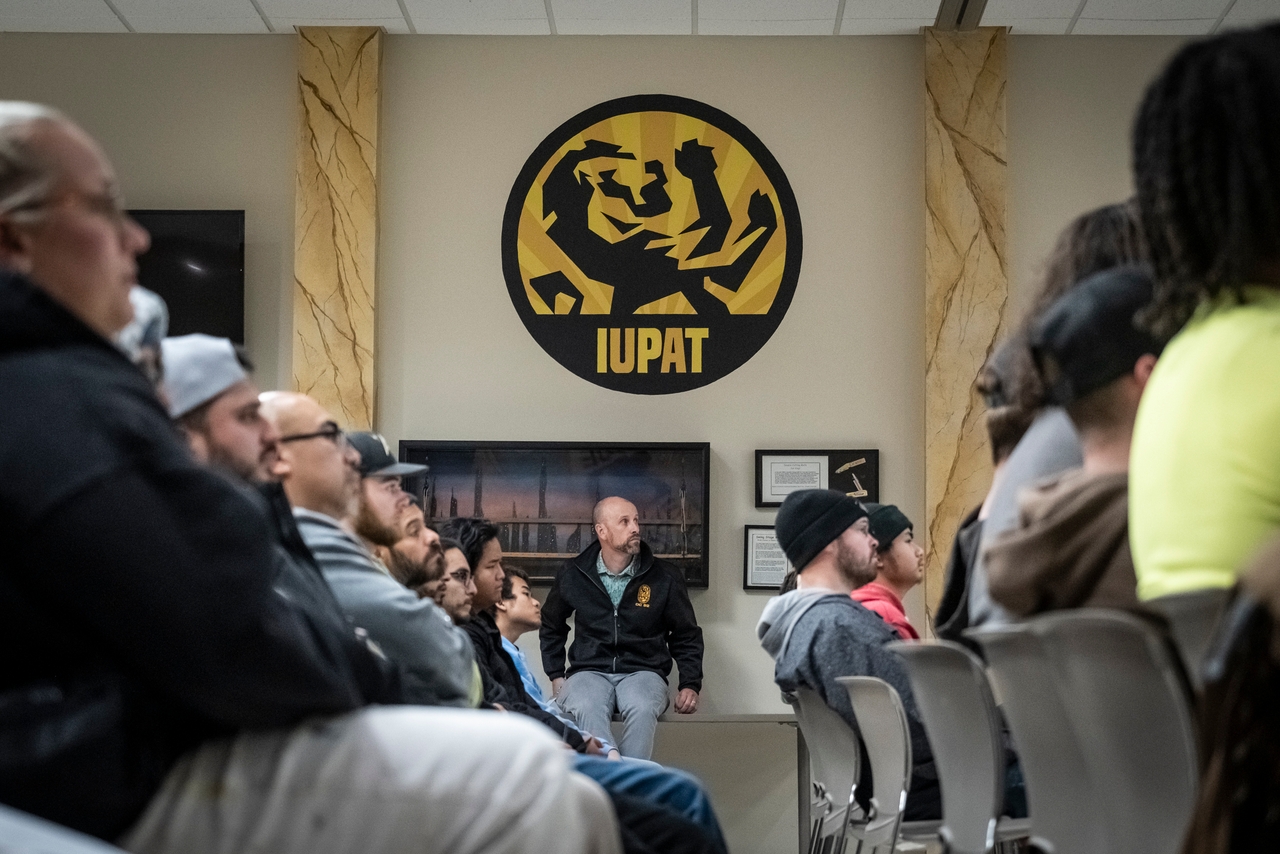
Although his wing of organized labor is not known for outspoken advocacy on behalf of immigrants, Williams does not hold back on the issue. Last week he testified before Congress and described “horror story after horror story” of union members losing temporary protected status, being detained on the way home from work, “not to be heard from again.”
Caroline Yang for HuffPost
“What is going on in our country right now should alarm all of us,” he told lawmakers.
Williams’ testimony rankled Stephen Miller, the official leading Trump’s anti-immigration campaign, who said it was an example of unions advocating “for the replacement of American workers with an endless supply of cheaper foreign labor.”
“The immigrant worker is not the one screwing you over here. It’s an economic system that puts a value on low wages, on driving working conditions down.”
- Jimmy Williams Jr., general president, International Union of Painters and Allied Trades
It’s not hard for Williams to see why some workers would support an aggressive deportation campaign.
The composition of the construction industry has changed dramatically in recent decades, with the share of white workers falling and Latinos now making up around one-third of the workforce. Those demographic shifts have come to Williams’ union, with commercial painting and drywall work offering first- and second-generation immigrants entry into decent union jobs. He now expects Latinos to be the union’s largest group within a couple of years.
Low-paying construction projects with immigrant labor are often the focus of the union’s organizing efforts. Williams, a fourth-generation glazier, says it’s an important step in reversing what he sees as the gradual degradation of a middle-class job. The effort is partly about adding new members, but it’s also about recouping market share to protect the union’s existing, pensioned membership.
Once a mighty force within the construction industry, building trades unions have lost significant ground since the 1970s, with union contractors undercut by non-union ones. The industry is rife with worker misclassification and wage theft — problems Williams predicts will become only more widespread if workers become increasingly afraid to assert their rights. It’s one of the reasons he campaigned against Trump during last year’s presidential election.
“We understand they’re hurting, too,” he said of members who support the crackdown, “but the immigrant worker is not the one screwing you over here. It’s an economic system that puts a value on low wages, on driving working conditions down.”
The painters union has been confronting the immigration issue since Trump’s first presidency, when Immigration and Customs Enforcement detained one of its members, Hugo Mejía, as he arrived for a drywall job at an Air Force base in California in 2017. The union’s public defense of “brother Hugo,” as leaders referred to him, divided some of the membership.
At the time, one white member told HuffPost protecting Mejía was a waste of time and resources, though another said, “I have more in common with Hugo than I’ll ever have with my boss.”
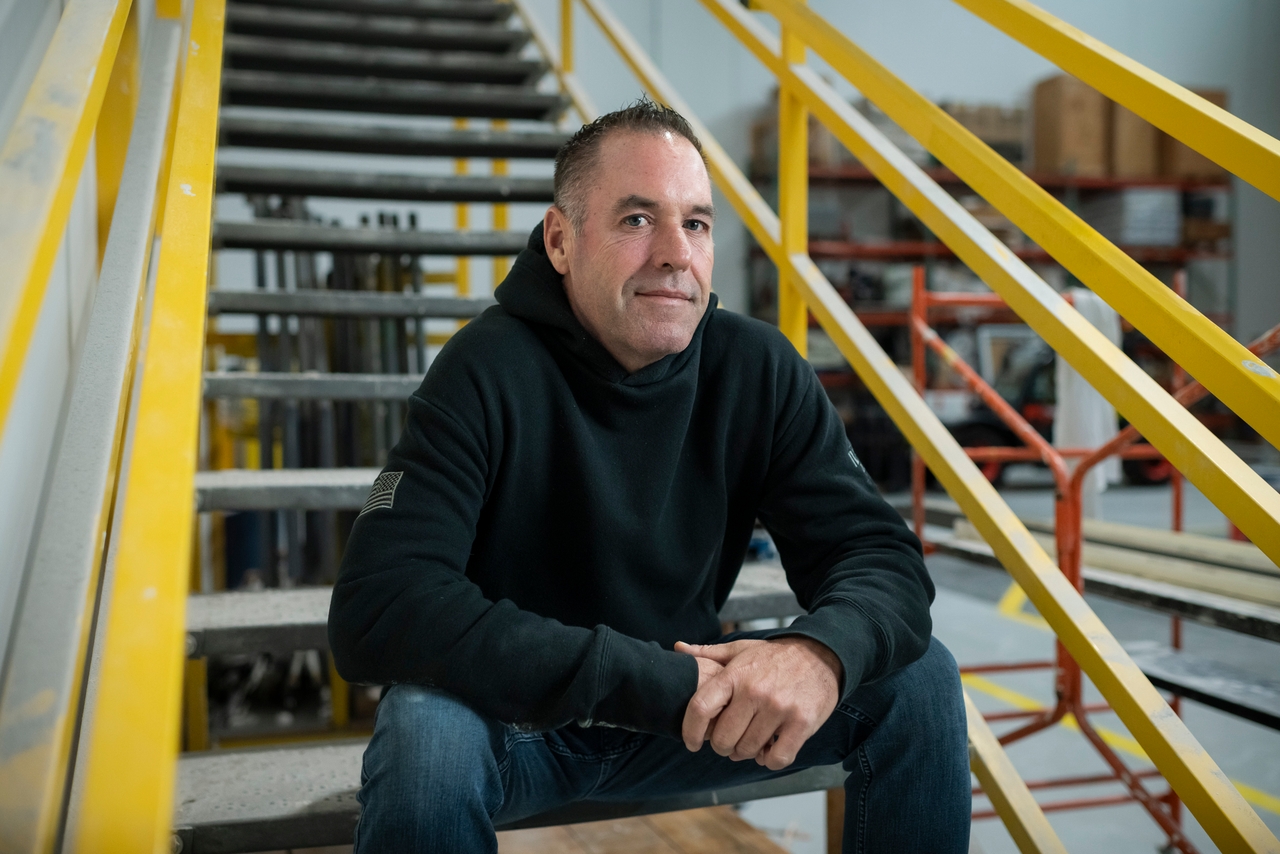
Williams is trying to bridge some of those gaps. This year, he’s been traveling to all 30 of the union’s local councils across the country to roll out a program called “Building Union Power,” which teaches members and apprentices about the union’s history and the economic and political forces that have shrunk organized labor’s footprint. He hopes it can reverse an “apathy” within the union and help rebuild solidarity across political lines.
Caroline Yang for HuffPost
“We’ve got to slow it down enough to have real conversations with our members,” he said.
Trump’s immigration crackdown has pushed the issue to the forefront of several unions. The White House’s most high-profile migrant deportee, Kilmar Abrego Garcia, is a union sheetmetal apprentice from Maryland. The administration wrongfully deported him to an infamous Salvadoran megaprison earlier this year, violating his court-ordered protection against deportation. Abrego Garcia was returned to the U.S. despite resistance from the Trump administration, and a judge ordered him to be released from custody last week.
The sheetmetal workers union declined an interview request on Abrego Garcia’s case, but its leadership has issued statements in his defense, arguing his case “is about all of us — and the rights we all stand to lose when one person is deprived of theirs.”
“When [ICE] starts picking people up … it has the effect of making a big section of the working class fearful and willing to take lower wages and worse conditions. That has an impact even on unionized people.”
- Nelson Lichtenstein, labor historian at the University of California, Santa Barbara
Republicans in the building trades don’t always appreciate such advocacy. In April, an affiliate of the International Brotherhood of Electrical Workers in Washington state passed a resolution to mobilize against ICE raids by joining protests and passing out “know-your-rights” cards. Rob Allen Jr., a conservative member, spoke out against the measure. Describing himself as a committed unionist, Allen told HuffPost he’s grown tired of progressive activism in labor. He believes a union should stick to “what unites us, the trade, rather than what divides us.”
“We have a thousand electricians out of work right now; we should be focused on getting them back to work,” Allen said. “Putting our efforts into non-work-related political issues is not the best use of union resources.”
Immigration has been a thorny issue within certain wings of organized labor for more than a century, with foreign-born laborers often seen as a threat to established workers’ livelihoods. (Miller, the Trump aide, celebrated labor for having “led the charge” against immigration in the early 20th century.) The AFL-CIO labor federation, which includes a building trades coalition, called for amnesty for undocumented immigrants 25 years ago. But it’s an issue some union officials would still rather not touch, said Nelson Lichtenstein, a labor historian at the University of California, Santa Barbara.
“It’s true that many of these leaders are unwilling to come out forcefully and speak on this question — they just want to let it die,” Lichtenstein said.
He called that a mistake.
“When [ICE] starts picking people up … it has the effect of making a big section of the working class fearful and willing to take lower wages and worse conditions,” he said. “That has an impact even on unionized people.”
Brent Booker, president of the Laborers’ International Union of North America, said he’s trying to “change the way we talk about” immigration. Rather than fixate on workers who came to the U.S. to better their families’ lives, Booker said, they should focus on the contractors who are exploiting them and undercutting the firms that sign on to project labor agreements.
“The employers are the ones who are breaking the law,” Booker said. “I haven’t seen one contractor tackled in the street, a bag [put] over their head and zip ties on them and carried off in an unmarked car. I’ve seen that happen to a lot of immigrant workers.”
“I don’t convince everyone of that,” he added, “but I think that’s a start in which we’ve got to flip that conversation.”
Williams sometimes gets pushback from union officers who believe they should stay away from a “wedge issue” like immigration altogether. One compared it to abortion or guns; Williams countered by pointing out a crucial difference.
“Abortion and guns don’t make their way onto a construction site,” he said.
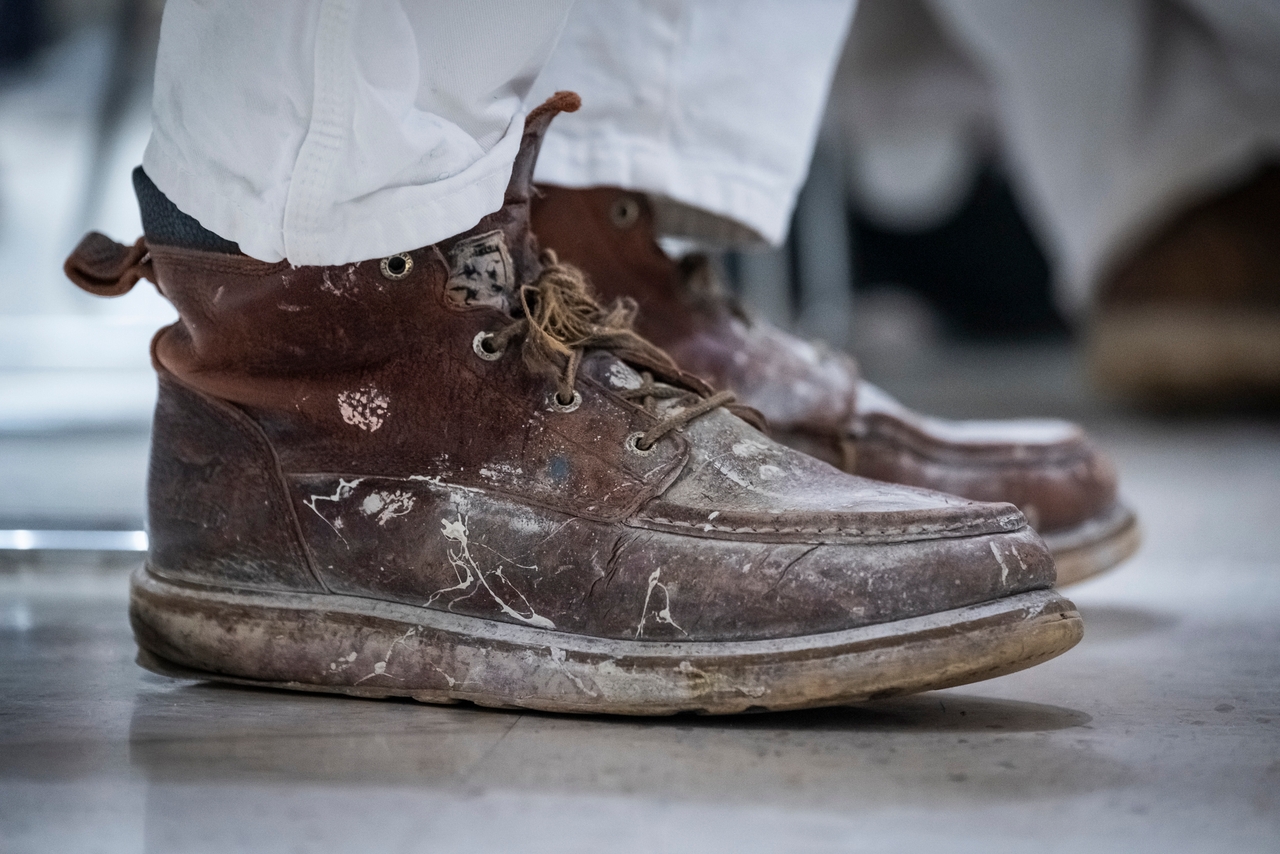
One of the biggest problems construction unions face is the scourge of misclassification: workers being labeled “independent contractors” rather than employees, leaving them without unemployment insurance, workers compensation or union rights. Immigrants are believed to be particularly susceptible to the practice since they are less likely to challenge their employment status.
“It’s the biggest scam in the industry by far,” Williams said.
The painters union tries to combat that practice by bringing wage complaints to the government on behalf of laborers who have been cheated out of overtime. But these efforts could be hampered by the Trump administration’s deep cuts to the federal government, including the U.S. Labor Department, which investigates federal wage theft claims, said Shane Smith, the union’s vice president for organizing.
Caroline Yang for HuffPost
“It’s a tough place to be,” he said. “That’s a tool we use to build power for workers, to build toward those [union] elections and to be able to get a win for those folks to see the power of collective action.”
He added, “We had a lot of good headway under the last administration, and that looks to be disappearing now.”
Regardless of those cutbacks, many workers no longer trust the process or fear their information will be shared across agencies, organizers said. In a sign of how the atmosphere has shifted, the Trump administration quietly ended a Biden-era program that offered temporary protection from deportation to workers who speak up about labor violations, Bloomberg Law reported.
Laura Garza, director of the immigrant workers’ center Arise Chicago, said many of the workers her group assists are not interested at all in approaching the federal government right now, even if they’re being cheated out of pay. Arise typically files several unfair labor practice charges with the National Labor Relations Board each year when workers believe their rights have been violated. This year, it hasn’t filed any.
“That’s just a reality,” Garza said.
With Chicago now the focus of ICE enforcement, Arise has seen a 50% dropoff at its in-person trainings where workers learn about wage and safety protections. Garza said they have shifted to training employers on what their responsibilities are, with many small businesses opting to take part in the program.
The painters union is also having to make adjustments due to the climate of fear. In some instances, workers have literally run away from organizers as they pulled up to a worksite, said Savannah Palmira, an organizing director based in Seattle. The organizers realized the black safety vests with neon stripes they were wearing resembled ICE uniforms, so they switched to orange vests instead.
“Trying to get a worker to come forward is very, very hard,” Palmira said.

Caroline Yang for HuffPost
But the union hasn’t given up on trying to gain new members.
Zach Thoemke, an organizer for the union in Minneapolis, said he recently helped two painters secure thousands of dollars in backpay they were owed, and the employer ended up agreeing to bargain with the union — the sort of victory that takes months of work and legal wrangling. He understands why some workers would be reluctant to take such risks in the current climate.
“When the workers come forward and they trust in us, and we do everything right, we do win,” he said. “It’s just hard to instill that confidence when they have so much to lose.”









.png)




.jpg)

 English (US) ·
  French (CA) ·